

Russia no longer a ‘strategic ally’ in Armenia’s new government program. civilnet.am
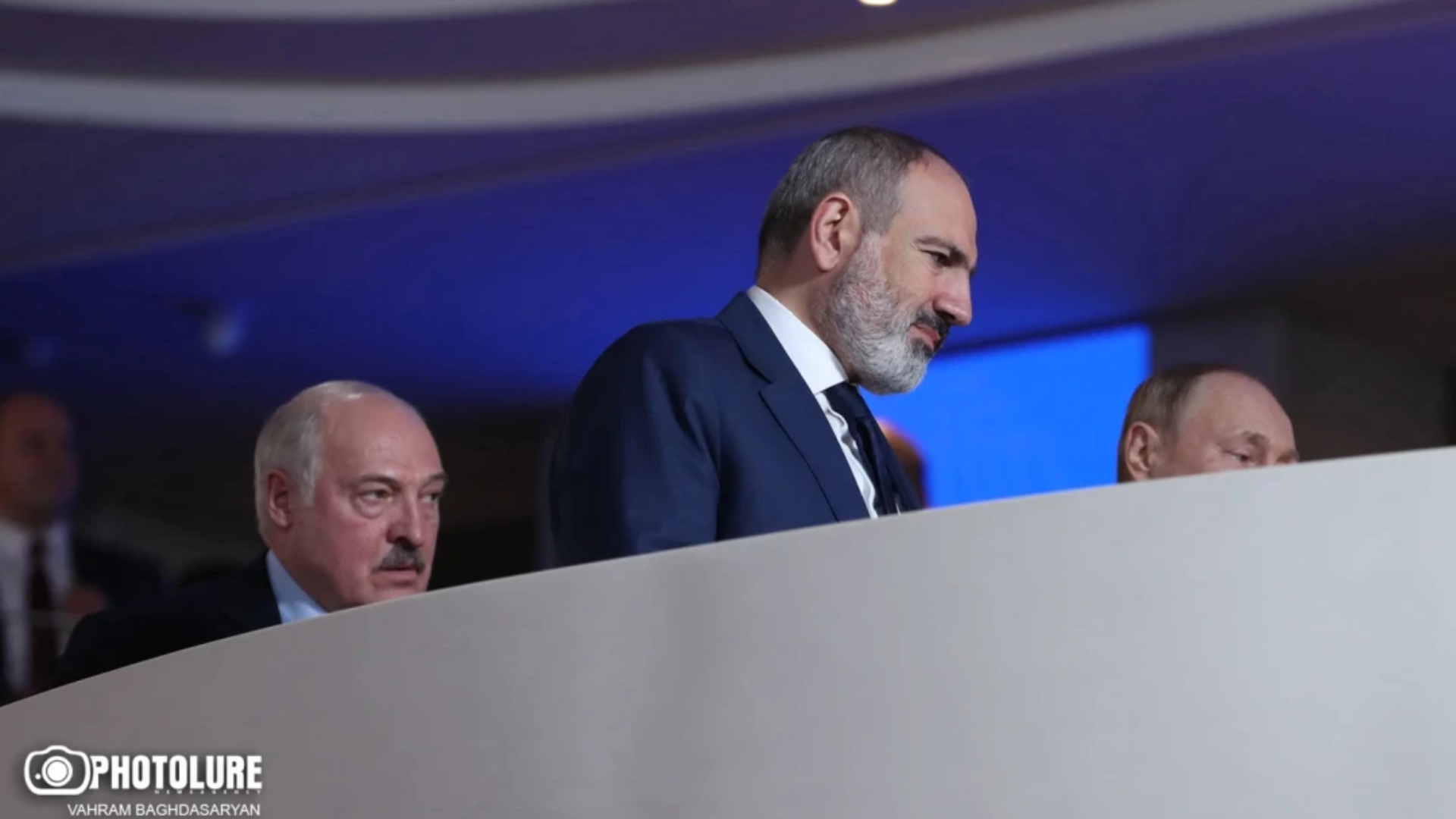
Armenia’s new government program for 2026-2031 significantly recasts the country’s foreign policy compared with the previous five-year program, with one of the most striking changes concerning Russia.
Five years ago, the government described ties with Moscow as the “Armenian-Russian strategic alliance” and pledged to strengthen “allied relations and strategic partnership.” The new program instead presents Russia as a partner with which relations are to be transformed and deepened.
The geography of the foreign policy section has also changed. Russia, the first country addressed in the 2021 program, now appears eighth, after Azerbaijan, Turkey, Iran, Georgia, the European Union, the United States and France.
At the same time, Nagorno-Karabakh, one of the central foreign policy issues in the 2021-2026 program, has disappeared from the new document. The previous program devoted an entire section to the conflict and described Armenia as the guarantor of the security of the Armenians of Nagorno-Karabakh.
From ‘strategic alliance’ to a transforming partnership
The difference in language on Russia is stark.
The 2021 document contained a separate subsection titled “The Armenian-Russian strategic alliance.” It said Armenia would continue strengthening the capabilities of Russia’s 102nd military base in the country. It also noted that Russian military outposts had been established in the Goris and Sisian areas of southern Armenia and said the involvement of Russian border guards in protecting Armenia’s state border would be expanded.
Russia also came first in the foreign policy section. The government pledged to “continue to strengthen and expand allied relations and strategic partnership with Russia” across political, military, economic, energy, transport, humanitarian and cultural fields. It also planned to intensify high-level political dialogue and deepen cooperation through the Eurasian Economic Union, Collective Security Treaty Organization (CSTO) and Commonwealth of Independent States.
Russia’s role as a co-chair of the OSCE Minsk Group, which mediated the Nagorno-Karabakh conflict, was cited as another factor adding importance to the relationship.
The 2026-2031 program uses markedly different language. Its section on Moscow is titled “Transformation and deepening of partnership relations with Russia” and says dialogue aimed at “mutually beneficial, multi-sector cooperation” will continue. The government also speaks of transforming, developing and deepening relations with Moscow under the new conditions created by peace in the region.
The terms “allied relations,” “strategic partnership” and “Armenian-Russian strategic alliance” are no longer used in reference to Moscow.
The contrast is particularly notable because the government continues to use strategic language for other partners. Relations with Iran are described as being of a strategic nature, while Georgia, the EU, the United States, France and China are referred to in the context of strategic partnerships or their further development.
Neighbors first, Russia eighth
The sequencing of countries offers another indication of how the government’s foreign policy framework has changed, though the order does not by itself amount to an official ranking of priorities.
In 2021, bilateral relations began with Russia, followed by the United States, France and the EU and its member states. A separate point on international recognition of the Armenian Genocide was followed by Iran and Georgia. Azerbaijan and Turkey appeared later, followed by China, India and Japan.
The 2026 program begins instead with Armenia’s four immediate neighbors: Azerbaijan, Turkey, Iran and Georgia. They are followed by the EU, United States, France, Russia, China and India.
The new structure reflects what the government calls “regionalization,” a policy aimed at making life in Armenia’s immediate environment without external support “not only possible but also comfortable” for the country. The program emphasizes developing relations with all four of Armenia’s neighbors.
The change is particularly pronounced in the treatment of Azerbaijan.
The 2021 program approached Azerbaijan largely through the Nagorno-Karabakh conflict and the security environment following the 2020 war. It accused Baku of failing to implement parts of the November 2020 ceasefire statement and referred to Azerbaijani incursions into Armenian territory and statements containing threats of force.
The new program begins its bilateral foreign policy agenda with the institutionalization of peace with Azerbaijan. It calls for signing and ratifying a peace agreement, continuing border delimitation and demarcation, developing contacts between civil society and business communities and promoting bilateral trade.
Turkey has undergone a similar repositioning. The 2021 program emphasized the absence of diplomatic relations, the closed border and what it called Turkey’s “open involvement” in the 44-day war, while reiterating Armenia’s readiness for normalization without preconditions.
In the new document, normalization with Turkey is the second bilateral foreign policy priority, immediately after Azerbaijan.
Iran and Georgia also move to the front of the program, ahead of Armenia’s major global partners.
The EU, United States and France then appear before Russia. This is another significant contrast with 2021, when Russia led the list and Washington was described as a partner with which Armenia had reached the level of a “strategic dialogue.”
The new program also describes Armenia’s approach as a “balanced and balancing” foreign policy, intended to prevent excessive asymmetries in the country’s external relations or provide tools to counterbalance them.
Taken together, the sequencing and terminology suggest a different organizing principle: immediate neighbors come first, followed by major Western partners, with Russia situated within a broader and more diversified set of relationships.
CSTO disappears from the foreign policy agenda
The change in Armenia’s approach to Russia is also visible in the treatment of the CSTO.
The Russia-led security organization featured prominently in the 2021 program. The security chapter contained a separate subsection on Armenia’s CSTO membership, pledging active participation and work to improve the bloc’s collective security mechanisms.
The foreign policy section went further, describing the CSTO as a “key link” in Armenia’s security system.
The organization is absent from the list of multilateral foreign policy platforms in the new program. Armenia froze its participation in the CSTO in February 2024.
Instead, the new document refers to cooperation through the United Nations, Council of Europe, OSCE, CIS, International Organization of La Francophonie and European Political Community. It also says Armenia will work toward membership in the Shanghai Cooperation Organization.
The Eurasian Economic Union, however, remains a separate policy direction. The government pledges to continue work to ensure the free movement of labor, services, goods and capital within the bloc.
The distinction points to a more nuanced shift in relations with Moscow: economic and institutional ties remain part of Armenia’s foreign policy, while the Russia-centered security framework that featured prominently in the 2021 program has largely disappeared.