

Free Armenian Hostages Civil Society Movement Calls on Nobel Peace Prize Nominators to Affirm International Law and Spotlight Armenian Hostages
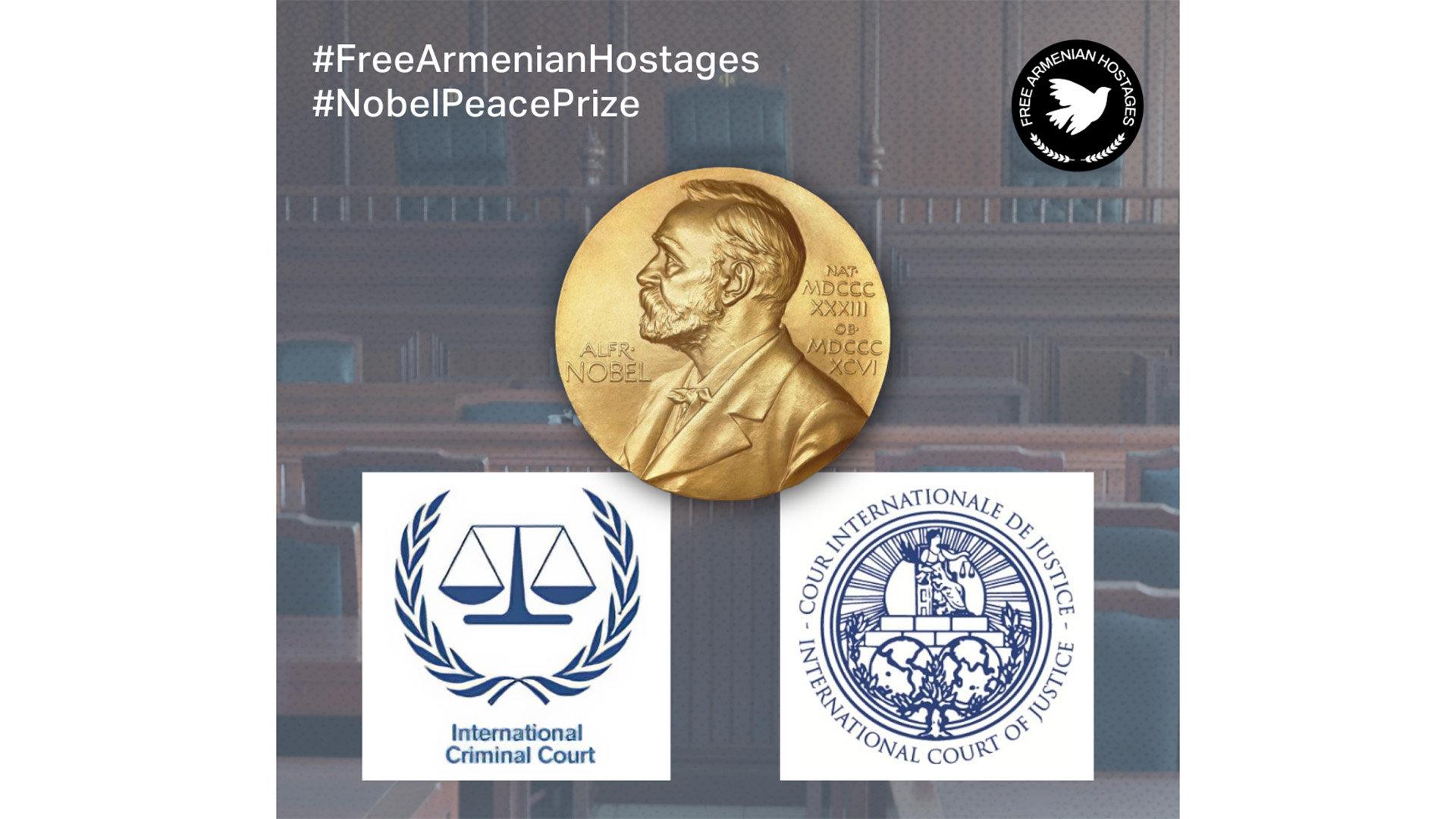
A global civil society initiative advocating for the release of Armenian hostages and the protection of fundamental human rights has launched an international campaign urging eligible Nobel Peace Prize nominators to use their moral authority to reaffirm the primacy of international law and accountability.
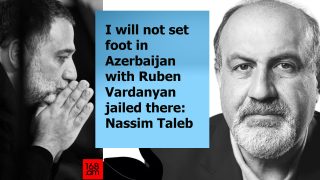
The campaign represents a broad civil society movement working for the release of nineteen Armenian hostages unlawfully detained in Azerbaijani prisons since 2020, following the war and the forced displacement of more than 120,000 Armenians from Artsakh/Nagorno-Karabakh.
According to the initiative, the detainees have been denied fair and transparent trials, restricted access to independent legal counsel, and are held in conditions that raise grave concerns under international law. Organisers stress that their continued imprisonment is not only a humanitarian tragedy, but also an ongoing breach of international legal obligations.
As part of the campaign, letters have been sent to more than 300 verified Nobel Peace Prize nominators worldwide. The outreach invites them to consider using their nominations to defend international justice itself, including through support for the International Criminal Court (ICC) and the International Court of Justice (ICJ).
The initiative explains that it initially considered encouraging nominations for political leaders who might, through peaceful and lawful means, secure the release of hostages, ensure the rights of displaced Armenians, and contribute to the restoration of Armenia’s sovereign territory. After careful reflection, organisers concluded that no individual currently meets the moral threshold such outcomes would require.
Instead, the movement has chosen to highlight what it describes as a deeper and more urgent crisis: the accelerating erosion of respect for international law.
Azerbaijan’s President Ilham Aliyev has recently declared: “There is no such thing as international law in today’s world… Let everyone forget about that. There is strength, there is cooperation, there is alliance, there is mutual support.”
The movement rejects this logic. Without law, power alone dictates outcomes. It refuses to accept a world in which the fate of nations rests on force, ambition, or personal ethics rather than on binding legal principles.
For Armenians, this is not abstract theory — it is lived reality. In 2023, Armenians were besieged, bombed, starved, and forcibly deported from their ancestral homeland in Nagorno-Karabakh. Armenian prisoners remain incarcerated in Baku.
“We refuse to live in a global order where justice is negotiable and impunity prevails,” a campaign representative said. “Not only for Armenia’s sake, but for all smaller and vulnerable nations, the world urgently needs more enforceable law — not less.”
The campaign argues that international legal institutions, though imperfect, under immense political pressure, and at times failing, remain humanity’s last moral firewall against mass violence, ethnic cleansing, and impunity.
“International courts may not possess armies,” the representative added, “but they possess legitimacy, precedent, and the promise that power must ultimately answer to law.”
Organisers emphasise that the campaign’s appeal is not only for Armenians, but for all peoples, communities, and nations who depend on enforceable legal protections when domestic justice fails.
The deadline for submitting nominations for the 2026 Nobel Peace Prize is 31 January 2026.
Further announcements regarding nominator responses and campaign developments are expected in the coming weeks.