

Erdogan’s Denial of Genocide Attracts More Attention to Turkish Mass Crimes
(Second and final part)
Last week, I exposed Turkish Pres. Recep Tayyip Erdogan’s totally false statement: “Our history contains no genocide, no massacres, no oppression, and no colonialism. Throughout our thousands of years of glorious history, there has been only justice and compassion.”
To counter Erdogan’s lies, I presented the first part of the list of crimes committed by the Ottoman Empire and the Republic of Turkey, prepared by The Hellenic Canadian Research Institute.
Here is the second and final list of the Turkish crimes:
Refuting the “No Colonialism” Claim: Modern Settlement and Occupations
Erdoğan’s claim that Turkey’s history contains “no colonialism” is flatly contradicted by the fact that both the Seljuk and Ottoman Empires were founded on territorial conquest, subjugation, and long‑term colonial occupation. Furthermore, the modern Turkish Republic continues to orchestrate ongoing policies of military occupation, resource expropriation, demographic engineering, and state‑directed settlement projects beyond its borders:
— Illegal Occupation and Settler Colonialism in Northern Cyprus (1974–Present)
Following its military invasion of Cyprus in 1974, Ankara established a de facto partition of the island that has now entered its sixth decade. The Turkish government implemented an aggressive campaign of demographic engineering, forcing 170,000-200,000 indigenous Greek Cypriots from their ancestral homes in the north. To permanently alter the territory, Turkey initiated a state-sponsored population transfer, importing tens of thousands of mainland Turkish settlers in violation of the Geneva Convention.
— Neo-Colonialism in Northern Syria (2016–Present)
During the Syrian civil war, the Turkish military launched successive operations to occupy a 30-kilometer-deep buffer zone in northern Syria — a textbook case of transformative military occupation with distinct neo-colonial patterns. Central to this strategy is a systematic process of administrative and cultural erasure, in which Turkey brought local Syrian health, education, and judicial sectors directly under the bureaucratic control of the Hatay governorate inside Turkey. Under this centralized authority, school curricula were forcefully changed to Turkish, the Turkish Lira was introduced as the primary currency, and indigenous Kurdish street names and cultural holidays were strictly banned.
— Military Intervention in Artsakh (2020-2023)
Turkey’s contemporary regional ambitions have heavily shaped the map of the South Caucasus, utilizing modern military force to directly alter local demographics. During the 2020 Nagorno-Karabakh War, Turkey provided decisive, direct military, intelligence, and logistical support to Azerbaijan. Turkish senior military personnel directed operational planning while advanced drones were deployed to obliterate Armenian defenses. The resulting military victory by Baku successfully broke a three decade stalemate, directly paving the way for the total exodus and ethnic cleansing of around 120,000 indigenous Armenians from Artsakh in 2023.
— Bombing of Kurdish Infrastructure in Syria and Iraq (2023)
October 2023: Ankara launched an intense, devastating campaign of air and drone strikes against Kurdish regions in Syria and Iraq, damaging vital humanitarian infrastructure, including water pumping stations, electricity plants, oil refineries, and domestic gas facilities. Highlighting the sheer scale of the offensive, human rights organizations reported over 1,000 individual airstrikes carried out in Iraq by mid-2024.
– Legalized Silence — Article 301 of the Turkish Penal Code
The acknowledgment of the Armenian Genocide is prohibited by the Turkey’s judicial apparatus. The primary legal mechanism used to punish dissidents, journalists, and academics who attempt to discuss these historical atrocities is Article 301 of the Turkish Penal Code.
Article 301 criminalizes the act of publicly “insulting the Turkish Nation, the State of the Republic of Turkey or the Grand National Assembly of Turkey.” Anyone convicted under this law faces a prison sentence ranging from six months to two years. The law has been used aggressively to target individuals who publicly use the word “genocide” or publish works detailing the massacres of minorities. Prominent intellectuals, including Nobel Laureate Orhan Pamuk, were prosecuted under this statute for mentioning the mass killings of Armenians and Kurds. Similarly, peace activist Yannis Vasilis Yaylali was imprisoned for two years for commemorating the victims of the Armenian and Greek genocides.
The danger of this state-sponsored legal targeting was fully realized in the landmark case of Hrant Dink, a prominent Turkish-Armenian journalist. Dink was repeatedly prosecuted and convicted under Article 301 for his writings on the Armenian Genocide. The state’s public legal campaign painted him as a traitor, creating a hostile domestic environment that ultimately culminated in his assassination by an ultranationalist in 2007. Though the law was amended in 2008 to require explicit permission from the Ministry of Justice before filing a case, it remains a powerful tool of state censorship, effectively enforcing a state-approved history through fear.
– The Danger of Erdogan’s Moral Superiority and Selective Moralism
Erdogan, by asserting that Turkey’s past contains “only justice and compassion” effectively, erases the generational trauma and lived experiences of the millions of indigenous minorities who were systematically uprooted from Eastern Thrace, Anatolia, the Armenian Highlands, Cyprus, and the Levant.
– Conclusion
Sweeping claims of historical perfection are the tools of political convenience, not historical reality. The transition of power across the late Ottoman Empire and the Republic of Turkey is an undeniably complex, deeply scarred legacy that requires transparency, open archival access, and the courage to face dark chapters honestly. To truly heal these systemic wounds, Turkey should implement a Truth and Reconciliation process. Such a framework would allow the state to confront past state-sponsored injustices through public testimony, rigorous education, and official accountability, demonstrating that true justice and international credibility cannot be built on state-enforced silence.
For Turkey, achieving genuine moral leadership on the world stage requires abandoning defensive political rhetoric and extending the same compassion it demands for victims abroad to the memory of the victims within its own historical ledger.
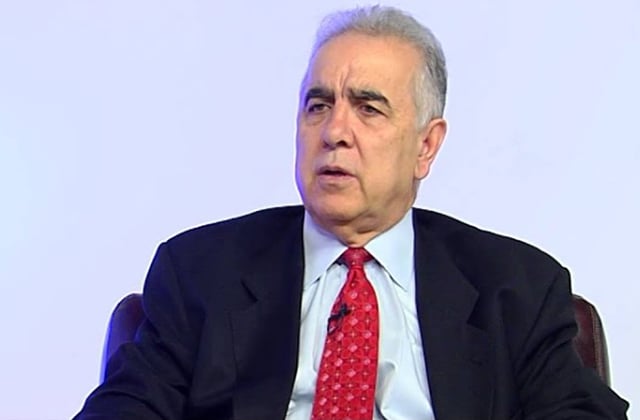
By Harut Sassounian
www.TheCaliforniaCourier.com