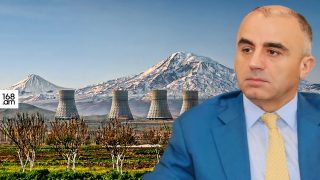


SMALL MODULAR REACTORS: WARNINGS OF THE U.S. FINANCIAL MARKET
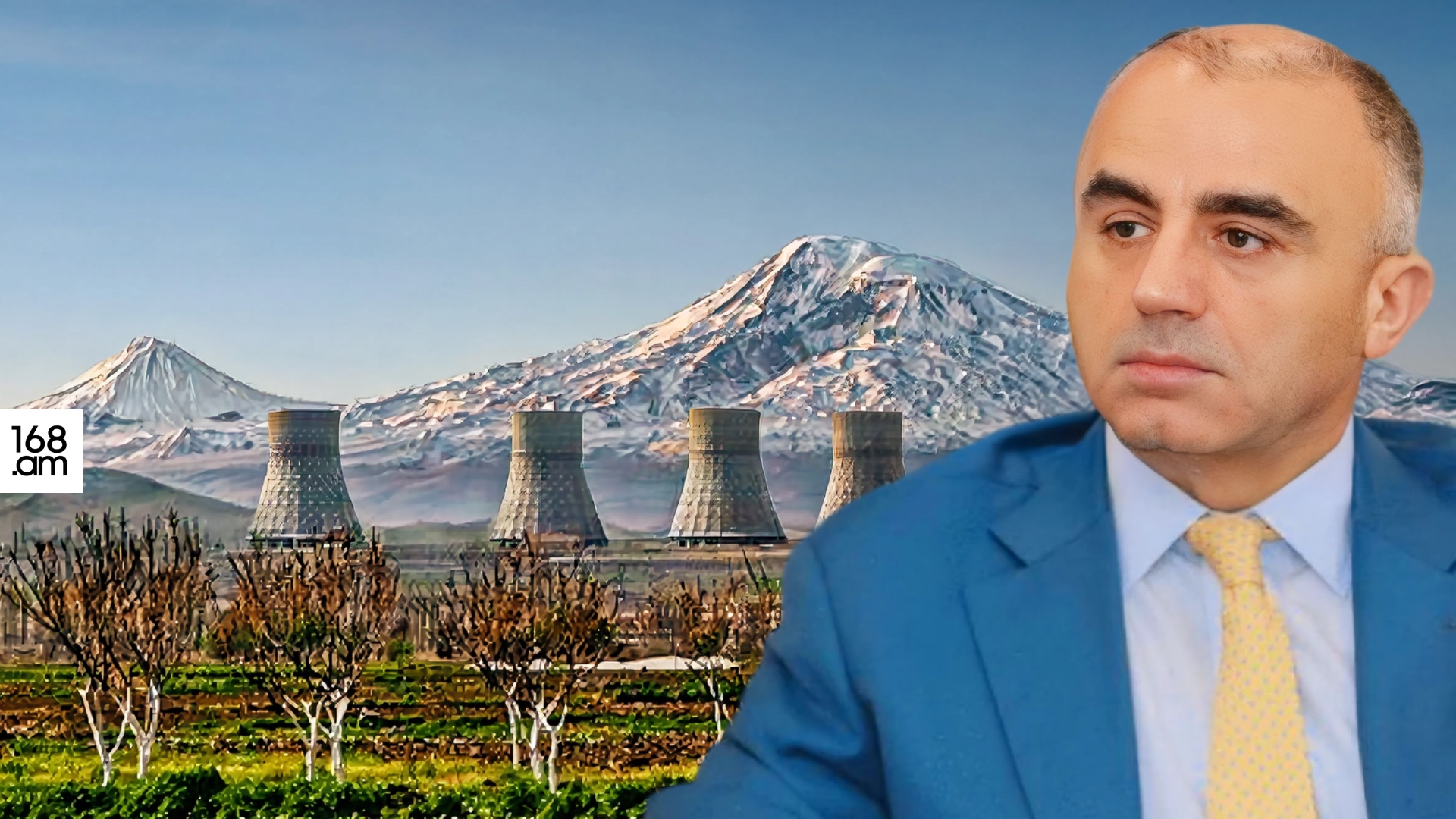
I briefly addressed the subject of small modular reactors (SMRs) in March this year in an article entitled “The Big Problems of a Small Reactor”. It examined the technological and economic uncertainties surrounding such projects, as well as issues related to fuel supply and radioactive waste management.
What prompted me to return to the subject was an article published by the Financial Times on August 18 about the deteriorating financial position of leading U.S. developers of SMRs. According to the report, the expectations surrounding the industry’s development remain far removed from its actual ability to deliver viable projects on an industrial scale. This has direct practical relevance for Armenia, whose government has designated the development of modular nuclear power based on U.S. technology as a priority of national energy policy.
Expectations and Reality
The generating capacity of an SMR generally does not exceed 300 megawatts. Its main components are intended to be manufactured in factories, then transported to and assembled at the operating site, potentially reducing construction time and costs.
These expectations, however, have so far failed to materialize, as reflected in the performance of the relevant companies’ shares on the U.S. stock market. Since reaching their peaks in October 2025, the combined market capitalization of NuScale Power, Nano Nuclear, and Oklo has recently fallen by approximately $30 billion. Experts argue that this is not merely a case of ordinary market volatility, but evidence of a mismatch between expectations surrounding the new technology and the prospects for its commercial deployment.
The companies are operating at a loss and require further investment. Yet the industry’s underlying problems extend beyond financing: technological challenges persist, supply chains remain insufficiently developed, and nuclear fuel supplies are not guaranteed. France’s EDF and Britain’s Rolls-Royce have chosen to base their modular reactor designs on the established technology of large pressurized water reactors. Even that, however, does not guarantee the economic viability of their projects. NuScale is a particularly telling example. Despite regulatory approval of its reactor design in the United States and the allocation of approximately $183 million from a planned $1.36 billion package of federal support, the company’s first major project was terminated.
A Choice Without Comprehensive Expert Assessment
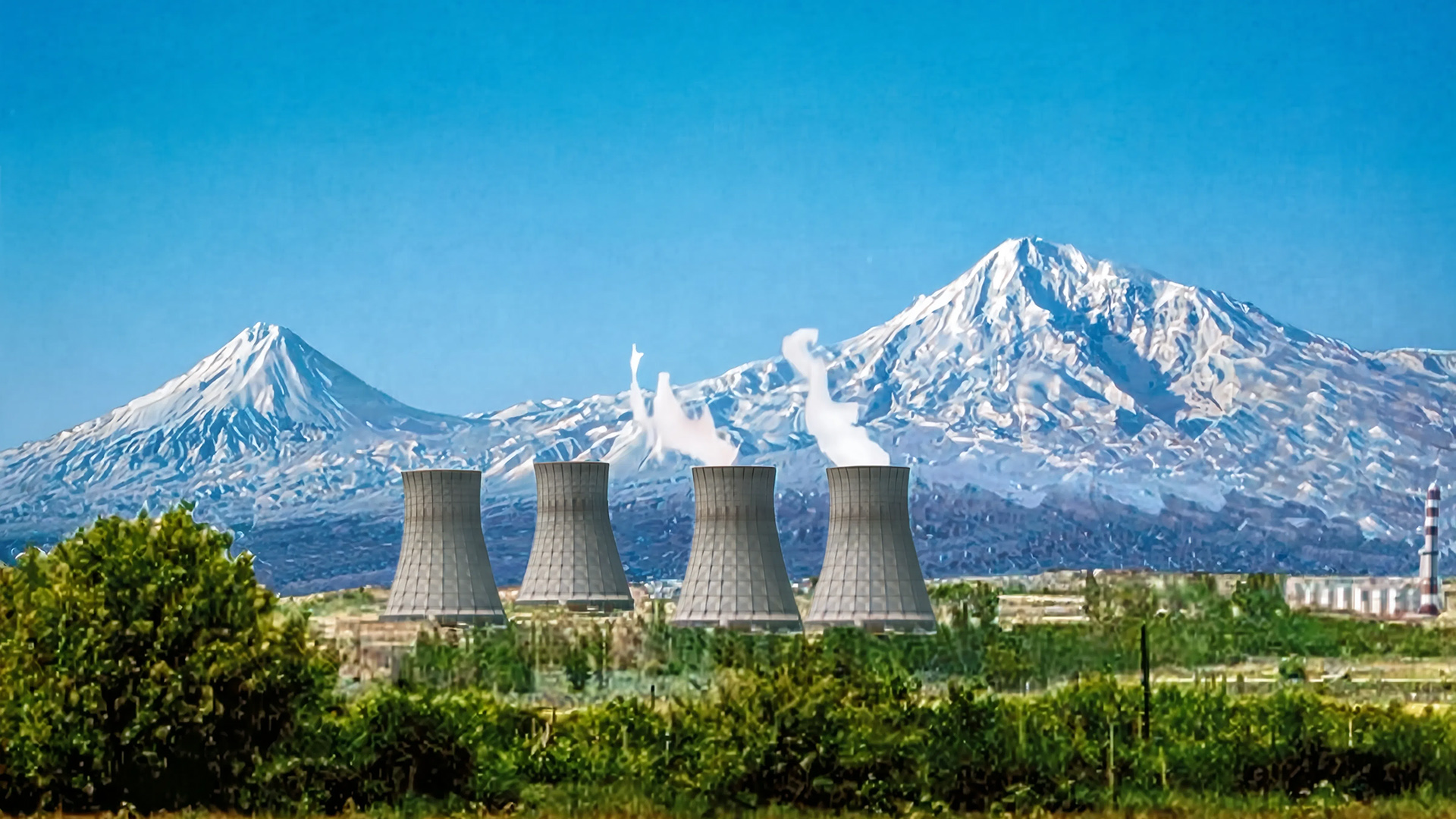
Replacing the Armenian Nuclear Power Plant is a matter of national security and cannot be dictated by technological fashion or shifting political expediency. In 2025, its operating 416 MW unit supplied approximately 30 percent of Armenia’s electricity generation. The Armenian government has decided to extend the plant’s operation through 2036. As the International Atomic Energy Agency (IAEA) has emphasized, however, continued operation is possible only if the necessary technical studies confirm the plant’s safety. Pressure from Turkey and Azerbaijan, both of which seek the plant’s earliest possible closure, is an additional factor.
Against this backdrop, on March 10, 2026, the Armenian government announced its intention to develop modular nuclear power. It is both notable and puzzling that the reactor technology for the future plant has already been presented as a settled choice, even though discussions over a specific design, supplier, contract terms, and construction schedule have yet to conclude. What comparative analysis was used to exclude the other options?
In May this year, the U.S. engineering firm Sargent & Lundy completed a preliminary assessment of options for replacing the Armenian Nuclear Power Plant and identified four U.S. SMR technologies as warranting further consideration. A study conducted by a U.S. company and confined exclusively to U.S. technologies cannot be regarded as an impartial and comprehensive assessment of all possible options, nor can it alone provide a sufficient basis for a strategic decision. Moreover, the public has yet to be informed of the criteria used to select the projects under consideration, their implementation schedules, total costs, or financing terms. Such a decision requires a comprehensive analysis of all available options, including their safety, technological maturity, economic efficiency, and implications for Armenia’s energy system.
Certain official statements also raise questions. According to the minister of territorial administration and infrastructure, the final choice of technology may be postponed until 2027, when modular plants are expected to enter service in several countries. Yet one of the most advanced Western SMR projects is scheduled to bring its first reactor online only in late 2030. The minister’s statement is therefore at least open to question: if none of the projects under consideration is due to enter service by the date he cited, on what empirical evidence does the government intend to base its final decision?
$9 Billion: Expenditure, Not FDI
On February 9, 2026, the prime minister of Armenia and U.S. Vice President J.D. Vance signed a statement announcing the conclusion of negotiations on an agreement for cooperation in the peaceful uses of nuclear energy. Vance referred to potential U.S. exports worth up to $5 billion, as well as a further $4 billion in long-term service contracts. These figures do not represent direct U.S. investment, let alone financial assistance. They reflect the estimated value of U.S. supplies and services: future revenue for U.S. companies, but expenditure for Armenia, whose sources of financing have yet to be determined.
To put the possible project’s scale in perspective, the IMF forecasts Armenia’s GDP at approximately $32 billion this year. The estimated $5 billion cost of the initial supplies is therefore equivalent to roughly 16 percent of the country’s annual GDP. The scale and strategic importance of the project require clear answers. How will it be financed? Who will assume the risk of construction cost overruns? How will the new technology affect electricity tariffs? The assessment must cover the plant’s full life-cycle cost, including design, construction, seismic protection, grid connection, specialist training, fuel supply, and waste management.
It must also be remembered that the presumed lower cost of modular reactors depends on serial production. By purchasing one of the first SMRs, Armenia would be paying not for the benefits of a mature technology, but for the costs and risks of bringing that technology to maturity.
Diversification Without a New Dependency
Supporters of SMRs also justify their deployment as a means of diversifying Armenia’s external partners. A change of supplier, however, does not in itself eliminate dependency. Nuclear power entails long-term commitments involving fuel supply, the transfer of technology and equipment, maintenance, personnel training, and waste management.
A number of prospective SMR designs require high-assay low-enriched uranium (HALEU), for which commercial production infrastructure is still taking shape. The U.S. Department of Energy has warned that its shortages could delay the deployment of new reactors. It is therefore necessary to assess the resilience and effectiveness of the entire system required to deploy and operate the technology. If the full technological cycle depends on a single supplier, the present dependency will merely be replaced by a new one.
Demand from data centers must also be taken into account. According to Firebird, the first Armenian site will require 15 MW of capacity, and the next phase 125 MW. If this demand materializes before a new reactor begins operating, the additional burden will fall on the existing power system. The development of data centers, therefore, requires Armenia to identify reliable sources of power during the transition period in advance and to assess the impact of the additional load on other consumers.
The available evidence does not justify selecting SMRs in advance as a central pillar of Armenia’s energy security. All possible solutions must be subjected to an independent expert assessment insulated from political influence. For countries such as the US, Canada, China, Russia, and South Korea, the failure of an SMR-based project would mean financial losses and delays. For Armenia, a comparable mistake could be devastating: it could produce a shortage of generating capacity, higher tariffs and debt, reduced economic competitiveness, and a new strategic dependency.
Armenia’s energy development strategy must be determined according to clear and verifiable criteria: demonstrated technological maturity and safety; economic viability and affordable tariffs; reliable fuel supply and maintenance; timely commissioning of generating capacity; uninterrupted electricity supply; and reduced external dependence.
Armen Martirosyan
Member of the Supreme Soviet and the National Assembly of RA (1990-99)
Ambassador Extraordinary and Plenipotentiary of RA