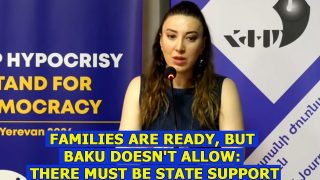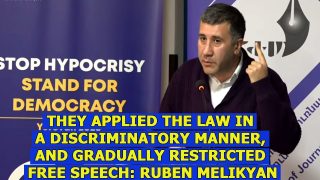


The Purpose, the Sponsor, and the Authors of the Politically Charged, Criminally Framed Campaign against Satik Seyranyan
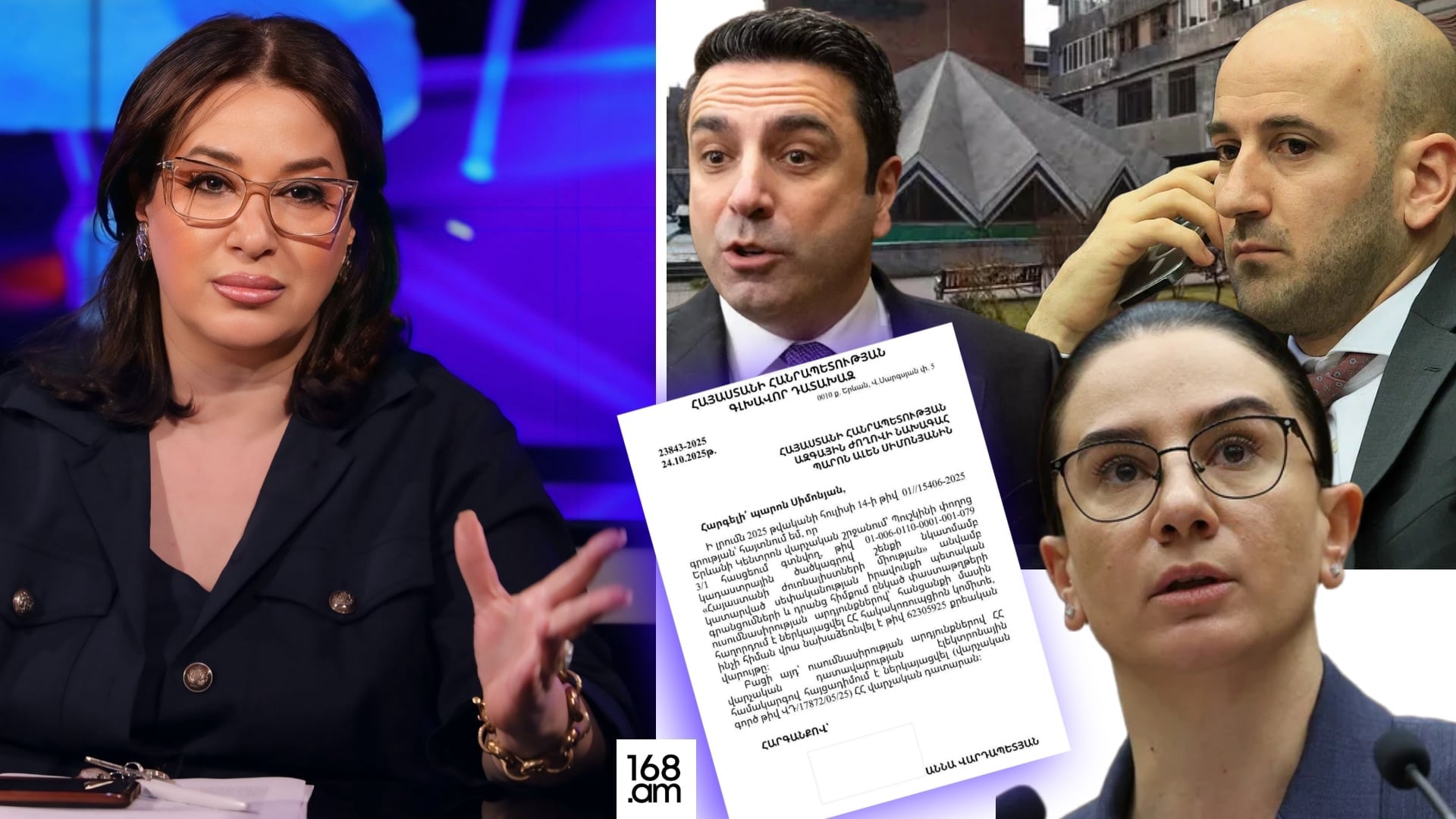
On November 15, a publication on 168.am became the reason for the “Civil Contract” (CC) faction—Nikol Pashinyan’s political force—and its orbit of pro-government propagandists to launch a pack-style attack against Satik Seyranyan, the editor-in-chief and founder of 168.am and President of the Union of Journalists of Armenia (UJA), all triggered by a single SMS.
The topic was an article from a Turkish website claiming that Nikol Pashinyan had agreed to build mosques in Armenia. The article included both the link to the Turkish site and the denial issued by Pashinyan’s spokesperson, Nazeli Baghdasaryan.
For the CC members—who never take offense at being called “Turk,” who crave sponsorship in the arms of Turks—the Turkish publication suddenly seemed offensive. Their outcry claimed the issue was “fake news.” Yet this is the same government that came to power through fake news, built giant armies of trolls solely to insult critics, exploited the fabricated “Robert Abajyan’s grandfather,” and for over seven years circulated false narratives. Suddenly they were “offended.” As if they had not repeatedly denied stories that later became reality. It was obvious to everyone that the ordered attack simply needed a pretext, and that pretext appeared in this form. After all, dear CC members, since you are taking 300,000 Azerbaijanis to Armenia (and now talk of 500,000), where exactly are they going to pray? This, by the way.
Moreover, the head of the Caucasus Muslim Board and Azerbaijan’s spiritual leader, Sheikh-ul-Islam Allahshukur Pashazade — who repeatedly targets the Armenian Apostolic Church and the Catholicos of All Armenians — has many times announced the reactivation of the “Iravan Qaziyat,” expressing confidence that it will resume its activities in Yerevan and Etchmiadzin:
“We do believe that the Western Azerbaijanis will return to the lands of their ancestors. There are many mosques, sacred sites, and cemeteries on these lands. After consultations with the Western Azerbaijan community, we restored the ‘Iravan Qaziyat’ for moral support… “I do believe it will resume its activity in Yerevan and Etchmiadzin,” he said literally. And until now, the only one to respond to him and to Aliyev has been the Armenian Apostolic Church. You haven’t even had the courage to respond.”
Satik Seyranyan, of course, briefly commented on the situation, but an even more noteworthy event had taken place earlier.
CC MP Sisak Gabrielyan, a former journalist, posted on his Facebook page:
“The property of the Union of Journalists must be returned to the state. A lawsuit has already been filed; a criminal case has also been initiated.
The building is in downtown Yerevan, about 2400 sq. m., with a market value of $3–5 million US dollars. I learned from the Prosecutor General’s Office that the structure has processed the letter sent months ago by myself and NA Speaker Alen Simonyan. This is only one of thousands of properties which, in our view, became state property after independence but were unlawfully transferred to various individuals or organizations. Most of the properties have never served the public interest, and representatives of the field have received almost nothing from their lease or sale revenues.
As a result of studying the Union’s documents, the Prosecutor’s Office has filed a crime report with the Anti-Corruption Committee.
The Administrative Court will soon examine the Prosecutor’s Office motion to annul the documents and return the property to the Republic of Armenia.”
Searching for the Article and the “Facts” Behind the Claims
Moreover, responding to journalists’ criticism in his comment section, Gabrielyan wrote:
“The property belonged to the state. It would be interesting to know what journalists received from the tens of millions in annual income.”
Here—this is where things get more interesting. We’ll speak about this shortly, but note the following: the letter to the Prosecutor General’s Office was sent by Gabrielyan and Alen Simonyan; the crime report was filed to the Anti-Corruption Committee by Prosecutor General Anna Vardapetyan; Gabrielyan even posted the scanned document on Facebook, and Simonyan shared it.
From the moment of Gabrielyan’s post, 168.am began inquiring into what criminal case he was referring to and how Satik Seyranyan was connected to it—why, based on a single command and two MPs’ letter, and through the generosity of the Prosecutor General, suddenly dozens of new fake accounts were created to attack her.
Honestly, we could not imagine that the grounds of their public statements would be considered a state, pre-investigative, or other type of secret. In other words, they can defame you, spread AI-generated obscene videos about you, cross every red line—but you are not allowed to know the most basic answer: why?
We sent inquiries to all involved structures. The Prosecutor’s Office forwarded us to the Anti-Corruption Committee; the Committee back to the Prosecutor’s Office.
Finally, the Prosecutor’s Office demanded a formal written inquiry. We submitted it.
We asked:
- What letter did the Prosecutor’s Office act upon, as described by Sisak Gabrielyan?
- What lawsuit has been filed in court?
- What criminal case has been initiated in relation to the Union of Journalists of Armenia?
- What crime report was submitted to the Anti-Corruption Committee of Armenia after reviewing what documents? (Please indicate the article.)
We received a deeply “informative” reply:
“In response to your November 17 inquiry, we inform you that on October 17, 2025, the Anti-Corruption Committee initiated criminal proceedings under Article 441(1) of the Criminal Code. The investigation is ongoing.”
Article 441. It concerns abuse or excess of official powers, causing significant harm.
The use by an official of his/her authority, official powers, or the influence arising from them to the detriment of state or service interests, or the failure to perform official duties, or their improper performance, or the commission of an act that does not stem from his/her powers or goes beyond the scope of those powers, which has caused substantial damage to the rights, freedoms, or lawful interests of an individual or organization, or to the lawful interests of society or the state, is punishable by a fine in the amount of twenty to forty times the base fine, or by deprivation of the right to hold certain positions or engage in certain activities for a term of three to seven years, or by restriction of liberty for a term of one to three years, or by short-term imprisonment for a term of one to two months, or by imprisonment for a term of one to four years.
On the day we received this reply, November 19, we sent another question:
What is the factual basis for initiating the criminal proceedings? Which documents led to the crime report?
They told us they have no further explanation for the media.
The Journalists’ Union of Armenia (JUA) addressed the same questions to the Prosecutor General’s Office, expecting to receive answers to these questions as a party to the proceedings. And we received an even more absurd response.
“The information subject to disclosure regarding the same criminal case was provided on November 19.”
Meaning: the two-line answer given to 168.am also applies to the UJA as a party to the case.
“This was the response that the JUA received from the Prosecutor General’s Office, referring to the reply provided to 168.am.”
“In other words, according to Anna Vardapetyan, 168.am, as a media outlet, cannot receive more than a two-line template response. It turns out, however, that even a party to the case cannot, and when responding, they simply refer to the answer sent to the media.”
We also contacted the Anti-Corruption Committee. They were equally tight-lipped:
“‘In response to your inquiry, we inform you that a criminal proceeding has been initiated at the Anti-Corruption Committee regarding the alleged abuse of official powers. There are no persons with the status of accused in the criminal proceeding,’ was the reply from the Anti-Corruption Committee, which also did not specify what actions were being taken in relation to the case.
In any case… this concludes our account of the communication between us and the law enforcement bodies.”
What we finally managed to learn, that the matter pertains to a privatization issue from the 1990s. To put it bluntly: Gabrielyan, Simonyan, and Vardapetyan are demanding that Artur Nahapetyan answer the question — why the UJA building was given to the Union after the collapse of the USSR.
“Now a question for the CC group: what does Satik Seyranyan have to do with this, which you raised such a commotion as if you had uncovered a century-defining criminal who had privatized the multimillion-dollar JUA building in the center of the city for pennies?”
And Most Important — About the Property
Recalling Gabrielyan’s comment: “The property belonged to the Republic of Armenia. And what have the journalists received from the tens of millions in annual income? It would be interesting to know.”
We are also interested in knowing where this money goes, and into whose pocket.
Has Gabrielyan asked Alen Simonyan?
Had he written one more letter, he would have learned that from her very first days as UJA president — for 7.5 years — Satik Seyranyan has been trying to cancel old contracts and return the Union’s property; that for 7.5 years the UJA has been in various Armenian courts for this purpose; that the property was leased for 40, 70, or more years at token prices by the former UJA president Astghik Gevorgyan, who granted sublease rights; that sub-tenants have been making huge profits at the expense of the Union; that these leases were signed without approval of the UJA Board and with forged signatures; that Astghik Gevorgyan was actually a defendant in a criminal case, with a preventive measure applied — later lifted. (And perhaps Alen Simonyan would have things to say about this too.)
Gabrielyan should look into it — he will certainly learn even more.
And as for Anna Vardapetyan — the chief director and producer of this politically-motivated, criminal-tinted campaign — she should occasionally remember the position she holds, and that today she has it, tomorrow she may not. You have no answers to basic questions, yet far more serious ones will be asked tomorrow.