

Armenia and Azerbaijan Risk Paying the Price For Becoming a U.S. ‘Geopolitical Playground’: Ehsan Movahedian
During 168TV’s program “Review,” we spoke with international relations expert, lecturer, and PhD, Ehsan Movahedian.
-How would you assess the current political and socio-economic situation within Iran?
-The political situation in Iran is moving towards stability. After a period of instability and unrest in Iran, on Wednesday, about a third of Iranians participated in a march to mark the anniversary of the victory of the Islamic Revolution of Iran, which was an unprecedented record. It should be noted that the peaceful protests of the people due to the bad economic conditions were turned into chaos by the intervention of a number of armed terrorists, and these terrorists, supported by the United States, Israel, the Emirates, Iraqi Kurdistan, and Baku, killed a number of ordinary people and even Iranian security forces. Therefore, it should not be assumed that there was a peaceful protest in Iran and that the Iranian government had dealt with ordinary people. According to the Leader of the Islamic Republic of Iran, Ayatollah Khamenei, these people were seeking a civil war and then a coup in Iran and the overthrow of the Islamic Republic of Iran. As a result, Iran would have been divided. The desire to disintegrate Iran has been emphasized not only in the Baku media, but also in the American and British media, and they intend to destroy Iran first and then the other West Asian countries such as Turkey, Saudi Arabia, and Pakistan that pose a problem for Israel’s hegemony in the Middle East. The Israelis explicitly mentioned this issue in their media.
In the economic sphere, the country is facing many problems such as devaluation of the rial, inflation, economic stagnation and unemployment. The reasons for this are severe economic sanctions by the United States, internal mismanagement, excessive reliance on dollars and euros for trade and purchasing goods, and abuse of countries such as the UAE, which are considered Iran’s way to circumvent sanctions. The government has taken steps to deal with corrupt managers and people who take advantage of people’s economic problems to earn money. It is subsidizing some essential goods such as rice, meat, etc. and is trying to reduce dependence on the dollar and make more use of the economic capacities of friendly powers such as Russia and China.
-What realistic expectations can be placed on the Iran–U.S. negotiations, and what are Iran’s key priorities in this process?
-I do not think that negotiations with the US will be successful. The demands of this country are illogical and ambitious. Zero enrichment is not possible for Iran. Because Iran uses this technology in the fields of medicine, medicine, agriculture, various industries, and scientific research. By insisting on negotiations on the construction of ballistic missiles or not supporting resistance groups in the region, the US wants to reduce Iran’s defense capabilities so that it can safely attack Iran and destroy the country. Therefore, accepting the US’s ambitious demands will lead to Iran’s destruction. The experience of other countries such as Libya and Venezuela is also before Iran. They accepted all the demands of the West and made themselves defenseless and disarmed, and as a result, they were attacked and weakened or disintegrated.
If the US demands a reduction in Iran’s enrichment, it is logical, but the rest of the demands are unacceptable and will lead to Iran’s destruction. It should be noted that Israel is also putting heavy pressure on the US to fail the negotiations. If the US resists Israeli pressure and stops being too demanding and lifts sanctions on Iran, a compromise is possible, but if it tries to impose demands unilaterally on Iran by bullying and not giving Iran any concessions, no sane person will accept this. The possibility of conflict is high before the start of the US congressional elections. However, if conflict does not occur in these two weeks, its probability will decrease and will increase again from late summer next year.
-At present, how probable do you consider the risk of a direct military confrontation between Iran and the United States?
-As I said, the US and Israel are currently seeking a military conflict with Iran, but Iran’s display of power in the Persian Gulf and extensive military and intelligence cooperation between Iran, China and Russia have prevented them from implementing their dangerous plans for the time being. The US plan is that with more economic pressure, the Iranian people will become angry again and take to the streets to protest. In this situation, the terrorists supported by the US and Israel will become active again for a coup and civil war in Iran and will try to kill ordinary people and security forces. Then the Western-backed media will blame these bitter events on the Iranian government and accuse it of violating human rights. By doing this, the West claims that it has the right to intervene militarily in Iran to help the Iranian people, and then the war will begin. We have to wait and see how successful this scenario will be.
-It has been suggested that Iran declined Turkey’s proposal to host Iran–U.S. talks in Istanbul, viewing it as a potential “trap.” What factors explain Tehran’s lack of confidence in Ankara as a mediator?
-Turkey is a serious rival of Iran in the region, and its concern about the fall of the Islamic Republic is not due to its friendship with Iran. Turkey is worried that it will become too weak against the coalition of Israel, Cyprus, and Greece. Otherwise, Turkey has cooperated with Israel in Syria in recent years and expelled Iran from this country and has worked hard to hit the resistance forces and Iran’s allies in Iraq, Syria, Lebanon, etc. Turkey has also acted against the interests of Iran and Russia in the Caucasus on the orders of NATO and the US, and wants to surround Iran by creating a fake Zangezur corridor in cooperation with Aliyev. In these circumstances, it is obvious that Iran cannot trust Turkey as a place to hold such sensitive negotiations. In contrast, Oman is a country that has always created a calm and secure atmosphere for Iranian negotiations. American, Israeli, and British spies have a strong presence in Turkey, and the possibility of media controversies and demonstrations by Iranian opponents in front of the hotel where the negotiations are held and creating an atmosphere against Iran is high. However, Oman is a safe and peaceful country in a convenient location where Iranian opponents and anti-Iranian media are not very present. Oman is also a safe place for Iran to meet and coordinate with representatives of Yemeni and Iraqi resistance groups, etc., and Oman does not take action against these groups like Turkey. Therefore, it was logical for Oman to host these talks. If this were done in Turkey, they would have tried to launch a media show with the cooperation of some Arab countries and put severe pressure on Iran to accept the demands of the West. But Oman did not do this and respects Iran’s demands and opinions. Therefore, Iran made the right decision and did not allow Turkey to abuse it.
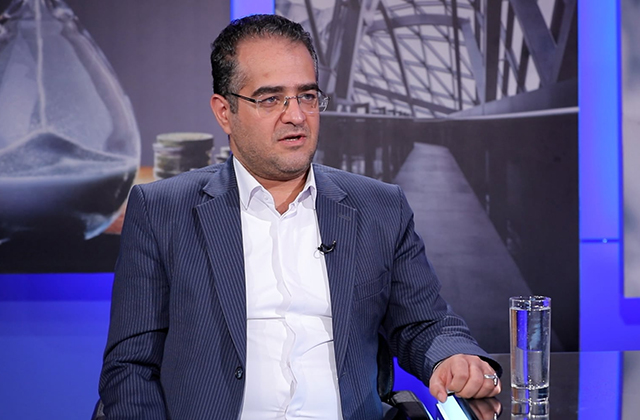
-How is the close military cooperation between Azerbaijan and Israel perceived within Iran’s security and strategic circles?
-The military and security involvement of the Aliyev regime in Israel’s aggression against Iran and Baku’s cooperation with Israeli and American intelligence and espionage agencies to create chaos and insecurity in Iran have been proven. Iranian television broadcast the confessions of a young man who had received orders from the joint Israeli-Baku cyber center. Based on these orders, he had acted to set fires and block streets, attack some government centers, and spread anti-Iranian propaganda on social networks. Last week, the Iranian Minister of Defense met with Aliyev during a trip to Baku. During this trip, he was warned about Baku’s possible cooperation with Israel in the next possible war. Iran has publicly warned all neighboring countries that if they provide centers on their territory to the United States and Israel in the next war, Iran will attack and destroy those centers. In the previous war, Israel used Baku soil to fly drones and fighter jets towards Iran and bomb some centers. Israel also used Baku soil for military exercises and to prepare for an attack on Iranian radar centers. This time, if Aliyev repeats his anti-Iranian actions, he will receive strong and painful responses and his oil income will be at risk.
-Are Israeli-linked infrastructures operating in Azerbaijan regarded in Tehran as a direct threat to Iran’s national security?
-Iran considers all the infrastructure created in Baku by Israel a treat for its own national security. These centers include some military airports near the Iranian borders, the joint Baku-Israeli cyber cooperation center, and some drone production factories and some other military equipment.
-What debates are currently taking place in Iran regarding TRIPP? Are concerns about security risks prevailing over the prospect of new economic opportunities?
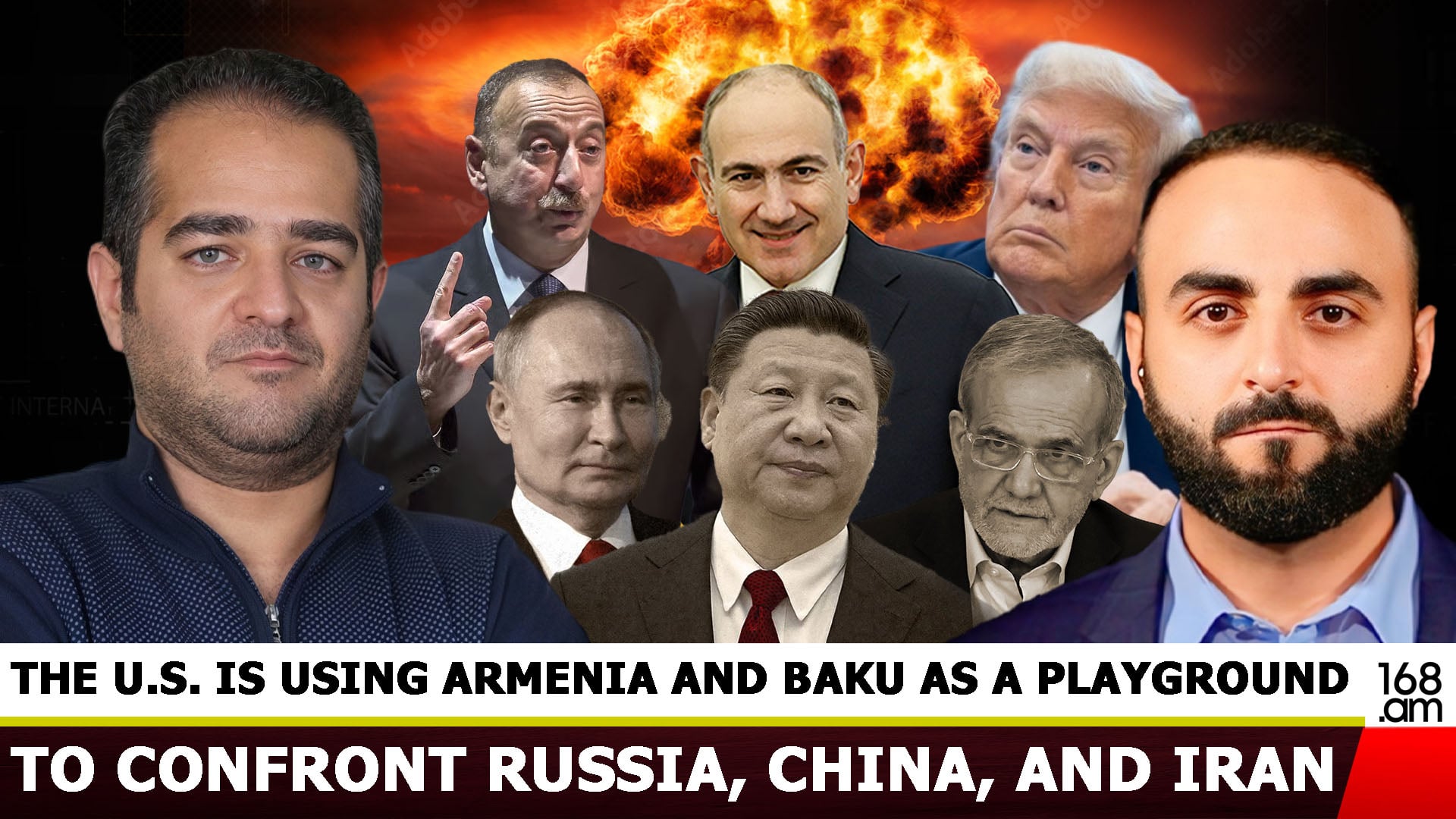
-From Iran’s perspective, the Trump route is primarily a security threat, not an economic one. The Trump route is a continuation of the fake Zangezur corridor being built by Turkey and Baku. Pashinyan showed the route of this project during his meeting with Vance. It was clearly stated that the Trump route would pass through the Iranian-Armenian border, and if it were created, the common Iranian-Armenian border would be destroyed. In the 90s, CIA spy Paul Goebel intended to implement this plan, which did not come to fruition due to the cooperation of Iran and Armenia. Now, Trump wants to create this plan again so that both Iran and Armenia would be surrounded and weakened among their enemies. The US government, which no longer has access to China’s important mineral resources, intends to plunder the uranium and mines of Armenia and Central Asia by creating the Trump route, have a military presence in the Caspian Sea, and threatens the national security and territorial integrity of Iran, Russia, and China. U.S believes Armenia must join the Turkic States Organization and lose its independent Armenian identity so that the US plans can be implemented and then Iran will be weakened. Even the drones sold to Armenia are for surveillance and security patrols on the Trump route, not to help maintain Armenia’s security against Baku and Turkey. In fact, the US has turned Armenia and Baku into its playground to confront Russia, China, and Iran, and the people of these countries may pay the price for this mistake of Aliyev and Pashinyan in the future.
-Do Iran’s established red lines concerning the Armenian–Iranian border remain unchanged?
-Iran’s red lines regarding the fake Zangezur corridor and the Trump route are fixed. Iran considers the goal of these actions to be to create geopolitical changes to its detriment in the Caucasus region. Therefore, it opposes any action that changes the territorial integrity of the countries in the region and the current borders. The creation of this corridor will in practice result in the presence of the United States, Israel, and NATO forces on Iran’s borders. Therefore, Iran has made a clear statement on this matter. The last time, Mr. Velayati, advisor to the Iranian Leader on international affairs, clearly announced Iran’s opposition to Trump’s path in a meeting with the Armenian ambassador in Tehran, and the Foreign Ministry spokesman also said about Vance’s visit to the Caucasus: Baku and Yerevan are aware of our positions on transportation routes. Any action that harms the geopolitics of the region is not in the interest of regional security.
-Iran’s ambassador in Armenia stated that a perception is emerging in Tehran that Armenia could be turning into a platform for forces hostile to Iran. How should this statement be interpreted, and has the traditionally strong trust in Armenian–Iranian relations been affected by Armenia’s expanding cooperation with the West?
Iran and Armenia have many common interests, and the actions of the current Armenian government in welcoming Trump’s path and increasing the presence of Americans in this country harm Armenia itself. Because the United States does not care about Armenia’s interests and preserving its independent identity against the invasion of Baku and Turkey. Vance visited the Armenian Genocide Memorial during his visit to Armenia. But he quickly deleted the message sent in this regard from the X network. In a message that was later replaced by another person with very low responsibility in this regard on X, the phrase Armenian genocide was also deleted. The Armenian genocide is one of the pillars of Armenian identity, and any weakening of this collective memory contributes to the destruction of Armenia.
The United States did not help Armenia during the Karabakh war and was only a spectator of the fall of Artsakh and the killing and displacement of hundreds of thousands of Armenians. Therefore, one should not trust the claims of the United States. In recent years, Iran has tried to help maintain the security and territorial integrity of Armenia by holding military maneuvers on the borders of Armenia and Baku, warning Aliyev and Erdogan, and expanding economic cooperation with Armenia. Therefore, the Armenian government must also take measures that will give Iran sufficient motivation to continue supporting Armenia. Releasing some people for repeated demonstrations in front of the Iranian embassy in Yerevan, insulting Iranian officials, burning the Quran, the holy book of Muslims, and increasing security and intelligence cooperation with the United States and Israel will reduce Iran’s trust in the Armenian government. The decision in this regard is the responsibility of the Pashinyan government, and the Iranian government will make the necessary decisions in line with the actions of the Pashinyan government in the coming months.
By Razmik Martirsoyan