Recalling that today marks the end of the Somme offensive in 1916, which caused hundreds of thousands of casualties in the British, French and German armies, War Veteran noted that after that in fact the United States was dragged into the First World War, and in Colonel Macgregor’s judgement, this was the beginning of everything goes wrong in the History of European Civilization.
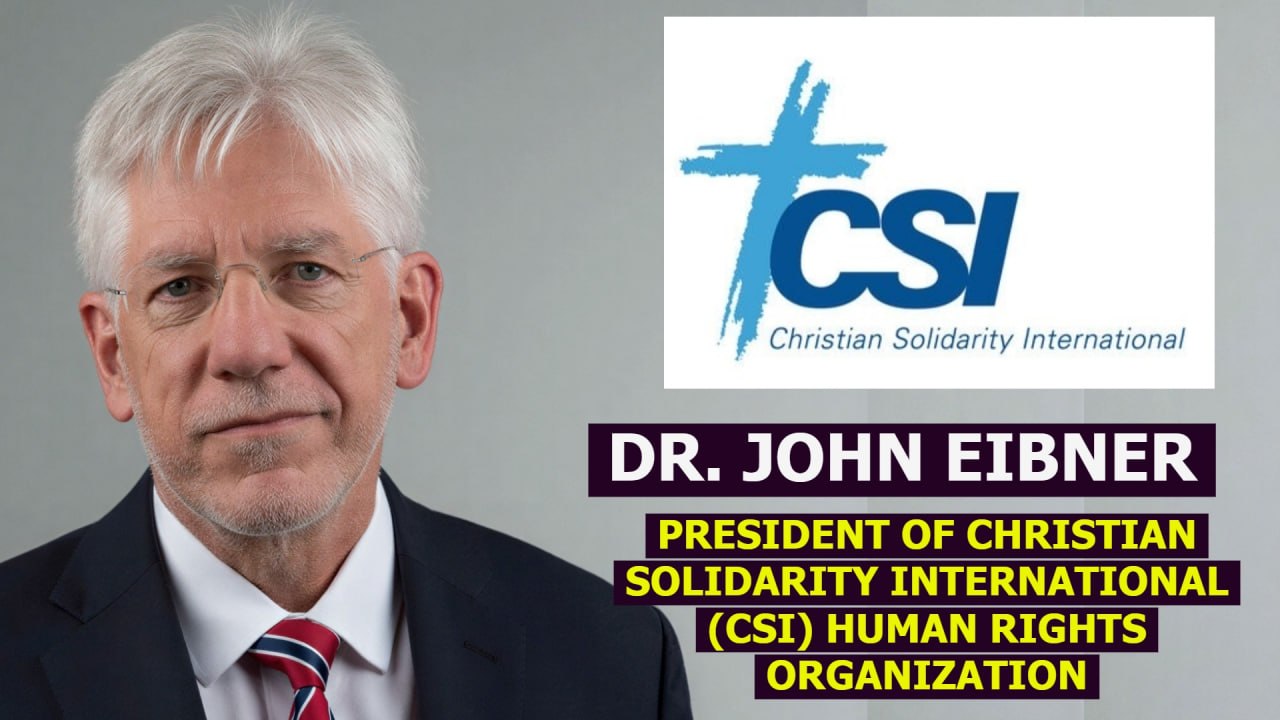
The Christian Solidarity International (CSI) human rights organization is deeply concerned about the human rights situation in Armenia regarding the crisis in Church-State relations and the arrests of the high-ranking clerics and supporters of the Armenian Apostolic Holy Church. In an interview with “168 Hours”
Arthur Khachikian, Stanford University PhD Graduate in Political Science, USA, discussed the agreement signed in Washington on August 8, and concerns about Armenia’s security with James W. Carden, editor and columnist at The American Conservative, former U.S. State Department adviser, and a senior advisor to the American Committee on the US-Russia Accord (ACURA)
A conversation with Dr. Hall Gardner, Professor Emeritus of International Politics at the American University in Paris, and Arthur Khachikian, a Stanford PhD in International Relations.
Dr. Pietro Shakarian, lecturer in history at the American University of Armenia, published a new book called “Anastas Mikoyan: An Armenian Reformer in Khrushchev’s Kremlin.” During an interview with 168 Hours, he talked about his book as well as some geopolitical issues.
168 Hours continues its collaboration with the Global Campus of Human Rights. In this episode, we spoke with Dr. Michael Hayes, Academic Director of the APMA program and member of the Global Campus Council.
In an interview with 168 Hours, Manishak Baghdasaryan from Armenia and Clara Roque from Mexico talked about their academic journey at the University of California, San Diego, and shared their thoughts on education and student life abroad.
“Peaceful relations between Armenia and Azerbaijan are a good thing, the role of the USA here is problematic, because the US is not part of the South Caucasus region,” in the interview with 168 Hours said Professor Jeffrey Sachs, renowned economist, professor, and Director of the Center for Sustainable Development at Columbia University’s Earth Institute.
During the interview with 168 Hours, he mentioned that one type of American ambassador wants to represent Washington, even if it means making the host nation upset, another type of Ambassador will try to ingratiate himself, especially with the dictatorships in the world, thinking that if they have a smooth relationship with the president of the country in which they’re serving, that means that they are a good ambassador.
“In order also to reach out to peace, we have to make a distinction between freedom of expression deprivation in a national framework or in an international framework, a national framework, it depends, always by the government. So it’s a decision what kind of behaviors or statements are denied and what not. So what we can do in this case is to create dialog with institutions and also create dialog between international organizations and governments, or between governments.”