

Armenia Joins European Debate on the Future of Journalism at the Centre for Media Pluralism and Media Freedom in Florence
Media professionals and experts examine the impact of artificial intelligence, digital platforms, and evolving regulatory frameworks on journalism’s democratic role
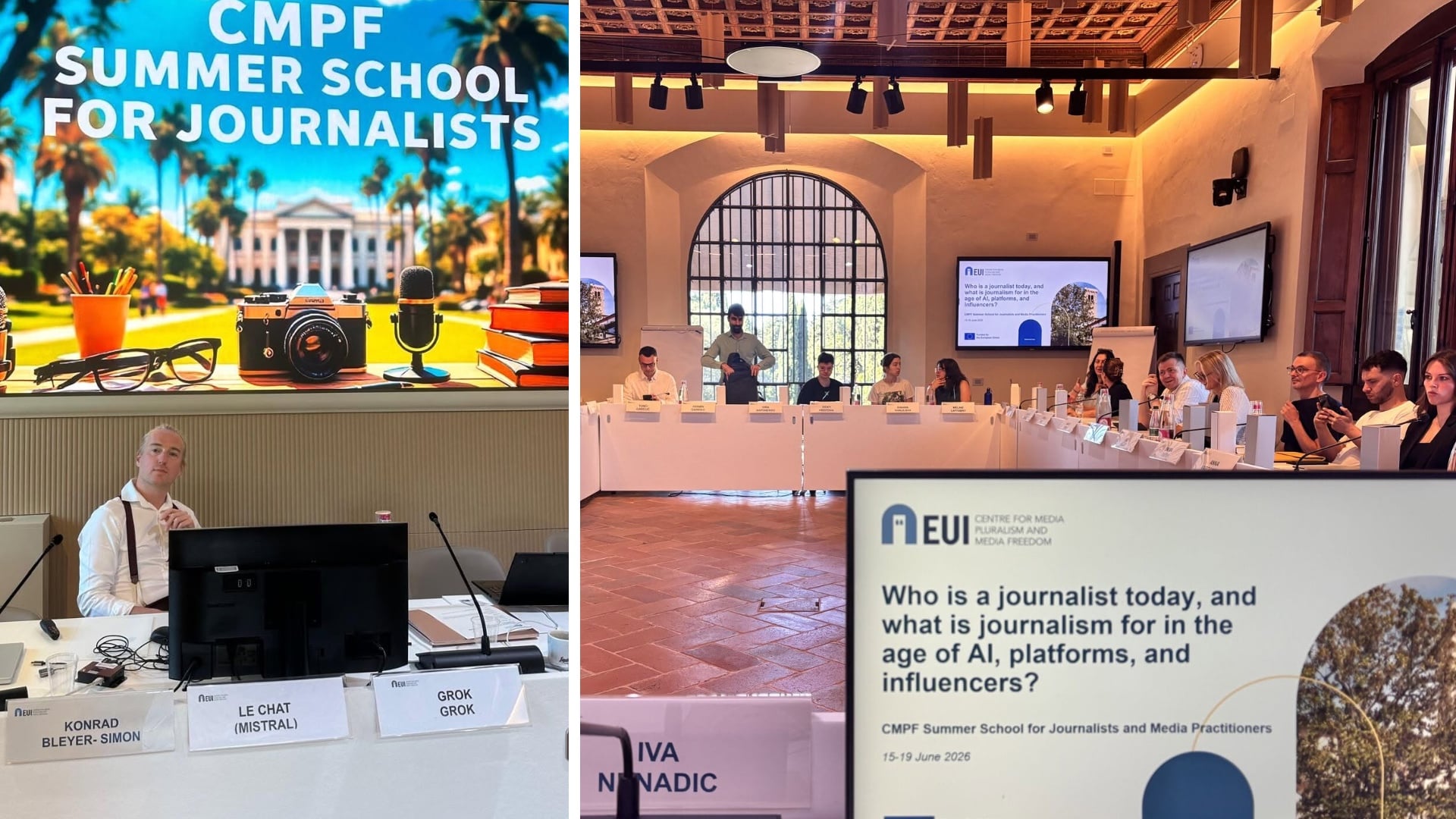
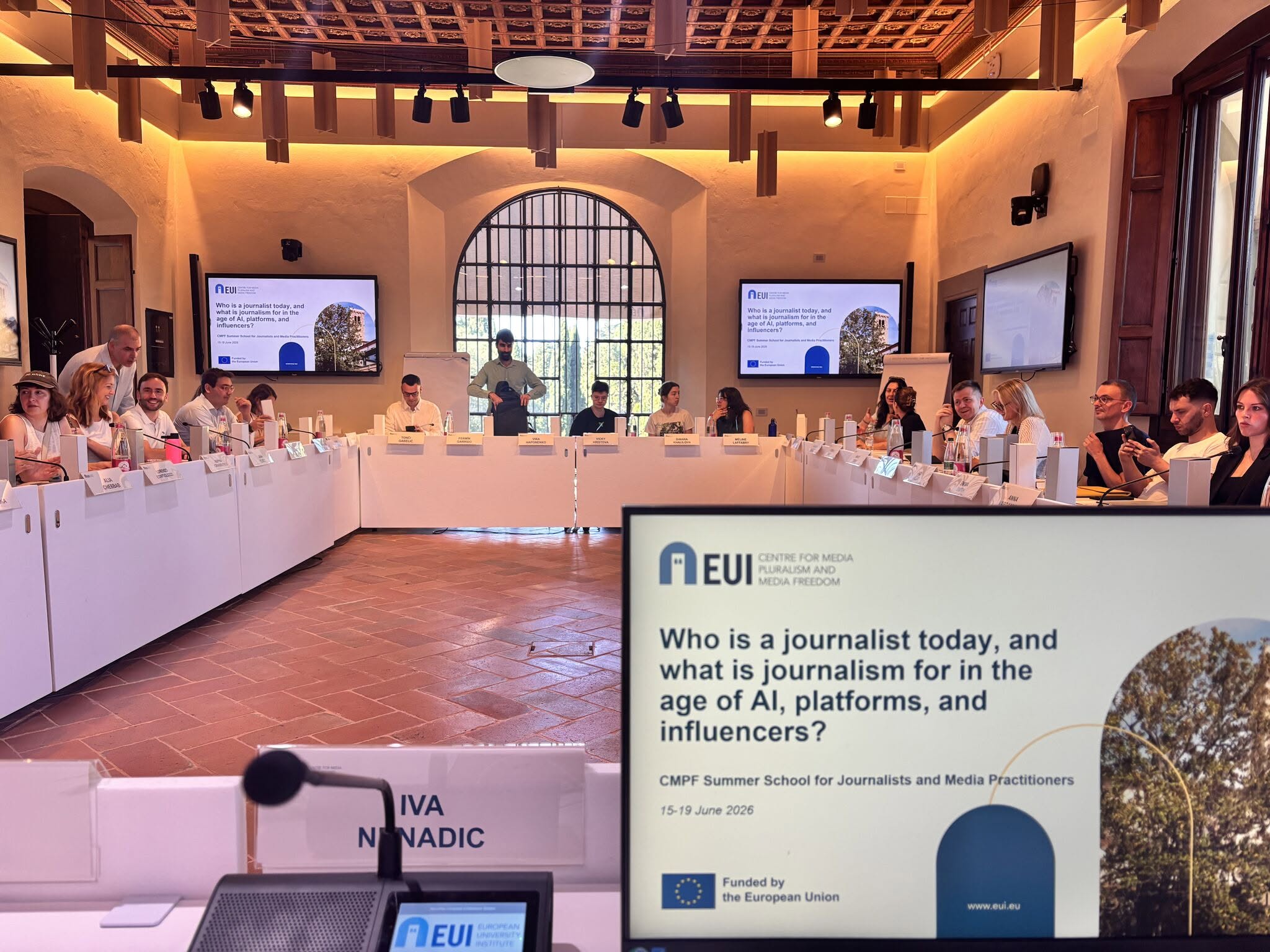
FLORENCE, Italy, June 15, 2026 — Media professionals, academics, policymakers, and journalists from across Europe and beyond gathered in Florence this week for the 2026 Summer School for Journalists and Media Practitioners, an international programme organized by the Centre for Media Pluralism and Media Freedom (CMPF) at the European University Institute (EUI). Armenia was among the invited countries participating in the five-day event, held from June 15 to 19.
Now in its 14th edition, the Summer School has become one of Europe’s leading forums for critical reflection on the future of journalism. This year’s programme focuses on a question increasingly shaping media policy debates worldwide: Who is a journalist today, and what role should journalism play in a digital environment increasingly dominated by artificial intelligence, online platforms, and social media influencers?
The initiative is co-funded by the European Union through the Monitoring Media Pluralism in the European Union project and organized in collaboration with the EUI’s Max Weber Programme, with additional support from the Robert Schuman Centre for Advanced Studies.
Redefining Journalism in a Fragmented Information Ecosystem
At the centre of discussions is the growing uncertainty surrounding the very definition of journalism. The rise of content creators, influencers, citizen reporters, and AI-generated information has challenged traditional assumptions about who produces news and what standards distinguish journalism from other forms of communication.
Participants are examining whether professional journalism should continue to be defined primarily through institutional affiliation, editorial oversight, and adherence to ethical standards, or whether new forms of information production require broader and more inclusive definitions.
The debate carries significant implications. Legal protections, access to information, media funding mechanisms, and press freedom safeguards often depend on how journalism is defined. As a result, the question is no longer merely academic but increasingly political and regulatory.
“Journalism remains one of the foundations of democratic accountability,” participants noted during opening discussions. “The challenge is determining how those democratic functions can be preserved while the media environment undergoes profound transformation.”
Creative Disruption or Creative Destruction?
A key analytical theme running throughout the programme is whether technological change represents creative disruption or creative destruction for journalism.
On one hand, digital platforms and AI technologies have expanded access to information, lowered barriers to publication, and enabled new forms of storytelling. Independent journalists and smaller media outlets can reach audiences previously inaccessible through traditional channels.
On the other hand, participants highlighted concerns that platform-driven information systems often prioritize engagement metrics over accuracy and public value. Algorithms may amplify sensational content, contribute to political polarization, and fragment public discourse into isolated information bubbles.
Generative AI presents an additional challenge. While AI tools can assist journalists in research, translation, and content production, they also raise concerns about misinformation, synthetic content, copyright protection, and the potential erosion of public trust in authentic reporting.
The central question emerging from these discussions is whether technological innovation is strengthening journalism’s democratic mission or undermining its capacity to provide reliable, verified information to citizens.
Who Pays for Journalism?
The economic sustainability of journalism remains another major focus of the Summer School.
As advertising revenues continue shifting toward global technology platforms, traditional news organizations face mounting financial pressure. Local and regional media outlets have been particularly affected, raising concerns about the long-term viability of independent journalism.
Participants are exploring competing models for sustaining quality journalism, including public funding mechanisms, subscription-based business models, philanthropic support, platform contributions, and hybrid approaches.
The debate reflects a broader policy challenge facing democratic societies: if journalism serves as a public good essential for informed citizenship, should governments, platforms, private foundations, or audiences bear responsibility for its financing? Equally important is ensuring that financial support does not compromise editorial independence.
Testing Europe’s New Regulatory Framework
The Florence programme also serves as a platform for assessing the effectiveness of Europe’s emerging digital governance framework.
Participants are examining several landmark regulatory instruments, including the Digital Services Act (DSA), the European Media Freedom Act (EMFA), the Copyright Directive, and the AI Act.
Together, these regulations represent the European Union’s most ambitious attempt to address the growing influence of digital platforms and artificial intelligence on public communication.
Supporters argue that these measures improve transparency, protect media pluralism, and create safeguards against harmful online practices. Critics, however, question whether regulation can keep pace with rapidly evolving technologies and whether enforcement mechanisms will prove sufficiently effective.
The Summer School’s discussions suggest that regulation alone may not solve journalism’s structural challenges but will likely play a critical role in shaping the future balance between public interest, technological innovation, and market power.
The Geopolitical Dimension
Beyond technology and economics, the programme highlights the growing geopolitical dimensions of media governance.
Relations between the European Union and the United States increasingly influence debates surrounding platform regulation, data governance, competition policy, and AI oversight. As most major technology companies are headquartered in the United States, European regulatory initiatives often have international implications.
Participants are analyzing how these transatlantic tensions affect global standards for content moderation, media freedom, platform accountability, and digital rights. The discussions reflect broader concerns that the future of journalism will be shaped not only by technological developments but also by geopolitical competition over the governance of information ecosystems.
Armenia’s Participation Reflects Global Relevance of Media Transformation
The inclusion of Armenia among participating countries underscores the gloal significance of the issues under discussion.
Like many countries navigating digital transformation, Armenia faces challenges related to media sustainability, disinformation, platform influence, and the evolving role of journalists in democratic society. Participation in international forums such as the CMPF Summer School provides opportunities for knowledge exchange and comparative analysis of policy responses.
As media systems worldwide confront similar pressures, the Florence gathering highlights the increasingly interconnected nature of debates surrounding journalism, technology, and democracy.
Preserving Journalism’s Democratic Function
While participants approach the future of journalism from diverse professional, academic, and national perspectives, one conclusion appears to unite the discussions: the democratic value of journalism remains as important as ever.
The challenge is not simply preserving traditional media institutions but identifying which core principles—accuracy, verification, accountability, editorial independence, and service to the public interest—must be protected regardless of how technology reshapes the information landscape.
As artificial intelligence, digital platforms, and new information actors continue to transform public communication, the Florence Summer School aims to equip journalists and media practitioners with the analytical tools necessary to navigate an increasingly complex media environment while safeguarding journalism’s essential democratic role.
Contributed by Anna Vardanyan
Florence, Italy