

Business Seizures Are Becoming Armenia’s New Normal

The campaign to strip political opponents of their assets is gaining new momentum in Armenia. It is no longer a secret that, regardless of the legal justifications offered, the country is witnessing a politically motivated crackdown orchestrated by the authorities, carried out through the confiscation of private property, the takeover of businesses, and the redistribution of wealth.
The right to property—a fundamental right protected across the democratic world—is under serious threat in Armenia. Businesses, including large enterprises, are no longer safeguarded against arbitrary government action. Without due process or a court ruling, the head of government can publicly announce the confiscation of an individual’s assets, and within moments, the entire state apparatus is mobilized to execute that directive. The rule of law and legal safeguards appear to carry little weight.
This amounts to an overt campaign of intimidation against the business community. Regardless of how it is framed or justified, suppressing businesses and confiscating private assets will impose a heavy cost on both the state and the economy. The time will eventually come when those responsible will have to answer for these actions and pay the price for the damage inflicted.
There is hardly any need to elaborate on the risks this poses to Armenia’s investment climate and broader economic environment.
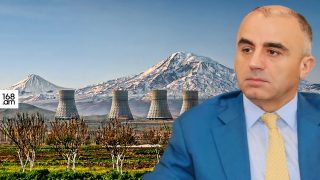
Following the elections, the government appears to be moving swiftly to complete the process of expropriating the Electric Networks of Armenia (ENA), owned by Samvel Karapetyan. A draft decision has been introduced to designate 100 percent of the company’s shares as serving an overriding public interest.
Once the three-month negotiation period expired without the anticipated talks taking place, it became clear that the government intended to proceed by invoking the doctrine of public interest to seize the owner’s assets. Whatever legal arguments may ultimately be advanced, the political nature of this process is evident. As part of what critics describe as a political vendetta, the authorities first took control of the company’s management, then revoked its license, deliberately undermined the planned negotiations, and are now preparing to finalize the expropriation by declaring the company subject to overriding public interest.
The government justified its decision to designate the Electric Networks of Armenia (ENA) as serving an overriding public interest by arguing that, under the current circumstances, it is necessary to ensure the uninterrupted supply of electricity to the population, guarantee the normal operation of social and strategic facilities, and maintain the stability of the country’s energy system.
According to the draft decision, “Electricity distribution networks, by their very nature, constitute strategic infrastructure, and any disruption to their operation could result in widespread social, economic, and security consequences.”
Yet ENA has operated as a privately owned company for more than a decade. Only now has the government concluded that its strategic significance warrants declaring it an asset of overriding public interest in order to guarantee reliable electricity supply and preserve energy security. This reasoning suggests that consumers had previously been deprived of uninterrupted electricity service and that the country’s energy system had lacked stability until the government’s appointed administrator assumed control. Official data, however, tell a different story. They indicate that since the government-appointed manager took over, key performance targets designed to ensure reliable and stable electricity supply have, in fact, deteriorated.
Targets related to both the quality of electricity service and the frequency of power outages have reportedly been missed. Yet no one has been held accountable. Ironically, these same concerns were previously used to justify, through coordinated intervention by various state institutions, stripping the owner of managerial control and ultimately revoking the company’s operating license.
Government officials now argue that power outages have declined in recent months. But who can independently verify those claims? The institutional checks and balances that once existed have largely disappeared, with the government-appointed management and the Public Services Regulatory Commission now perceived as acting in concert. Under such circumstances, critics argue that virtually any performance indicator can be manipulated to justify what they regard as an unlawful process of depriving the owner of private property.
By invoking overriding public interest, the political leadership may succeed in completing its takeover of ENA. But that will not bring this saga to an end. The day will come when these actions will face scrutiny before international courts and arbitration tribunals, potentially resulting in substantial compensation claims against the Armenian state. Declaring an overriding public interest does not close the legal chapter.
Meanwhile, as part of what is described as a broader campaign of political retribution, authorities have launched sweeping inspections of companies owned by Gagik Tsarukyan and members of his family. Shortly after the Prosperous Armenia Party announced its intention to participate in the elections and seek the removal of the current government, officials suddenly revived allegations that Tsarukyan had acquired Ararat Cement, along with adjacent land and related assets, through illegal schemes and legislative violations. The Prosecutor General’s Office quickly announced new findings, and criminal proceedings were initiated.
For eight years, the authorities neither raised these allegations nor took meaningful steps to recover what they now describe as unlawfully acquired state property. Yet on the eve of the elections, the investigations suddenly gained momentum.
Who can seriously believe that politics plays no role in this?
While law enforcement agencies have been mobilized on one front, the tax authorities have been deployed on another. Critics argue that the tax service has increasingly become an instrument for penalizing businesses perceived to have diverged from the government’s political line. After tax inspectors reportedly identified irregularities at the Shangri La casino, owned by the Tsarukyan family, the Minister of Economy moved with unusual urgency to revoke its operating license.
The Prosecutor General’s Office has also filed lawsuits targeting several other businesses linked to Tsarukyan, including the Multi Group Concern.
How far the authorities are prepared to go—and which businesses may become their next targets—will become clear in the near future. One thing, however, is already evident: this course of action is unlikely to end well, and ultimately it will be the Armenian state and its citizens who bear the consequences.
HAKOB KOCHARYAN