

Parliamentary Mandates, Boycott, and the Voter’s Will
Following the entirely predictable decision of the Constitutional Court of Armenia, the public and political debate has once again intensified around the question of whether the two opposition forces that entered parliament should take up their mandates or refuse them. Some argue that accepting the mandates may be seen as legitimizing the disputed election results or as a form of political discrediting for the opposition. This view has certain grounds. However, in my opinion, the issue cannot be assessed solely from this perspective.
The opposition, of course, should not simply take up its mandates and enter the routine mode of parliamentary activity without a clear political position, conditions, and public explanation. Such an approach would inevitably lead to the formalization of the opposition’s role. At the same time, it is equally questionable to conclude categorically that taking up the mandates in itself amounts to legitimizing the authorities or to a political defeat for the opposition.
The central issue here is the voters’ will. The votes cast by citizens create a serious political and moral obligation for the opposition forces that have entered parliament. These forces cannot simply declare that they will not take up their mandates solely on the grounds that the system is flawed or unfair. Such an explanation is insufficient because opposition voters cast their ballots with the expectation of being represented.
Opposition voters voted not only for the possibility of a change in power, but also so that their position would be heard in the National Assembly, so that questions would be addressed to the authorities, investigative committees would be formed, necessary information would be requested, and their political agenda would be presented both domestically and internationally. In this sense, the mandate is not merely a matter of party decision-making; it is also an instrument of voters’ trust and representation.
Refusing the mandates can be justified only if the opposition can convincingly demonstrate that entering parliament would cause greater harm to voters’ interests than remaining outside it. In addition, it must be clearly shown that, in the case of a struggle outside parliament, there exists a more effective, realistic, and publicly understandable roadmap. Refusing a mandate cannot be merely a political gesture. It must be made clear what follows: what demands are being put forward, within what time frame, through what public mobilization, what legal steps, what international engagement, and under what conditions new elections would be demanded.
It is also evident that there is no guarantee that new elections would be fairer if the same electoral environment, the same risks of administrative resource abuse, the same media landscape, the same judicial and legal system, the same internal polarization, and the same electoral mechanisms remain in place.
At the same time, it must be taken into account that leading Western states have, in effect, recognized the election results. Under these circumstances, the opposition’s task should also include consistent activity on Western platforms aimed at ensuring the rule of law in Armenia, strengthening democratic institutions, and developing mechanisms of parliamentary oversight. From this perspective, the parliamentary mandate can serve not only as an instrument of domestic political struggle but also as a means of objectively presenting Armenia’s democratic agenda on external political platforms.
In this context, the more responsible approach, in my view, is to take up the mandates—but not silently, unconditionally, or within the usual parliamentary routine. The mandates should be taken up with a clear statement that this does not constitute a political acceptance of the results and quality of the elections, but rather a commitment to defend and represent the voters’ voice. At the same time, it is necessary to publish a package of proposals and demands aimed at updating and institutionally strengthening the role of the opposition in parliament.
At the core of this package should be the task of giving real substance to parliamentary oversight, so that the opposition becomes a force capable of counterbalancing the authorities, shaping the public agenda, and defending the interests of voters. Opposition participation should be transformed into an instrument for counterbalancing the authorities as much as possible, shaping the public agenda, and consistently representing voters’ interests. Otherwise, parliamentary presence may turn into a formal and politically harmful form of participation.
Therefore, refusing the mandates should be viewed not as a primary political tactic, but as a measure of last resort. If parliamentary activity ultimately turns into politically meaningless formalism for the opposition, then at that stage, the issue of a coordinated and simultaneous resignation of mandates by the opposition forces should be discussed.
The most important issue is not the mechanical decision of whether to take up or refuse the mandates, but the extent to which the opposition can turn the mandate into a means of defending the voter’s voice, overseeing the executive branch, and concentrating political struggle within parliament. Therefore, the formula is as follows: taking up the mandate cannot in itself be interpreted as legitimizing the authorities, just as refusing the mandate, if necessary, cannot be interpreted as disregarding the voter’s will.
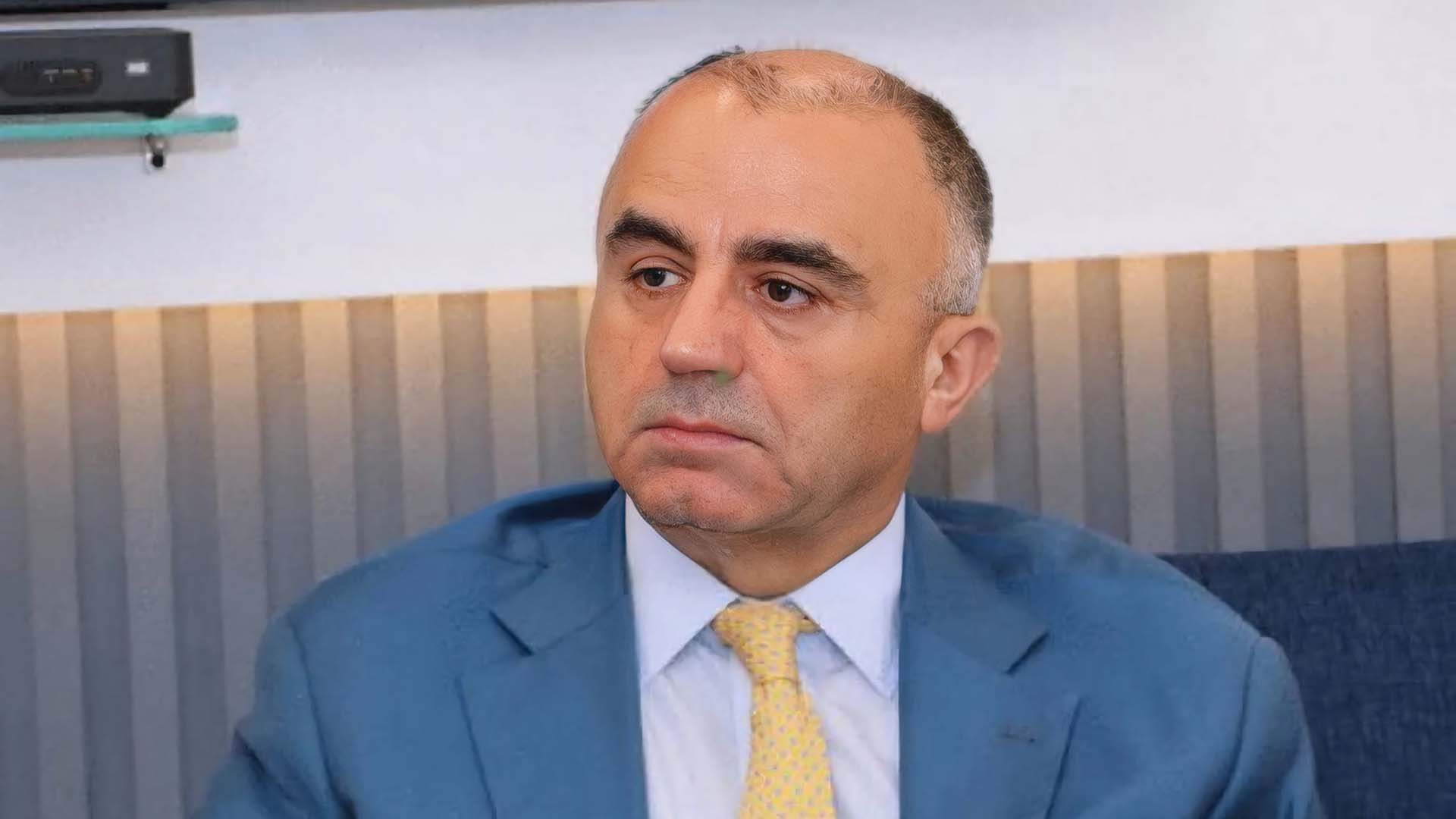
Armen Martirosyan
Member of the Supreme Council and the National Assembly of the Republic of Armenia, 1990–1999
Ambassador Extraordinary and Plenipotentiary