

Armenia Will Not Be Reborn Through Self-Denigration
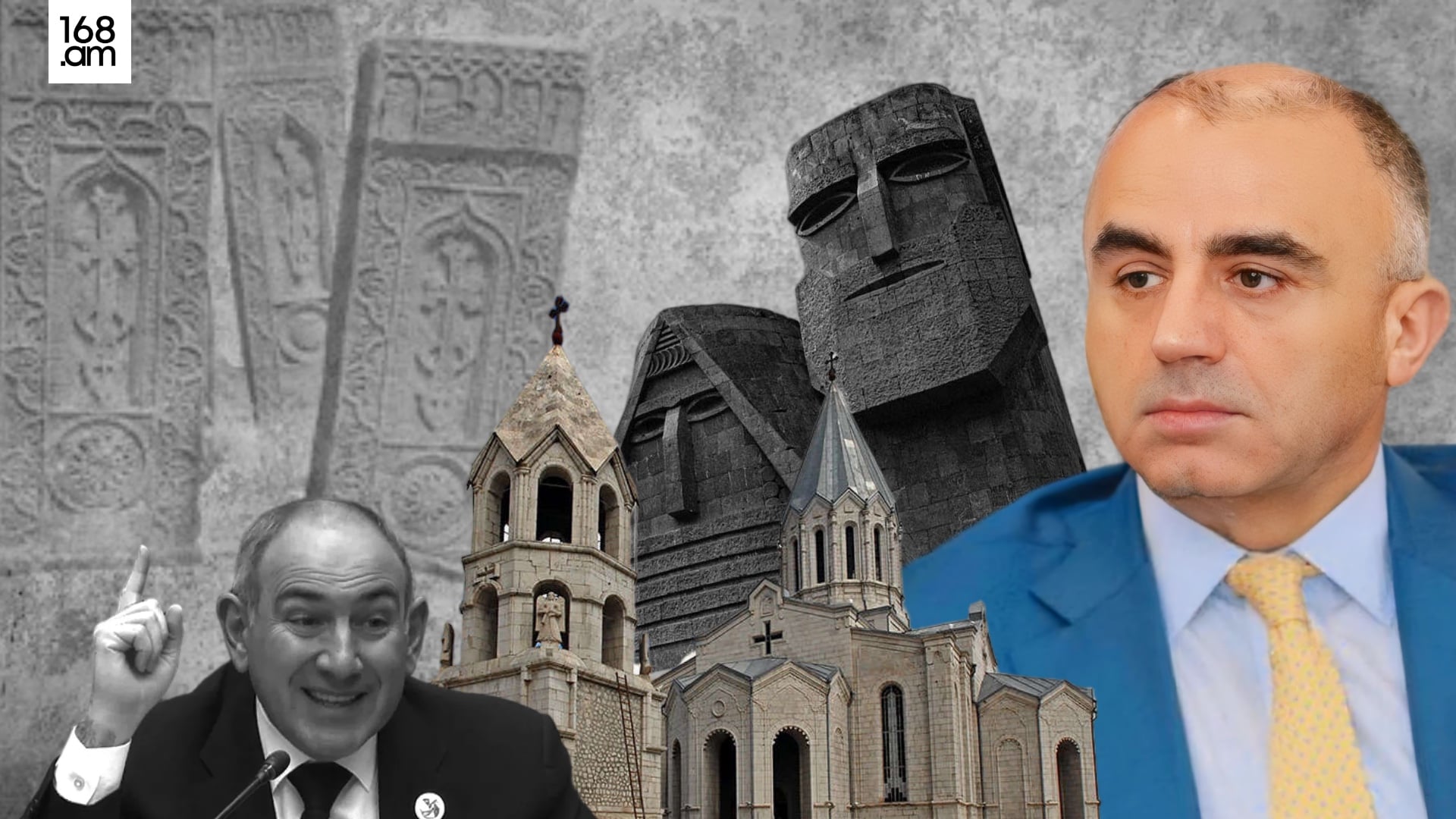
The way Armenia’s current authorities repeatedly insist that Artsakh — Nagorno-Karabakh — “never belonged to Armenia” is not merely an attempt to justify their current foreign policy line. It is also a mechanism of political denial, reinforced by obsessive repetition. A repressed trauma is returning here not in the form of recognition, but in the form of endless self-justification.
The logic of “we did not lose it, because it was never ours” is psychologically understandable. It allows the authorities to suppress the painful feeling of defeat, evade responsibility, and even present a national catastrophe as a cure for a supposed “historical illusion.” But when this formulation turns into a mantra, a question inevitably arises: if the matter is truly settled and self-evident, why is there a need to return to it again and again?
A Freudian perspective naturally comes to mind here because it helps explain the compulsive nature of this repetition. Just as a person unable to free himself from guilt keeps returning to a painful subject, the authorities repeatedly resort to the same formula of self-justification: “Artsakh was not ours, therefore we did not lose it.” But the more insistently and frequently this denial is repeated, the less it resembles a sober recognition of reality and the more it looks like a symptom of profound trauma.
This masochistic practice must end. No one seriously doubts that Artsakh is part of our historical homeland — a space of memory, culture, churches, cemeteries, family histories, and political struggle. For many generations of Armenians, Artsakh was a symbol of dignity, resistance, and the right to determine one’s own destiny.
Armenia’s modern history and state-building cannot be understood without Artsakh, no matter how much history textbooks may be rewritten. Three years before the collapse of the Soviet Union, a broad social consensus emerged in Armenia around the need to protect the people of Artsakh from annihilation and to support their right to self-determination. Artsakh became one of the political and spiritual foundations of Armenia’s independence and one of the main sources of national consolidation.
The defeat in the 44-day war and the subsequent surrender of Artsakh forced Armenians to fundamentally reconsider their worldview and to ask anew what now unites us — and on what foundation Armenian statehood should develop after the loss of Artsakh. Without at least a minimal consensus about the future, domestic political competition will continue to revolve not around the development of the state, but around endless score-settling and the struggle for courtly privileges.
Armenia needs a new national compact. But it cannot be built on historical self-denial and self-flagellation. It must begin with an honest confrontation with what happened. The loss of Artsakh was not only the result of external aggression, international indifference, and the unreliability of Armenia’s former security pillars. It was also the result of the adventurism and irresponsibility of political leaders, their inability to assess the changing balance of power in time and with sobriety, and their failure to develop a realistic strategy.
Former assumptions about security and national goals collapsed when confronted with new external and internal realities. A new national compact requires the recognition of one’s own responsibility — not for self-humiliation, but for moral renewal.
In this process, our compatriots displaced from Artsakh must occupy a special place. Their fate cannot be viewed solely through the lens of housing, benefits, or employment. Solving their social problems is vitally necessary, but it is not enough. The fate of the Armenians of Artsakh is a question of national dignity and historical memory. The 120,000 Armenians of Artsakh who were forced to leave their historical homeland are not only victims of an Armenian tragedy. They are the living bearers of that tragedy.
ARMEN MARTIROSYAN
Member of the Supreme Council of Armenia (1990–1995)
Member of the National Assembly of Armenia (1995–1999)
Ambassador Extraordinary and Plenipotentiary