

Armenia’s media landscape remains extremely polarized, journalists become targets of pressure: Satik Seyranyan
Armenia’s media landscape remains extremely polarized, journalists become targets of pressure: President of Union of Journalists of Armenia Satik Seyranyan
Speech by Satik Seyranyan, President of the Union of Journalists of Armenia and Editor-in-Chief of the “168 Hours” newspaper (168.am),
delivered on May 3, World Press Freedom Day, at the “VOICE OF ARMENIA” conference on press freedom, freedom of speech, and fundamental human rights.
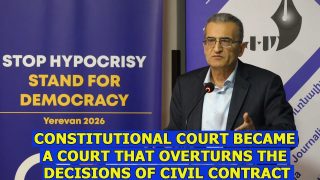
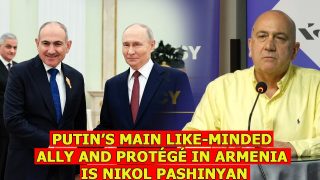
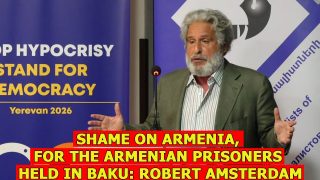
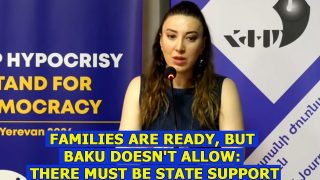
The conference is attended by heads of Armenia’s leading media outlets, journalists, and human rights defenders. The event was organized ahead of the inaugural Armenia-EU Summit, scheduled to be held in Armenia on May 4 and 5, 2026.
Dear colleagues, thank you very much for accepting the invitation to participate in. Some of our colleagues will join us in the process.
Honestly, it’s a great day for me the sense that some really great people in one place I have long not encountered. Old contacts. Good. I remember the good old days when we were interacting and discussion. Welcome to the “VOICE OF ARMENIA” conference. Let us open it officially.
This events, dear colleagues, takes place today for two reasons. May 3 is International Press Freedom Day, and I congratulate all employees of mass media: journalists, editors. technical staff, the readers on our professional day. I wish you resilience and patience and tomorrow in Yerevan the inaugural Armenia-EU Summit kicks off, which is another opportunity to speak in the presence of high-ranking European delegations and our European Partners about the state of democracy in Armenia, civil liberties, and all the values that lie at the heart of the European civilizational and political system.
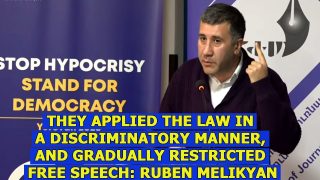
My wish the journalists is resilience and patience and it’s not by accident. Although there have always been problems in the field of freedom of speech and freedom of expression and freedom of press in Armenia, no government anywhere, no one likes the media and journalists, especially in the last eight years, the media in Armenia, large number of individual, journalists have been subjected to assistance, systematic attacks organized by the authorities. Ranging from trumped-up criminal cases and physical threats, and social media attacks, as well as more Psychological terror, from limitations on personal freedom and freedom of speech to lawsuits against the media and journalists with consequences of heavy financial obligations, from hate speech generated by the ruling power, and it’s satellite mushroom websites and social media pages to public insults and targeted Cursing and insults from discriminatory treatment to threats directed at the family members of journalists and even their underage children from the use of violence on live broadcast, to other manifestations of obstruction of work of journalists, violence arrests searches property seizures, control and direction of advertisers.
It is obvious that they have received indulgence from their unbridled behavior on becoming of a head of state and in general, a high-ranking official Member of Parliament. They received this from the political leadership, whose actions are rarely met with any resistance from the relevant International organizations. The Testament of this is that Armenia saw a significant deterioration in the World Press Freedom ranking falling from 34th place to 50th. According to be 2026 report of Reporters Without Borders, Armenia’s media landscape remains extremely polarized ,and journalists become targets of hate speech and political pressure. This indicator however is not just a number representing Armenia’s position in the ranking. Behind it are dozens of Acts of reprisals against media and journalists, criminal cases of trials threats of violence against our colleagues. In 2025 alone, 37 lawsuits were filed against more than 17 media outlets. In addition to the denial of information considered insulting or defamatory, huge monetary claims were filed against media outlets. In these cases more than 66 700 000 AMD in compensation are being sought from 17 media outlets, excluding court expenses.
There are numerous cases of violence against journalists by officials personally or through their bodyguards. Many of our partners have been illegally banned from covering the work of State institutions with their accreditations being terminated by arbitrary decisions of public officials.
The authorities’ campaign against the press has a systematic and consistent nature. These cases are separate manifestations of the policy against the media on the state level. The reasons for this consistent campaign against freedom of speech and the Press are, of course, political. The current government, which is becoming more authoritarian with each passing day, is actually deprived of any viable mechanisms of checks and balances and feel threatened only by the Press. It is thanks to the often arduous work of journalists that society learns about the government’s excesses, permissiveness and illegalities. In conditions of almost zero role of other systems of checks and balances the Press has remained the only institution fighting against the illegal and anti-democratic nature of the government. That is why the current government consisting of a large number of former journalists has declared the media a class enemy and is fighting against the press and journalists with the dirtiest of methods.
Dear colleagues, the Summit that started today in Yerevan and a number of statements that have already been made, make it even more obvious, that the undisguised manifestations of hypocrisy and double standards with which the European Union and individual countries treat the issues of democracy, including freedom of speech in Armenia for the sake of their geopolitical interests, supporting what is obviously an authoritarian incumbent. All those values and beliefs that were once the basis of the European political system after they turn into simple, cheap tools for solving geopolitical problems. Our task, of course, is not to make a complaint to the European delegations. They are guided not by democratic values, but by geopolitical interests, which implies support for the incumbents and the coming elections as well. It may seem strange at first sight, but today here, as we speak about the shameful state of democracy and freedoms in Armenia, we are indirectly defending the European values and were defending against the hypocrisy of the European bureaucracy. And the goal of our work is to protect democracy, true democracy, which cannot exist without free speech and the media.
Armenia’s Union of journalists express this particular gratitude to its International Partners: European Federation of journalists and the International Federation of journalists. They have always appropriately responded to our calls. They repeatedly spoken out against illegal actions and political persecution by the authorities against Armenian media outlets and journalists and broadcasters. In some cases they’ve issued very strong level a warnings to the Armenian authorities, appealing to the Council of Europe’s platform for the safety of journalists which has also repeatedly issued level a warnings.
Today, however, we will talk not only about the repressions and restrictions applied against the Press but also about the broader state of civil Liberties. I am glad that in addition to representatives of partner media outlets, our conference is also attended by highly regarded human rights defenders and lawyers who I am sure will best represent the real state of Human Rights and Freedoms in Armenia in their reports today. I wish us fruitful work and it’s my pleasure to now introduce the speakers of our conference:
1. SIRANUSH SAHAKYAN, advocate and the director of the International and Comparative Law Center, representative of the interests of Armenian prisoners of war at the European Court of Human Rights,
2. JOHN EIBNER (via video message) – President of Christian Solidarity International (CSI), Human Rights Advocate,
3. ROBERT AMSTERDAM, International lawyer specializing in political advocacy and human rights,
4. ARAM ABRAHAMYAN, Chief Editor of “Aravot” Daily,
5. VARDAN POGHOSYAN, constitutional law expert, political scientist
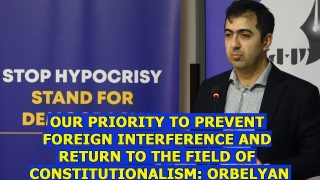
6. ARAM ORBELYAN, Managing Partner of the Concern Dialog law firm, attorney, international law specialist,
7. ARMINE OHANYAN, Chief editor of “Hraparak” daily newspaper,
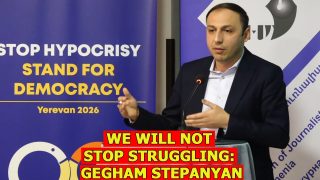
8. GEGHAM STEPANYAN, Artsakh Ombudsman,
9. RUBEN MELIKYAN, lawyer, human rights defender,
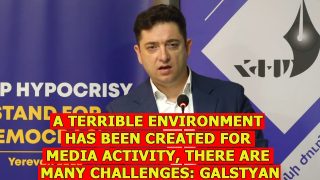
10. NAREK GALSTYAN, political scientist, PhD in Historical Sciences, director, and Chief editor of 24news.am,
11. HOVHANNES KHUDOYAN, lawyer, human rights defender,
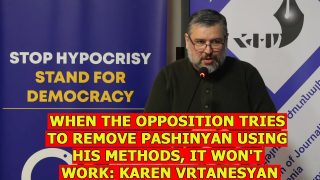
12. KAREN VRTANESYAN – propaganda researcher, expert