

WHY NIKOL PASHINYAN IS SO FEARFUL OF A FREE AND FAIR ELECTION: HE HAS NOTHING TO DO WITH THE CHURCH: KENNETH ROTH
American human rights activist and former Executive Director of Human Rights Watch Kenneth Roth is simply shocked why Armenian Prime Minister Nikol Pashinyan is so afraid of free and fair elections.
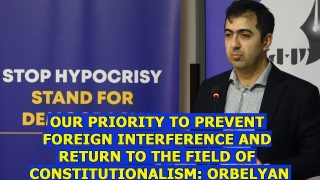
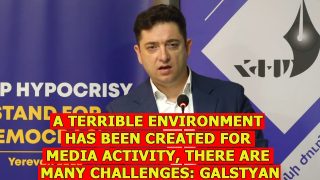
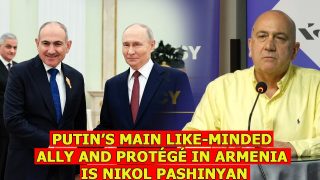
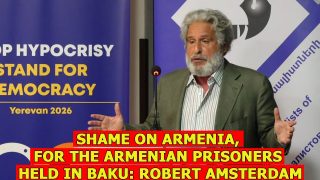
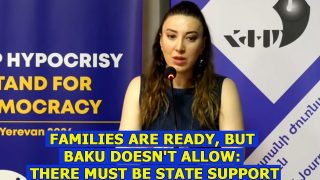
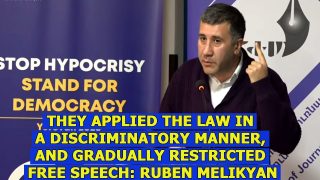
In a brief interview with “168 Hours,” summarizing the results of the first phase of IODA’s (International Observatory for Democracy in Armenia) fact-finding mission to observe and analyze democratic conditions in the run-up to the parliamentary elections in Armenia, Kenneth Roth, a member of IODA Executive Board member, called on the current government of Armenia to compete fairly in the parliamentary elections to be held in Armenia on June 7, as well as not to interfere in the internal affairs of the Church.
Kenneth Roth: American human rights activist, Executive Board member of International Observatory for Democracy in Armenia (IODA) and former Executive Director of Human Rights Watch.
Aram Sargsyan։ First of all, Mr. Roth, welcome to Armenia. Thank you for this possibility. Unfortunately, I didn’t have the chance to follow the full conference. I know it was on the situation of human rights and democracy in Armenia of IODA. So I want to ask an exclusive comment on this. What is your assessment on the human rights and democracy situation in Armenia under the Pashinyan government regarding the prosecution of many activists, clerics, etc.?
Kenneth Roth: First, let me explain that the International Observatory for Democracy in Armenia is a group of independent human rights experts who have come to Armenia to assess the conditions for a free and fair parliamentary election on June 7th. We are not affiliated with any government. We’re unattached to any NGO. We’re here just as independent experts. And we have spent the last week speaking to a broad range of people within Armenia, including judges, lawyers, journalists, members of civil society, independent commissions, the political parties, the clergy. Unfortunately, not the government. The government didn’t want to meet with us, even though we asked repeatedly. But based on all the information that we’ve been able to assemble, we have deep concerns about some of the government’s actions.
The government seems to be trying to harness the resources and the power of the state to tilt the electoral playing field in its favor. And that is not how a democratic leader should behave. Prime Minister Pashinyan is not just a candidate. He’s also the leader of a democracy. And the leader of a democracy has to exercise restraint. He should not be using broad provisions of the criminal code to charge opposition leaders or opposition figures, put them in preventive detention or various forms of custody, essentially limiting their ability to campaign. That is not how a democratic leader should proceed. And I don’t understand why the Prime Minister is so fearful of a free and fair election. Let there be competitive practices. And we feel that this is important, you know, not just for the fairness of election. It’s important for Armenia because Armenia, we have to recognize, is a small country in a very hostile neighborhood. There are many countries around Armenia that wish it ill.
And Armenia’s most important asset is its democracy. We should not have a government that is undermining that democracy in the name of another term in power. And so our message really to the government is to compete in this election fairly. We do not take sides. We do not support any candidate. We want to see a free and fair election. And when we see people being prosecuted or otherwise penalized just for speech, just for being an independent voice, that undermines the democracy that the government should be upholding and that is Armenia’s most important asset.
We also have a message for the international community, particularly the European Union, where it is looking at Armenia principally as a playing field for geopolitical competition. The European Union, if it stands for anything, it should stand for democracy. But instead it seems to be willing to close its eyes to some of these missteps that the government is taking, these efforts to undermine democracy in the name of fending off Russian influence. And of course Russian influence is a problem. It can be met by efforts to attack disinformation, by efforts to ensure that there’s cyber security, but it should not be met through anti-democratic means. You don’t save democracy by undermining democracy. And that is what I’m afraid the European Union is willing to do.
Aram Sargsyan։ As you mentioned, it’s interesting, the possible Russian influence, and we know, we follow the narratives of the current government on so-called “hybrid attacks” or “hybrid threats” on Armenia. What other foreign influences do you see on Armenia? And do you consider, what do you think about the other statements by the EU diplomacy, by the Vice President of the United States, by the Turkish foreign minister?
Kenneth Roth։ I mean, I’m very aware that many governments are choosing their favorite candidate. J.D. Vance endorsed the Prime Minister during his recent visit. Now, you can debate whether this is appropriate or not. The answer to that kind of external effort to influence Armenia’s election is not to compromise Armenia’s democracy. It’s to reinforce the democracy. Have a free debate. Let people say, is it appropriate for Russia to be using disinformation campaigns? Is it appropriate for J.D. Vance to be endorsing the Prime Minister?
Those are good debates. That’s what should happen. It should not be, the response should not be to start prosecuting people, you know, alleging that people are supposedly Russian agents when there’s no evidence for that. You know, alleging that people are trying to overthrow the government based on innocuous statements. You know, silencing journalists for so-called, you know, inappropriate language. I mean, these are efforts to really undermine the debate that is the best antidote to international or foreign influence.
Aram Sargsyan։ So we have a lot of speculations on possible Russian influence or other influences. Do you see that kind of real danger of any influence on the parliamentary elections? And as the current government makes its brand from the times of so-called Velvet Revolution, that they are very democratic. Have you followed the speech of the Prime Minister of Armenia in the European Parliament, where he says, well, he doesn’t violate, he doesn’t limit religious freedom, he has democracy in Armenia, we don’t have any problems with democracy in Armenia? What is your assessment on this issue?
Kenneth Roth։ I mean, that’s just not true. The Prime Minister is openly interfering with the independence of the clergy. The Prime Minister should have nothing to do with whether a priest is defrocked or not. That’s an internal matter for the Church. And so when the government steps in and tries to reverse Church decisions, that compromises the independence of the clergy. Now, you know, is the Church taking a position in this election? I don’t know, that’s its right, you know, if it’s for one candidate or another. The answer to that is to debate it, to argue why its choice is right or wrong. It’s not to try to silence the Church. That’s our overall message. This effort to sort of treat dissent or treat political opposition as a threat to democracy, that undermines democracy itself because it undermines the free speech that is essential to a free and fair election.
And we’d like to see the government change course and stop trying to persecute or silence independent voices. And we’d like to see the international community take a much more principled approach to democracy in Armenia, not treat it as something that can be compromised in the name of keeping Armenia out of the Russian camp. Because as I said, you don’t defend democracy by undermining democracy. And that seems to be the current European Union strategy.
Aram Sargsyan։ And one more question, if I may ask, on the current situation around Iran and anti-Iran war, what is your assessment on this situation and should we have any concerns on our security and existence?
Kenneth Roth։ Well, the decision by Trump and Netanyahu to start bombing Iran was a blatant act of aggression. It violated the UN Charter, which allows military force only in the case of a UN Security Council authorization or in self-defense against an actual or imminent armed attack. There wasn’t any of that in the case of Iran.
They bombed sort of to try to prevent Iran from becoming some kind of a threat in the future, but that is illegal under the UN Charter. And we’re seeing now the Iranian people suffering the consequences, obviously the tragic bombing of the girls’ elementary school, killing 175 people, the bombing of the oil facility in Tehran that has basically forced this huge city to live under this toxic smoke. These are the kinds of things that happen when the basic rule against using military force is violated. So I hope to see the war end as quickly as possible.
I hope that Armenia doesn’t suffer the consequences that it’s able to stay out of the war. There are some indications that Trump may be trying to wind it down. Clearly, the increase in the price of oil is hurting Trump’s electoral prospects in the United States. The Republicans face a midterm election. And if the price of oil is very high, that will hurt them. Trump himself has said he’s running out of military targets, so he should stop bombing. But I’m afraid that the Israeli government in particular wants to keep destroying Iran even forcing the civilian population to suffer as a way of preventing Iran from ever coming back as a threat. You know, that’s what they did in Gaza. That’s what they’ve done in southern Lebanon. And that’s what I’m afraid Israel is trying to do in Iran as well. So it’s very important that Trump resists that and he not allow the United States to be drawn into these war crime attacks on the civilian population.
Aram Sargsyan։ Thank you very much. Thanks.
Interviewed by Aram Sargsyan