

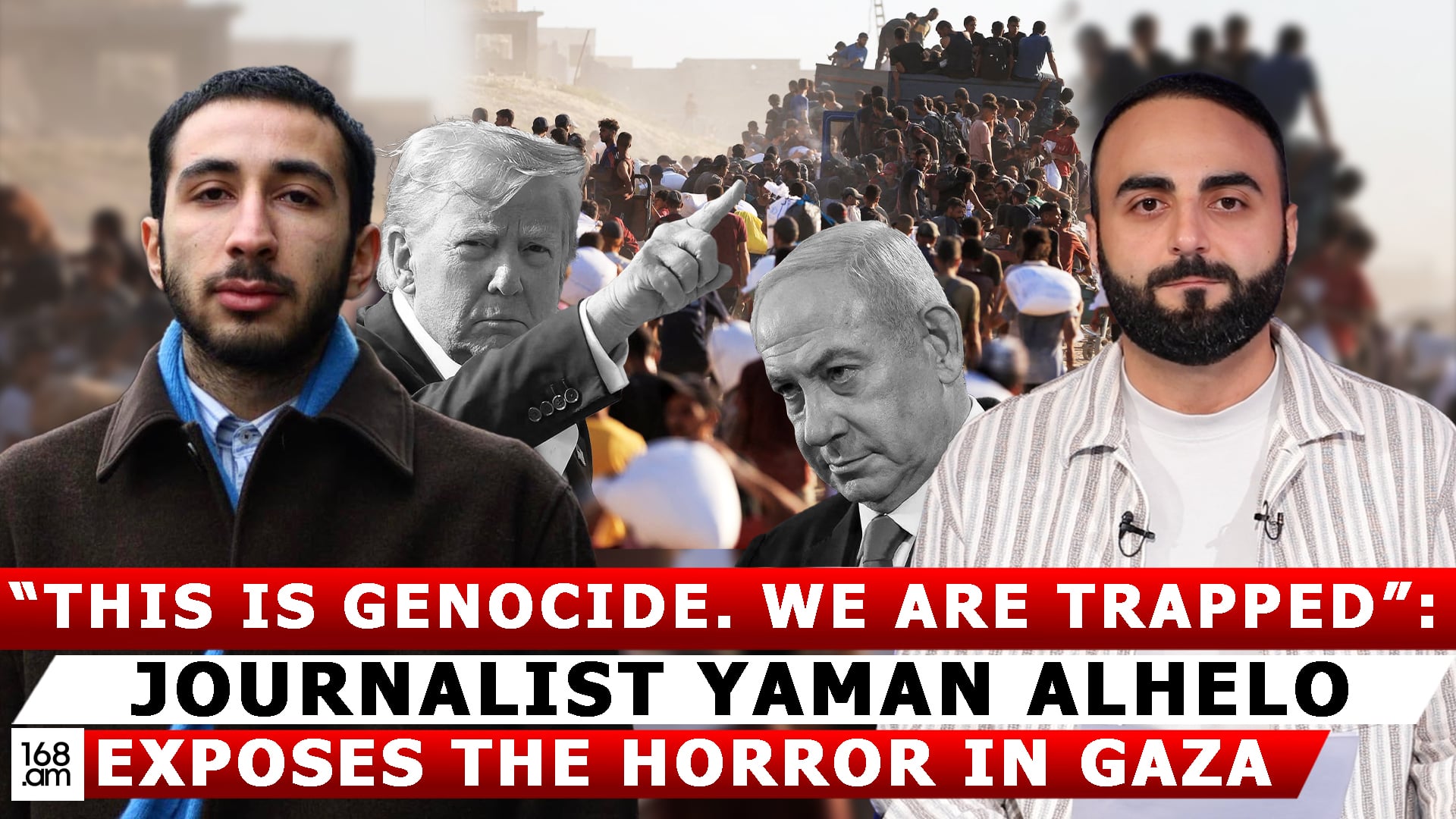
“THIS IS GENOCIDE. WE ARE TRAPPED”: JOURNALIST YAMAN ALHELO EXPOSES THE HORROR IN GAZA
The humanitarian catastrophe in Gaza continues to deepen — yet the world’s understanding of it remains clouded by distance, politics, and selective narratives. In an interview with 168 Hours, Palestinian-Jordanian journalist Yaman Alhelo offers a raw, unfiltered account of life under siege, the failures of global media, and the international community’s reluctance to act.
“Catastrophic” is how he describes the situation in Gaza.
“As of latest reports, now we have the latest update to the casualties of the war that has been going on for 663 days, we have more than 60,000 people that have been killed by the war, and the estimations for those injured is over 140,000 in the Gaza Strip.We have constant warnings about famine. On the other side, we hear Israeli side talking and discrediting whatever reports that comes out, whether it is from NGOs, whether it is from reporters inside of Gaza, but it is catastrophic. This is the only way that we can describe it. I would describe it in another way that the life for a person in Gaza at the moment is just like a constant test of how more misery can people actually endure,” he said.
In most conflicts, civilians are given a way out. In Gaza, that hasn’t happened.
“In any other war, people can flee and return. In Gaza, they are trapped. Those who leave can’t come back,” Alhelo said.
While numerous human rights organizations — including Israeli groups like B’Tselem and international bodies like Amnesty International — have called what is happening in Gaza a genocide, Alhelo says the term is still carefully avoided by major international outlets.
“There’s a fear of being discredited,” he explains. “Any organization that uses the word ‘genocide’ gets painted as radical or accused of parroting Hamas propaganda.”
He notes that while some Western outlets publish opinion pieces referencing the term, it’s rarely used in hard news coverage. Instead, sanitized language like “conflict” or “war” is preferred — a framing that obscures the profound power imbalance.
“People just would go by using the word war, even though that a war would usually have two sides relatively in the same kind of power supported by other sides, while what we see on the ground is just the most crucial powerful strongest army in the world, the US Army, supporting unlimitedly, the Israeli side and against a population at this point,” he said.
Israel doesn’t allow foreign journalists to go and cover the situation in Gaza.
“We watched a report yesterday published by the BBC where they were accompanying the airplanes that are dropping the relief boxes, which is a whole different story on its own, but the relief aid, like drops that have been happening, they accompanied one of these airplanes, and they got a message that they can take aerial footage of Gaza from the air as The BBC of how does it look from the sky? This is the closest that any foreign media has gotten to the point of reporting on Gaza. Now, when we talk about the Palestinian reporters, they become just another target of this war. Hundreds have been killed. Al Jazeera, correspondents, videographers, workers, technicians have been targeted knowing that that they are reporting on a specific narrative that the Israelis just don’t want to be out,” he mentioned.
While Gaza remains in the headlines, the West Bank is experiencing its own crisis — one that receives far less attention. Alhelo, whose family is originally from the West Bank, says that the region has been quietly transformed during the war.
“New Israeli settlements are expanding. Settler violence has increased. Cities are separated by checkpoints. The economy is collapsing,” he says.
The war has become a pretext for tightening control. “Since October 7, Israel has banned most Palestinians from working inside Israel. That decision alone has devastated thousands of families, including my own relatives in Ramallah.”
He expects boycott, pressure from international society on Israel: “This this is the only way. We have seen such situations similar to the Palestinian cause that it has worked.”
Even journalists based outside of Gaza aren’t immune from pressure. Alhelo describes how editorial decisions are often shaped by politics, donor interests, or diplomatic sensitivities:
“You have to take into consideration that you still want to live, and you don’t want your editors to be angry, or have your editors, as an example, be under opposition, because there is always somewhat high up in the management that thinks of diplomatic relations between a country and a different country, and then they think of priorities as well. So yes, of course, there is always constant pressures. I think of anything that I want to report on two and three times before saying it, because I will need to know, how would they react to it. I’ve suggested topics sometimes that my editors will think are not relative, or they would doubt the like the actual information that is coming out of resources that I would have.”
Yaman Alhelo expresses deep frustration and uncertainty about the future, saying that the situation has become so complex and negative that it’s hard to see any logical path forward. He believes the Palestinian struggle is no longer just about land, but part of a broader global cultural and political conflict — between East and West, religions, and global powers. True liberation for Palestinians, he argues, requires a larger transformation across the region, particularly breaking free from U.S. influence, which currently restrains Middle Eastern governments from challenging Israel effectively. Until that broader change happens, he believes Palestine cannot be truly free.
By Razmik Martirosyan