

How Art Advances Human Rights and Justice | Interview with Alessandro Ienzi
168 Hours continues its collaboration with the Global Campus of Human Rights, covering human rights issues both in Europe and worldwide.
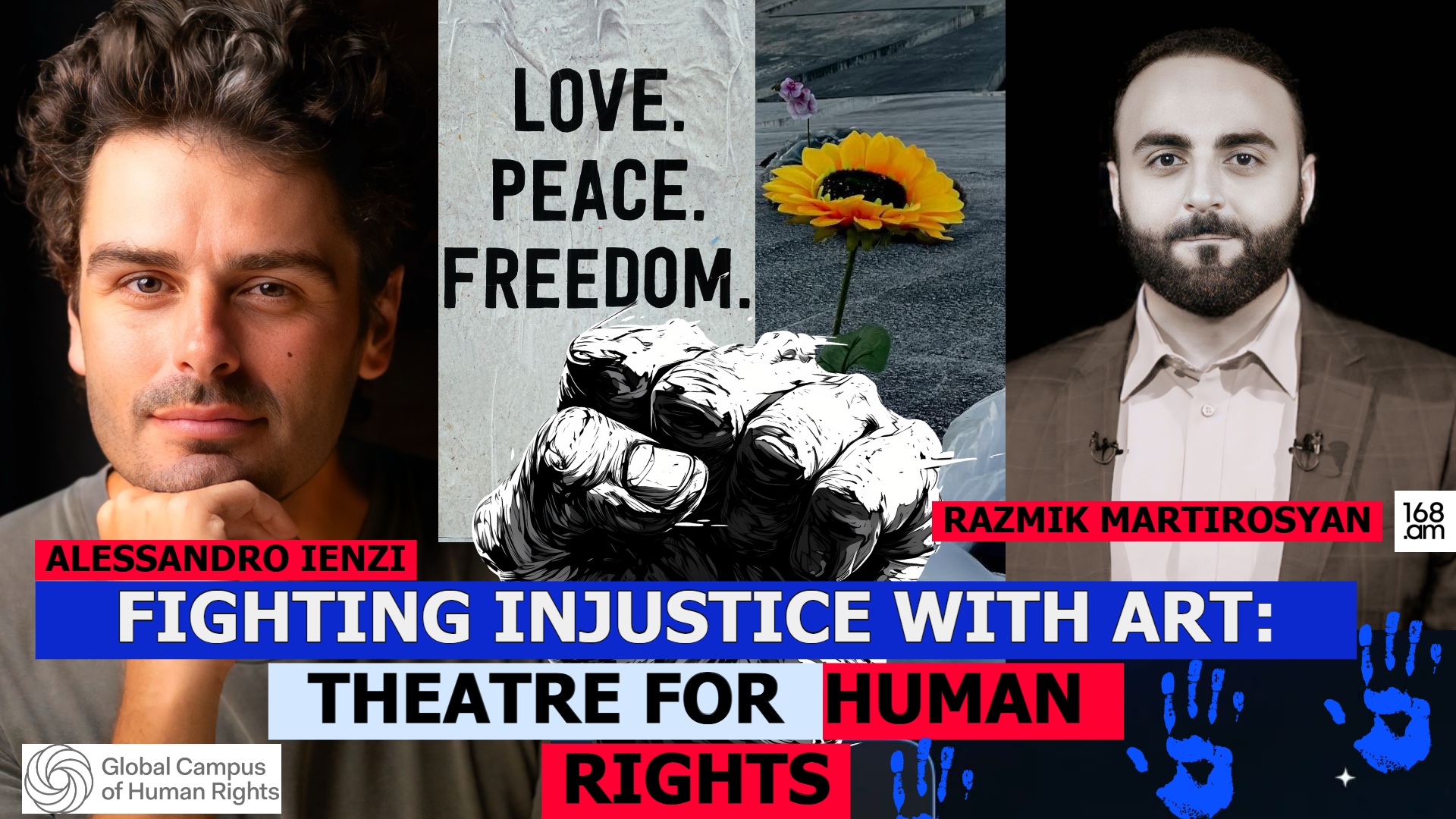
In this second episode, we interviewed Alessandro Ienzi, a lawyer, actor, and founder of Raizes Teatro, an organization that uses the power of performance to raise awareness and promote human rights.
Alessandro Ienzi graduated with a law degree in 2007 from the University of Palermo and later obtained a Master’s degree in international relations and international protection of human rights in Rome.
“After a few years working as a lawyer, I wanted to explore the world of art and especially of theater. That’s why I started working as a professional actor with a very important company. I was traveling all over Europe, and after a few year works, I decided to merge the two activities. So I understood the power of art and the power of theater to create dialog all over the world, especially through a universal language, which is imagination and which is culture. I decided to create and found an organization called Raizes, which is based in Palermo, now working worldwide, who’s promoting human rights, inclusion and global citizenship through the arts,” he said.
Raizes Teatro has been awarded the “Mediterranean Identity Award” in Andalusia for its commitment to peace and inclusion through art and theater.
With the Global Campus human rights, he started to cooperate in 2021 after attending the Cinema Human Rights and advocacy school that they held every year, in September.
“And after this experience, I won an award in New York, which is the international human rights art festival and I decided to create a program whose name was human freedom. Was a year- long project promoting human rights through the arts and with the Global Campus, we decided it was the time to strengthen the link between art and price. So every year we present together international performances, and also we attend important conferences. This year, for example, we did the opening of the World Congress for children rights in Madrid. And every year I do the opening of the School of human rights defender in Venice,” he mentioned.
In their performances, Raizes Teatro focuses on topics such as climate justice, gender equality, inclusion and disabilities, freedom of expression, youth rights, youth democratic participation, and drug trafficking.
“It depends on the topic we want to address, and also depends on the change want to make, because our mission is to make a change, also in cooperation with political institutions and also to change the legal framework and to improve the legal standards. It depends also on the emergency we got, for example, in Sicily, we work very much with migrant communities, especially with first generation. There are many unaccompanied minors arriving from Africa, crossing the desert and crossing the sea, who have been suffering a massive deprivation of human rights, for example, in many countries in Northern Africa. And then they’ve been traveling through the Mediterranean, and when they’re right here, they have no education, they have no access to public services. So it’s important to transform their voices in young leader voices were able to represent their own needs and also to raise their voices to get more attention from institutions,” he emphasized.
While talking about the main challenges concerning migrants’ rights in the first place, he mentioned education.
“We have to provide these people with the education so they can really get included, because they need to learn European languages. They need to learn, also to meet our mindset, to mix our mindset with their mindset, so they can get really included in our society, and they can also try to make different works and get different positions in our society. It’s a long journey. It’s a long way to go, but I think it’s very possible. It’s just a question to organize their stay, to organize their work and their education here in in Europe,” he said.
Alessandro believes that we need to make use of freedom of expression to create dialogue, not to build walls, but to design and build bridges between different cultures, between different institutions:
“In order also to reach out to peace, we have to make a distinction between freedom of expression deprivation in a national framework or in an international framework, a national framework, it depends, always by the government. So it’s a decision what kind of behaviors or statements are denied and what not. So what we can do in this case is to create dialog with institutions and also create dialog between international organizations and governments, or between governments.”
He thinks that human rights, and especially freedom of expression, is a long way to go and the work is never done: “Freedom of expression is out to express what we believe in. It’s not just to give information or free information, so to spread fake news or to spread points of view that are not acceptable for anyone. So we have to work a bit on our inner balance, to meet ourselves, to meet our roots, to meet our cultures and to meet our system of value, which must be founded on respect and mutual respect.”
Alessandro assures that art is essential in this regard, as “it can really balance our soul, it can really balance our system of values so we can find the right way to express ourselves and to meet other people.”
By Razmik Martirosyan