

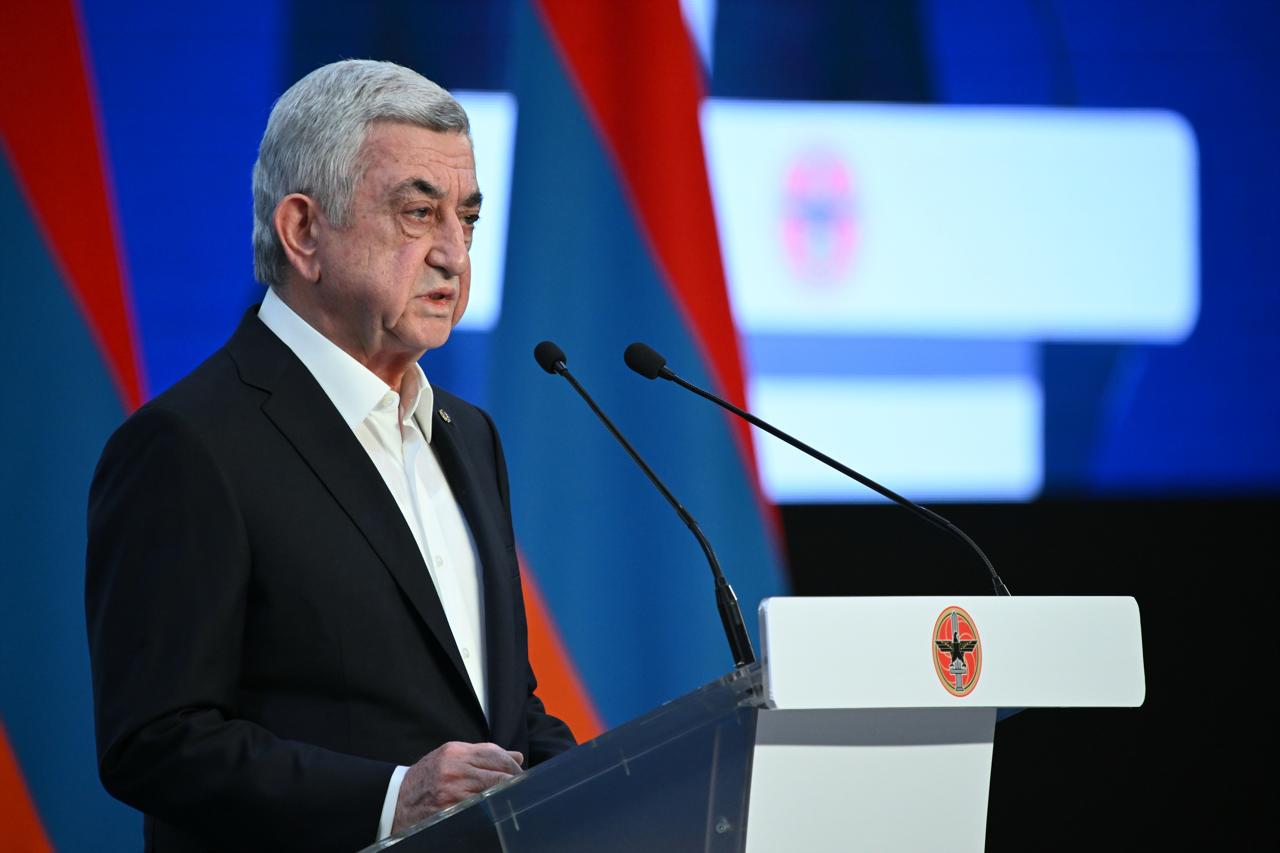
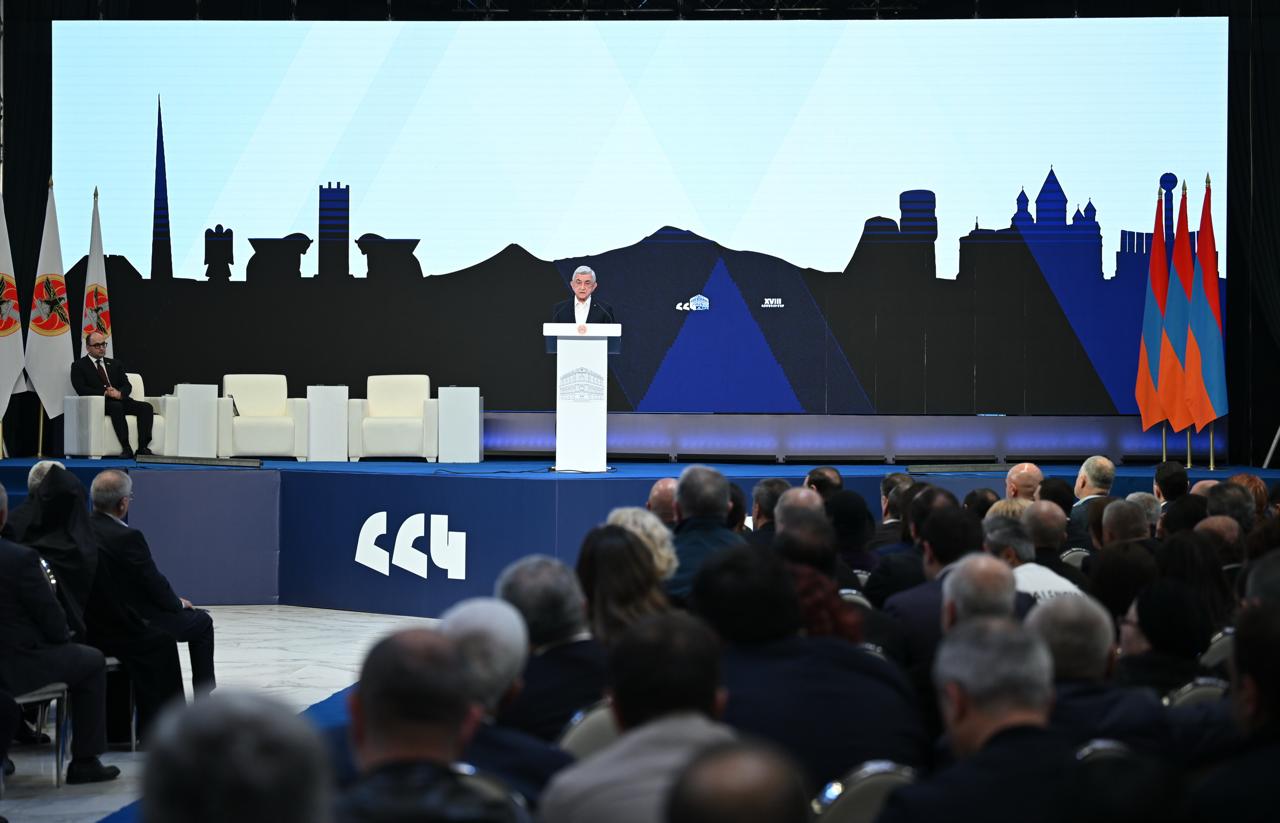
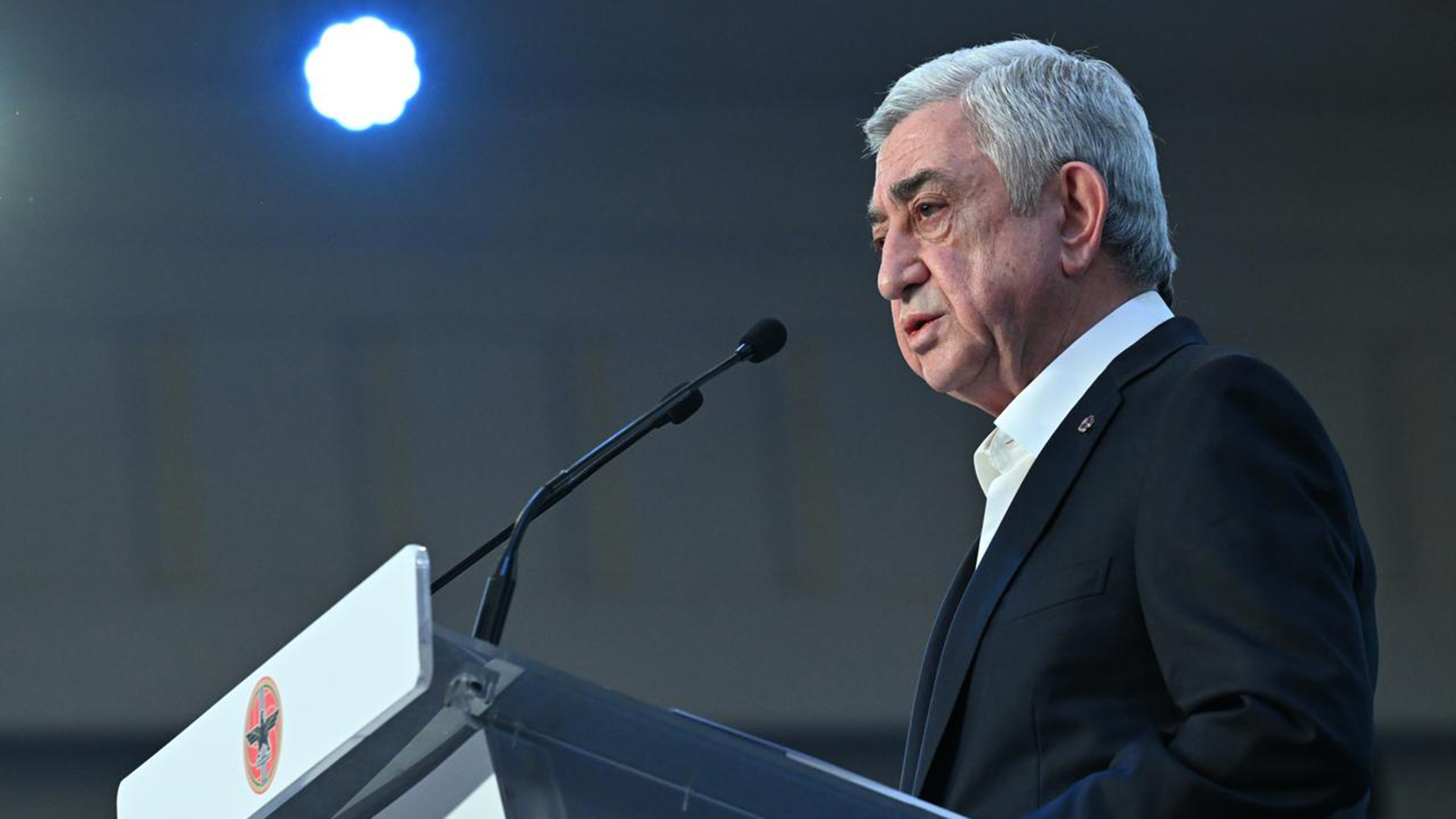
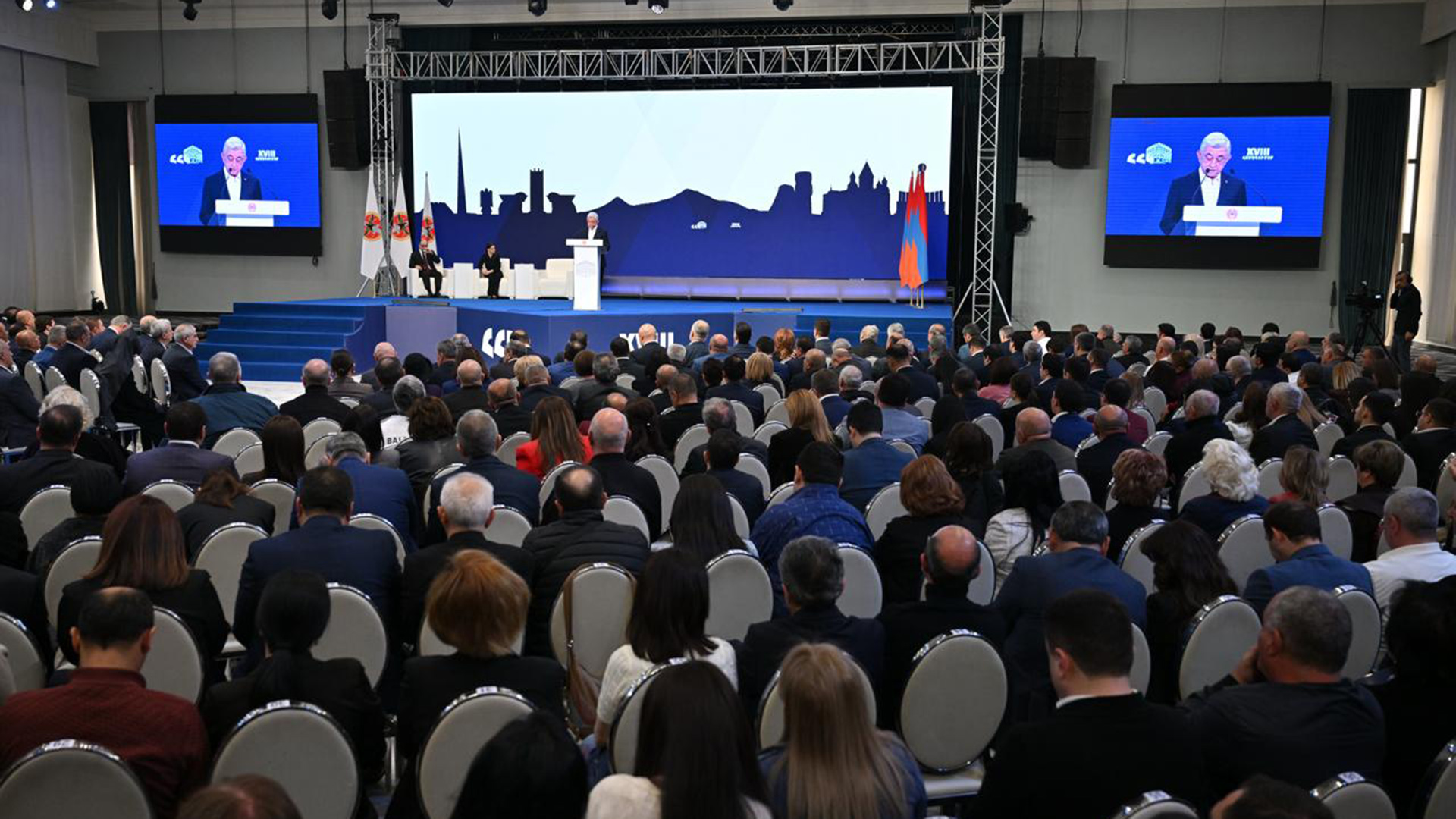
Report of Serzh Sargsyan, Chairman of the Republican Party of Armenia, at the 18th RPA Convention
Exactly 10 years ago, these very days, there was a war that lasted only 4 days and has remained in all our memories as the Four-Day War. It ended on April 5 at 12:00, after the enemy had been forced the previous day to ask for a ceasefire. On April 4, in the presence of the Ambassadors of the OSCE participating states invited to the office of the President of the Republic of Armenia, I had already stated that if the military operations continued and assumed a large-scale character, the Republic of Armenia would recognize the independence of Nagorno-Karabakh.
Dear Republicans,
As I welcome all of you to the 18th Congress of our party, I suggest that, before proceeding to today’s agenda, we remember and pay tribute to the bright memory of our martyred heroes who sacrificed their lives in defense of the Homeland during the Four-Day War. They displayed countless examples of unimaginable courage and self-sacrifice.
Let us express our gratitude to all the servicemen – from the highest command staff to the rank-and-file soldiers – who in that war thwarted the plans of the aggressor and, within a few days, imposed a ceasefire.
Let us observe a minute of silence in honor of the brave sons who sacrificed their lives for the defense of our Homeland, both in the Four-Day War and at all times.
Glory and honor to them.
The outcomes of the April War are testimony to the strength of our army, effective diplomatic work, and the national will and unity.
And today, as we remember the Four-Day War that began 10 years ago, we are obliged to thoroughly assess the events of those days, their impact on the negotiation process, and their impact on our country’s domestic political life.
It is evident that the objectives of the adversary, which had launched large-scale military operations, failed, because it was unable not only to break through our defensive front line, but also to break our unity, our faith, and our dignity.
In those days, our fellow Armenians united across the world and showed that their choice is a dignified peace, while self-defense is the guarantee of, and our inalienable right for, living safely in our ancestral homeland. In those days, both the Armenian army and Armenian diplomacy together served the interests of the two Armenian states and the Armenian people.
But shortly thereafter, various foreign-funded organizations began deliberately spreading fake news, claiming that the Armenian side had suffered heavy casualties, that the soldiers had lacked ammunition and food, that the military equipment had not been supplied with diesel fuel, and were otherwise circulating all kinds of discrediting, unfounded rumors and accusations against the Armenian Army.
After the 2018 power grab, Armenia’s rulers, as part of a deliberate campaign to discredit and weaken the army, continued to spread all manner of vile distortions, rumors, and fabrications about the April Four-Day War. Then they set up an ad hoc Inquiry Committee in the National Assembly and were later forced to come to terms with the facts that all of it was lies, falsehood, and vile slander. Only the heroism of our boys, our victory, and our unity were real.
In those days, the people were one whole, and the state, with its army, was the steel shield of the Homeland. Those were days of struggle, days of dignity, unity, heroism, and fateful days.
I have spoken about this in detail both before the parliamentary Inquiry Committee and at my first press conference.
Today I would like once again to address the thesis periodically circulated for propaganda reasons: “Why did you not recognize the independence of Artsakh then?”
As you will certainly recall, in 2008 Azerbaijan took advantage of the political turmoil inside Armenia to launch a diplomatic offensive, securing the adoption in the UN General Assembly of a resolution that ran counter to the Madrid Principles. All of the OSCE Minsk Group co-chair countries voted against it. It failed to gain the support of EU member states as well.
At that time, I conveyed to the Minsk Group co-chair countries that Armenia would recognize the independence of the Republic of Artsakh under two circumstances: first, if there were a prolonged large-scale war; and second, if the Minsk Group co-chairs failed to restrain Azerbaijan’s diplomatic attempts to shift the resolution of the Artsakh issue to other platforms, including the UN General Assembly.
When Armenia’s current rulers try to manipulate this issue, my response is very simple. Recognizing Artsakh outside those two circumstances would in itself have led to Armenia’s isolation by the international community and to a large-scale war. Under the “former authorities”, no such large-scale war erupted. That was due to our combat-ready army and the effectiveness of our diplomacy, which kept the negotiation process from collapsing. Under these people, by contrast, the war of 2020 sadly did become full-scale, with disastrous consequences, and it was not stopped because of one cowardly populist who let it drag on for 44 days simply so he would not be called a traitor.
So I ask: if all the conditions were there – a large-scale, long war that, despite mediation efforts, would not stop – then why did you not recognize Artsakh? What more still had to happen?
And when such claims come from outside – along the lines of, “Even you did not recognize it, so what do you expect from us?”, I understand why they say it, and what political expediency or immediate interest lies behind it. But thank God, the participants in the negotiation process are still around. Do they really not know that we had agreed with the OSCE Minsk Group co-chairs not to rush, not to provoke war, and not to undermine the work of the Minsk Group?
One thing is clear: if the victory of 2016 had restored in our people a strong sense of national dignity, unity, confidence in the Armenian army, and reinforced the Armenian side’s position at the negotiating table, then after the 44-day war of 2020 the opposite happened. As a result of the actions of a capitulationist and unpatriotic leadership, Armenia was plunged into a deep domestic political crisis marked by despair, loss of confidence in our own strength, and growing social polarization. At the negotiating table, compromise gave way to one-sided concessions.
There is an unwritten rule in world politics: the leader of a defeated country is expected to step down. Otherwise, the country risks suffering irreversible and disproportionate losses. Sadly, instead of defending the state, Armenia’s ruler chose to hold on to his chair, and as a result we lost part of our Homeland. And the remaining part – the Republic of Armenia – continues to face danger.
Dear fellow party members,
One of the important issues to be addressed at our Convention today is the Republican Party’s position on not participating in the upcoming parliamentary elections. As you know, three days ago the party’s Executive Body decided to refrain from taking part in those nationwide elections.
I know that this decision is not to everyone’s liking. I know that, with the right effort, we could have cleared the four-percent threshold required for parties.
But I also know another truth, and I reaffirm it from this podium today: what we need is a regime change. We are not concerned with the prospect of having a few seats in the parliament. The years behind us have only further confirmed the soundness of this decision.
And I assure both you and our people that even without participating – or rather, without participating directly – in these elections, the Republican Party will remain at the center of political developments and continue to be one of the leading players in this struggle.
As our late friend Galust Sahakyan would say, not taking part does not imply not fighting.
But before I elaborate about several initiatives we intend to propose to the other constructive forces in the opposition, I want to make clear why we are not taking part in these elections. In particular:
a) so as not to fragment the opposition camp even more;
b) to give all those forces that claim the so-called “former authorities” are not allowing a regime change to take place – to deliver on their own promises;
c) to set an example in political life by placing personal ego, narrow party interests, and individual political calculations below the broader goal of common success.
d) And finally, this decision is also largely shaped by one important fact: careful sociological research shows that Republicans and our supporters, with almost no exceptions, intend to participate in the elections and vote solely for opposition political forces. In other words, our electorate votes will not be wasted; they will be added to the broader opposition vote and will help prevent this government from reproducing itself in power.
Our ego, tempered by life and struggle, fellow party members, has never turned – and will never turn – into egoism. That would be unacceptable.
This decision did not come easily to us, but I have no doubt that we will never, ever be ashamed of it. On the contrary, we will become one of the best examples in modern Armenian political history of acting by the principle: “with my party, but for my nation.” And as I have already said, choosing not to participate does not mean abandoning the struggle. With the aim of contributing to the united efforts of the opposition to defeat this disastrous regime, the Republican Party is putting forward the following proposals to the genuine opposition as practical steps for joint action in the period ahead.
First, as you know, two major events will take place in Yerevan on May 4 and 5: first, the Summit of the European Political Community, and then the first European Union–Armenia Summit.
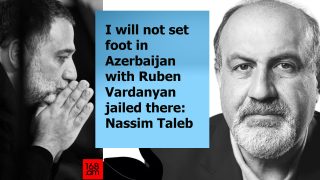
Recent years have shown that senior European leaders prefer not to see the reality that exists in Armenia, choosing instead to comfort themselves with sweet-sounding tales about democracy in our country that are miles away from the truth. What Europeans prefer not to notice is the following reality: Artsakh under occupation; the problems facing the Armenians of Artsakh after ethnic cleansing; the spiritual and cultural heritage in Artsakh being ravaged; Armenians suffering in Baku’s prisons as prisoners of war and hostages; political prisoners in Yerevan; unlawful attacks on and pressure against the Armenian Apostolic Church; unprecedented restrictions on freedom of speech; and police and judicial systems directed by a power-usurping political force and carrying out illegal actions. All these the Europeans prefer to pretrend not seeing.
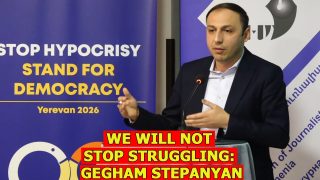
And we, as an experienced and responsible political party, propose to the other opposition forces – which will most likely be overwhelmed exclusively with their electoral campaigns – that they entrust us with the task of jointly developing and carrying out activities during those events. Joint actions, I repeat. Within the bounds of law and European political culture, the full reality of Armenia’s so-called “democracy” must be presented to the several dozen high-level delegations that will be in Armenia.
What this regime has planned as a pre-election party must – and can – be turned into an opportunity, on the eve of the elections, to lay bare the bitter reality in our country, a moment of truth of its kind. And the Republican Party can coordinate such an effort in cooperation with the other opposition forces – if, of course, such a proposal is of interest to them, and if they can find the time to join in addressing these broader national concerns together.
Second, much is being said about the need to motivate citizens and ensure a high turnout if the regime is to be defeated through the upcoming elections.
We declare that from this Convention until June 7, the Republican Party’s efforts will be directed toward encouraging nationwide participation in those elections under the slogan “Go, so they go” – through a range of actions, public messaging, information campaigns, and meetings with the people. We will use every opportunity to persuade our fellow citizens to go to the polling stations and vote for such forces that will put an end to Armenia’s humiliation today, and bring this treacherous and disastrous regime to an end.
Third: it is no secret that at this stage the genuine opposition forces say they rule out any cooperation with the ruling regime.
We have seen many times – and, unfortunately, we ourselves learned this the hard way after the last parliamentary elections – that political forces may make such declarations, yet there are always individuals who break with that commitment and weaken the opposition camp by drifting into the ruling regime’s orbit.
That is why we propose that, beyond general public statements by the main opposition forces, those placed among the first thirty names on their electoral lists should undertake a moral commitment not to cooperate with the capitulationist regime and not to abandon the opposition camp. They should do so by signing an appropriate memorandum, thereby aligning their political position with a personal pledge.
And finally, fourth: it is well known that our party’s work has never been limited to fighting this regime; it has also focused on a plan for how to lead the country out of the current crisis after the regime power.
As you know, for weeks our party colleagues and invited experts have been working on such a plan, and we have compiled a substantial body of proposals setting out possible and urgent steps across a range of sectors.
Since the Republican Party will not be participating in the upcoming elections, we are prepared to make that body of work – including many concrete programmatic provisions – available to any opposition force that is interested in it.
You may recall that just a few months ago, in the resolution adopted at the expanded council meeting marking our party’s 35th anniversary, we stated that removing the capitulationist authorities as soon as possible was an imperative, and identified three priorities for the post-regime-change period:
1. Creating an atmosphere of internal cohesion as a matter of the highest importance for national security, while ensuring that the adventurists and the unforgivable crimes of the current capitulationist regime – indeed – do not go unpunished.
2. Restoring the combat effectiveness of the Armed Forces of the Republic of Armenia in line with the challenges of the 21st century.
3. Building a highly professional diplomatic corps and restoring the Republic of Armenia’s relations with its allies and partners – clearly distinguishing partners from allies, while reassessing and giving new meaning to the political, economic, and security dimensions of Armenia’s external relations.
Until these priorities are achieved, they will remain our party’s core short-term and long-term priorities.Our vision is not simply a list of promises or aspirations. It is a moral commitment – and never a false civic contract.
We will not accept the existence of any so-called “corridor” across our sovereign territory, no matter how deceptively we are told that it is “not a corridor.” In no way does such an arrangement amount to the de-blockading of Armenia. Whatever name they choose to give it, it is the centuries-old ambition of our unfriendly neighbors – one they do not even try to conceal.
As for TRIPP, we have already expressed our concern, and we will reach a final conclusion only after its essence, components, means of implementation, and underlying mechanisms have been fully disclosed.
We believe that Armenian-Azerbaijani negotiations must proceed not from a position of weakness, but from the strength of national unity.
A balanced foreign policy must be restored – not to satisfy others, but to serve the interests of the Armenian people.
Armenia must be neither a client state, nor a parasitic state, nor an ethnographic museum.
Fellow Republicans,
The founding principles of our party program set out very clearly the mission and purpose of the Republican Party, as well as our approach to the basic principles and directions of state policy. But nowhere do they say that any of these only when we are in power.
Those principles are the value-based foundation of our political force, the core of our conduct in every circumstance – whether we are in government or in opposition. And we have proven that. The Republican Party draws its strength not from office, but from ideas.
The role of a political force does not begin and end with elections or with holding power; it can also act effectively outside the government. That is why no election can define or limit our future role in political life.
We will continue on our path with that same conviction, regardless of circumstances – firmly grounded in our values, and serving the nation and the state with a sense of responsibility, as we have done for the past 35 years.
Dear colleagues,
The parliamentary elections of June 7, 2026 are not just another nationwide vote. In essence, they amount to a referendum on the very existence of Armenian statehood. Those elections will take place whatever our attitude toward them may be. But tell me honestly: is there a single political force outside the orbit of the authorities that would claim governance in Armenia has not failed, and that the country is not in a national crisis in all the ways such a crisis manifests itself?
Months ago, during the hearings our parliamentary faction organized on this very issue, a draft statement was published setting out, in a fully reasoned and substantiated way, both the existence of the crisis and the failure of governance in the country.
Our Constitution offers a way out of crises like this: a vote of no confidence in the incumbent prime minister.
I have said it before and I stand by it: elections and impeachment should not be set against each other. If all responsible political forces agree that it is disastrous for the current rulers to remain in office even a single day longer, and that a change of power is urgently needed, then it is odd to fault us for pursuing impeachment instead of focusing exclusively on the elections.
What guarantee do they have that, if this destructive course is not stopped, our state will not face irreversible consequences? In circumstances like these, every day can be decisive, and inaction can be fatal. This is not a step taken for its own sake, but a means of preventing even greater losses and creating a new political situation in which a credible government can be formed through genuinely competitive elections. Otherwise, if we continue to delay and rely on electoral processes alone, we may simply multiply the list of irreversible losses.
Fellow Republicans,
There are periods in history when a nation is confronted with a choice – not between parties, not between individuals, but between dignity and submission, between survival and extinction, between truth and falsehood. We are living through such a time today. History shows that nations overcome crisis at the moment they decide they will no longer live in a pseudo-reality – when they finally say: enough. Enough of irresponsibility, enough of submission, enough of lies, enough of indifference, enough of division.
It is clear that the country is now being governed on the basis of lies and irresponsibility. The greatest strength of Armenia’s rulers is their complete lack of shame. They can look people straight in the eye and lie without embarrassment – and slander them as well.
They did it the same way all along: by chanting “We will win!” they led the country to defeat in the 44-day war; by declaring “Artsakh is Armenia, period!” they ended up surrendering Artsakh entirely; by saying “We gave up Artsakh to protect Armenia” they left Armenia’s borders exposed and allowed the enemy to cross them freely and occupy our lands; by boasting “we are the bastion of democracy in the region” they entrenched authoritarian rule at home; with declarations about having “red lines” in negotiations they showed they had none at all; with promises to “reform the army” they weakened and dismantled it; with claims of being “servants of the people” they lived lavishly at the people’s expense and mocked them – and continue to mock them – with spectacles of self-indulgence; and while calling themselves “the guarantor of Artsakh’s security,” they ultimately left Artsakh to fight heroically alone until the very last moment, only to then cynically declare that the people of Artsakh had fled their own country, their homeland.
Moral bankruptcy and absurdity have reached the point where the heroic people of Artsakh are are being branded as ‘deserters’ by a man whose entire life and political biography have been defined by retreats and caving in.
During the 44-day war, he ran from responsibility for the defeat in the war he himself was leading; and after the war, he ran from his own people and hid in fear in a bunker. Only one final step remains for this pattern to be complete: that he flees his office in the government building – provided he does so before bringing yet another disaster upon our country.
These people also claim that the CSTO led us to slaughterhouse in 2020. The CSTO is certainly not the world’s most effective military-political bloc, but then how was it that in 2016, at its summit in Yerevan, the same CSTO adopted a special declaration on the Nagorno-Karabakh conflict that also affirmed the right of the people of Artsakh to self-determination?
The CSTO had to be handled patiently and in a right way. Relations should not have been damaged before the war, nor should they have adopted the posture of the offended party after the war – only then to shamelessly agree, not long ago, to receive a high state award from one of the CSTO member countries.
These people have squandered all of Armenia’s diplomatic gains; even the selectively published Artsakh negotiation documents released at the end of last year bear witness to that.
From this podium, I want to stress once again: I always negotiated with one purpose – to secure internationally guaranteed implementation of the Artsakh people’s right to self-determination.
We have always negotiated to strengthen Artsakh’s sovereign statehood. I never hesitated to articulate our expectations clearly to the powerful states of the world, in diplomatic but unmistakable terms, and to negotiate for their achievement. The published docket of documents testify to that.
Yes, the negotiating legacy on Artsakh was squandered as well – squandered deliberately, through immoral and anti-state actions.
It has been squandered, and in the process war was brought closer — a war in which not a single partner stood by our country, because all of them had had enough of a leader who played the madman and placed his own people on the altar of geopolitical games. No – it was not the CSTO that led us to the slaughterhouse; it was you. And now their brazenness has reached the point where they openly threaten their own people with war.
Can you imagine it? Those who brought war are looking for warmongers. Those who surrendered Artsakh are looking for those who surrendered Artsakh.
Then again, why am I surprised? Even now, those who ‘brought Nikol to power’ are still looking for those who brought Nikol to power.
Our political landscape often looks like a festival of two-facedness and a parade of hypocrisy.
Gentlemen, we want no part in those games. We stand for honest rules of the game.
You alone brought war, and you alone are prepared to bring it again. And those who bring war must reap what they have sown – at a minimum through removal from power, and at a maximum through punishment to the full extent of the law.
That is what not only divine justice demands, but the vital interest of our people as well.
They are telling people, in effect: “Choose either us, or war!” In other words, they are trying to force the country into a false choice between fear and evil, as though no other option exists. But in reality there is another option: a different government with a strong negotiating team; a different government with a new national security strategy; a different government that can build mutually beneficial allied relationships with other countries. And that list can go on – as a more real alternative to fear and evil.
Judging by the growing public discontent with the capitulationist regime – a trend confirmed by public opinion polls as well – we can say with confidence that our people no longer wish to live under lies, humiliation, and dictatorship, and have already made that crucial choice for themselves. The real question is how well that vote of the people will be protected in June, and that depends to a great extent on the work done before election day. If things continue as they are – with the current regime arresting political opponents on fabricated charges, repressing opposition supporters, spending state resources in ways that would never occur in a non-election year, silencing free speech through coercion and imprisonment, pressuring media critical of the authorities, changing the rules of the electoral game without broad political consent, using state institutions and public resources solely to serve its own political agenda, and creating blatant inequality in the information space while restricting the spread of alternative views by various means – these elections can already be considered compromised.
And when, on top of everything already mentioned, certain external actors openly signal their preference ahead of the elections, thereby crudely and unlawfully interfering in the electoral process in favor of the current rulers, then all of these factors together create an environment in which the outcome may depend not only on the free will of the people, but also on the unequal conditions imposed on the political field. So after all this, I ask: if this is not what electoral manipulation looks like, then what is? The problem, therefore, is not confined to election day itself; the problem is the entire environment that is shaped before the vote. That alone is reason for serious reflection and concern.
And here I want to make one more important statement: if impeachment nevertheless does not take place, then regardless of which political forces choose to participate in the elections, if the current regime once again seizes power through unequal conditions, abuse of administrative resources, and other unacceptable methods, the Republican Party will take its stand in the front ranks of the post-election struggle.
Dear colleagues,
We are not here to applaud one another or trade compliments; that would be far too frivolous and irresponsible. We must not hesitate to speak openly about our mistakes and failures. Nor is this the first time we have done so. Our own party’s history shows that examining mistakes does not weaken a political force — it makes it stronger. A party that cannot come to terms with its past cannot build its future. Only by doing so can we look ahead without illusion, learn from our mistakes, and act with sense of realism.
Yes, we must admit that the opposition forces — including we Republicans — failed to build a broad national movement and to unite the opposition around a common purpose that could have stopped this madness. Instead, we remained fragmented, distrustful of one another, burdened by old contradictions, while the ship continued to sink.
Over these years, the national forces have stood as separate pockets of resistance against the treacherous rulers of the day, but we did not become a coherent alternative. And while we have been tearing each other apart in this draining internal struggle, grubby traders have been trying to wrap up and sell off — at the price of their own seats — everything that we built over decades with blood and sweat, alongside the finest sons of our people.
Throughout this regime’s time in power, we analyzed developments, foresaw — and often saw quite clearly — the disasters that were coming, the risks inherent in the “peace at any cost” agenda they were pursuing. We spoke about them openly and warned of the consequences now brought upon, and still being brought upon our state and our people. But sadly, we were not able to turn foresight into prevention.
In the course of our work, we have had failures of our own — failures that, let us admit, belong as much to us, as to all the national forces. I often ask myself: what is the value of all those efforts when the central task before us five years ago still remains unresolved, when those who seized power continue, brazenly and without restraint, to dismantle the foundations of the state, when our society remains divided, the opposition remains disunited, and the one pillar that still unites us – the Armenian Apostolic Holy Church — is itself under attack?
This question could drive many people to despair — but not me, and neither you, who as Republicans have borne your share of trials with honor, from the ranks of the Independence Army to the ranks of the regular Armenian army, and now in the ranks of an opposition under pressure, and who continue to do so to this day. We need to understand where we fell short, where we miscalculated, and what factors we failed to take into account before acting — including in assessing the conduct of the capitulationists, the conduct of our opposition partners, and the extent to which we have worked effectively with our society. In short, we must be clear-eyed about our strengths and our weaknesses. For any political force, these are questions that remain permanently relevant.
Could we ever imagine that populist usurpers could trample the Constitution in broad daylight, ignore every written and unwritten moral norm, shamelessly trade away our national values to keep their offices, and still bear no responsibility for it? The capitulationist once claimed that the current Constitution was “a suit tailored to Serzh Sargsyan.” And now, incredibly, he is preparing to “tailor our Constitution to fit Aliyev”, because that is what Aliyev and his elder brother demand.
We criticize external actors for the way they treat our country. But we must also ask ourselves why the international community behaves this way. The answer is harsh: because Armenia has lost its dignity. Because these people have turned us into a country that can be pushed around. Because, on the one hand, they have failed to build mutually beneficial – I repeat, mutually beneficial – institutional ties with the West, while on the other, they have damaged relations with Russia that had been built on mutual respect.
Foreign policy, however, must never become a relationship in which other states use your territory solely to advance their own vital interests, with zero regard for yours. At that point, it is no longer foreign policy at all, but submission to external dictates in the service of alien interests.
Let us look at Armenia as it stands today – or, as they like to call it, the “real” Armenia.
Geopolitically, we are isolated. The crisis in relations with Russia, until the last 2-3 days, was being masked by easy money and trade turnover boosted through artificial stimuli. Our CSTO membership has been frozen, yet we have no alternative security guarantees from any other place. Relations with neighboring Iran, once genuinely friendly, have been reduced to timid, faceless ties — so timid that they are afraid even to offer timely condolences over the deaths of that country’s spiritual leader and other figures among its military-political leadership.
As for the EU monitoring mission, we have already witnessed, observes but does not protect. And even its future remains uncertain. The American partnership, announced with great fanfare, is tied to a false “peace agenda” — in other words, to accepting Azerbaijan’s humiliating terms under constant daily threats. From this we gain nothing, while exposing ourselves to extremely serious risks on territory that is considered our own sovereign land.
And if anyone is misled enough to insist that the leader of a great power such as the United States is the guarantor of that ‘peace’, then I have a question: why, in that case, are Aliyev’s public claims to the territory of the Republic of Armenia – and his direct threats – met with silence? Or are those not considered a danger capable of provoking conflict, while in Armenia a reference in the Constitution to the Declaration of Independence, or even the uttering of the phrase “Republic of Artsakh” during a liturgy, is treated by certain spineless and witless cowards as a call to war?
If this goes on, it would not be surprising if, before long, even the phrase “Republic of Armenia” is effectively pushed out, while “Western Azerbaijan” is treated as perfectly non-provocative. After all, they would claim, all that would be for protecting “peace” and not putting it at risk, right?
This may sound like a slight exaggeration now, but sadly, over the past eight years we have seen things – both in conduct and in statements – that we could never have imagined before, under any circumstances.
Dear colleagues,
Ever since our last Convention, we have continued – as political opposition — to resist a process in which the current rulers are dismantling the state brick by brick, all while singing the praises of a democracy that does not exist.
At this Convention of our party, we have a duty to give a full account of ourselves: to speak not only about the work done in recent years to address the party’s internal tasks and the results of that work, but also – and more importantly for the Republican Party – about the broader national challenges and concerns that rise above party politics, the steps taken with our participation to confront them, our mistakes and achievements, and, above all, what remains for us to do in this fateful period.
But before doing that, let us warmly remember those of our party colleagues who have departed this life during this period, including Razmik Zohrabyan, Galust Sahakyan, and Vazgen Karakhanyan, who stood at the origins of the Republican Party. Their memory remains bright in our hearts, and their life’s path stands as a symbol of unwavering dedication and steadfast struggle.
Since our party’s previous Convention, tragically, our country has gone through fateful events that have not only had an unavoidable impact on domestic political processes and the work of opposition forces, but have also opened the door to new and dangerous developments in the region. Today we face a reality that is not merely a political problem, but a national tragedy and a profound hardship.
Many had believed that the 44-day war, with all its catastrophic consequences, was the worst that could happen to our people under this reckless and unpatriotic leadership. We did not share that view. We could see all too clearly how shamelessly they were once again deceiving and misleading our people. Still at our previous Convention in 2021, we warned against living in illusions and urged that we not cease, by every possible means and every single day, to act against these anti-national forces.
Yes, we could see how the capitulationist rulers were presenting the signing of the November 9 statement to a people still reeling from the shock of war as the beginning of an “era of peace,” trying to convince them that defeat had opened a new chapter, that this signature had somehow paved the way to stability, security, and peace.
But the bubble of that so-called “era of peace” soon burst once and for all. In December 2022, Artsakh was placed under total blockade. For nearly ten months, it endured the full hardship of a humanitarian catastrophe — cold, hunger, acute shortages of basic necessities, and the situation full of uncertainty — deceived and betrayed by Armenia’s rulers. It saw, firsthand, the hollowness of the norms and rights proclaimed by international organizations, and the indifference of the world. And that was only the beginning of the promised “era of peace.”
September 19, 2023 put a definitive end to that much-boasted “era of peace.” On that day, all the neatly packaged rhetoric about peace vanished with the first explosions. Artsakh once again awoke to the sound of rockets and artillery. Azerbaijan invaded the Republic of Artsakh.
Exhausted, isolated, and left defenseless, the Republic was bleeding out not only from the shelling of an aggressive enemy, but also from the blow delivered from behind their back by Armenia’s usurping rulers – those who had once claimed to guarantee its security – that now watched their agony with indifference. For Artsakh that was struggling, indeed, the most painful thing was not the enemy’s fire. The deepest wound was betrayal from the behind their back — and then the audacity to shamelessly claim that the people of Artsakh had not fought. All this despite the fact that the people of Artsakh put up fierce resistance and inflicted heavy losses on the enemy.
The culmination of that tragic chain of events set in motion in 2018 was the ethnic cleansing of Artsakh and the forced displacement of some 145,000 Artsakh Armenians (Of course, this also includes the number of people who fled various communities in Artsakh after the 44-day war) from their ancestral homeland of a thousand years. Under the threat of annihilation, they were driven from the homes, towns, and villages, the churches and cemeteries that had been defended at the cost of the blood of the finest sons of the Armenian people — and which today are being desecrated and destroyed. And even now, these same people in government offices have the audacity to threaten those Armenians of Artsakh who were forcibly displaced by ethnic cleansing and to say to them: “Why did you flee? Why didn’t you stay in Artsakh?” This is cynicism at its absolute worst.
After the forced displacement, what followed in Armenia was a state-level pattern of indifference and coldness toward the people of Artsakh — criminal inaction, and all too often empty promises regarding the search for the missing and the fate of our captured and abducted compatriots, who to this day remain in Baku’s prisons, subjected to inhuman suffering, instead of efforts of repatriating them home.
From this podium, I want to address our compatriots — my dear friends — who fought for our people’s right to live freely, independently, and securely, and who remain imprisoned in Azerbaijan, still true to their principles and beliefs: “Friends, I am with you every day, and, without exaggeration, almost every hour, in my thoughts and in my heart, and I believe that one day we will meet again. Your dignified bearing in those inhuman conditions speaks more powerfully, and is more worthy of respect, than the conduct of many who live in freedom.”
Fellow party members,
We cannot accept the claim that everything is over, that the Artsakh chapter is turned, as the capitulationists try to impose through their false, hollow, weak, and deceptive propaganda of “peace.” Such an approach is not only politically shortsighted; it also runs counter to the principles of international law and to fundamental human rights. Those principles affirm the inalienable right of the people of Artsakh to return safely to their ancestral homeland, the need for international guarantees of their life, freedom, and dignity, and the obligation to clarify the fate of the missing. After all, their families have waited for years, living in painful uncertainty, not knowing whether to mourn or to keep hoping for the return of their loved ones. International humanitarian law does indeed oblige the parties to a conflict to establish the fate of the missing and to uphold the families’ right to know the truth.
The Artsakh issue also remains unresolved because tens of thousands of people, forcibly displaced from their historic homeland, have been deprived of access to their cultural and spiritual heritage, of their property rights, and of the natural continuity of their communal and public life.
The right of the Armenians of Artsakh to return with dignity to their homes under international guarantees is an inalienable right, and no one can strip them of it. Even so, we are convinced that if Armenia’s current rulers are re-elected, they will neglect that fundamental right as well.
Real and lasting peace cannot be built on a policy of forcing an unresolved issue into oblivion.
Fellow Republicans,
In recent years, our party has continued to resist the anti-national policies of these disastrous rulers, while using every means at its disposal to support our displaced compatriots from Artsakh and to defend their rights both internationally and within Armenia’s domestic political sphere. Time and again, we have raised the alarm about growing security threats, seeking to rally society and put forward solutions grounded in the long-term interests of Armenia and the Armenian people.
Over these same years, the party has also continued to strengthen its own structures, bring more young people into its ranks, and promote its core ideas — convinced that only an organized and responsible political force can effectively withstand the trials facing our country.
This year marks the tenth anniversary of the founding of Armenia’s first party-led political school. It bears the name of my friend, the late Andranik Margaryan. Back in 2016, recognizing the importance of raising the political and civic awareness of young people, preparing a new generation of capable leaders, and bringing national-conservative ideas into the public sphere, we established this school. Up to date it has had around 850 graduates — a “community of thinking young people,” as one of its alumni aptly described it. But the important thing here is not the number itself; it is the multiplier effect, as ideas, knowledge, and values are passed on to others as well.
It is with precisely this understanding that we give special attention within our party structures to our youth and student organizations, which, to their credit, have shown real energy and initiative. Their work has been visible to all of us in recent years. Side by side with their senior colleagues, our young people have stood in the front lines of the opposition struggle; they have faced violence, been detained, and yet have neither backed down nor fallen silent. Our youth organization has also maintained active cooperation with partner organizations in foreign countries and taken part in many joint initiatives.
I have never hesitated to meet with our young people, and I do so often on various occasions — speaking with them, listening to their views on the issues we face, and answering their questions. I also have questions of my own. What interests me is what motivates them to be opposition party members at a young age. What brought them specifically to the Republican Party which is in opposition, at such a difficult time, when there are no promises here of jobs, career advancement, comfort, or an easy life — only the hardships that inevitably come with belonging to an opposition force? The answers I hear speak to the value system of our young people and to their sense of responsibility, which has no doubt been shaped by the upbringing they received. Glory and honor to the parents and teachers who raised them.
It is this generation that will tomorrow have to carry responsibility for the life of the state, society, and in politics — more mature in judgment, better groomed, and more resolute. This is an investment in Armenia’s future, and we will continue to devote our efforts to it.
I also cannot fail to speak about the role of the women in our party since our last Convention. They have stood firmly beside us on the front lines of this struggle, proving through their consistency and dedication that they are fully prepared to carry out their mission with honor alongside their fellow party members. In recent years, the women of the Republican party have also remained active at every level of our works, from the grassroots structures to the Executive Body.
The role of women in our party has always been valued and held in high regard, and it will remain central to our common struggle and to the path toward success. That is why our expectations of the women’s organization — no less than of our youth and student organizations — are now even greater.
In a few days, we will mark Motherhood Day. Taking this opportunity, I would like, from this podium, to extend my warmest wishes to our heroic mothers, our sisters, and all women — including the female members of the Republican Party.
Let me also turn to the work of our party’s representatives in this convocation of the National Assembly, within the “I Have Honor” faction. Let me remind you that from the very beginning, holding parliamentary seats was never our goal — and it is not our goal today either; our public position on participating in the 2021 elections is enough proof of that. Still, in light of circumstances we explained then, we chose to take part in the elections. And, contrary to pessimist views, we entered parliament — something many of the forces that joined the electoral contest failed to achieve.
We sent our deputies to the National Assembly with a clear purpose: working together with our opposition partners, to do everything possible — through constitutional means and by using every parliamentary instrument available — to rid the country, as soon as possible, of these usurping and anti-national rulers.
Like every fellow Republican, our MPs had been standing in the most demanding and responsible ranks of the peaceful street protests. At the same time, in pursuit of the broader goal, they made full use of every parliamentary tool available — combining work inside parliament with struggle in the street and making the two reinforce one another. They were ready, without hesitation, to lay down their mandates at any moment if that would have served the central objective. And where doing so would not have advanced that goal, they continued the struggle through parliamentary diplomacy — using the parliamentary rostrum to speak the full truth about the capitulationist rulers, without fear of being intimidated. They gave voice to the protest mood of a large part of our society, forcing today’s rulers once again to confront it. They refused to reconcile themselves to injustice and betrayal, and at every opportunity they drew the attention of international partners to the demands and rights of the many thousands of our citizens protesting in the streets — demands and rights that the current governors have sought to ignore and trample.
Our MPs have done substantial work to ensure that Armenia is not presented to the world solely through the defeatist and humiliating diplomatic posture of the incumbent rulers. The Republicans have used every available international parliamentary platform to raise issues relating to our country’s security, political prisoners, our POWs and the political and military leadership of Artsakh being kept hostage in Baku, and the rights of the ethnically cleansed and forcibly displaced Armenians of Artsakh — all while constantly running up against the obstacles created by the incumbents.
Political prisoners — our companions in this struggle — have remained, and continue to remain, at the center of the Republican Party’s and its MPs’ daily attention, not only in terms of keeping their cause in the public eye, but also in terms of care and support.
The parliamentary hearing recently organized by the “I Have Honor” faction on “The Current State of Relations Between the State and the National Church,” along with the other public hearings we have initiated over the years, have also given non-parliamentary forces an opportunity to voice their views from the country’s most important political platform.
Dear fellow party members,
I have seen a great deal in this life: war and peace, victory and defeat, heroism and betrayal, humility and arrogance, devotion and renunciation, faith and disillusionment, moments of national thriving and moments of profound decline. I have held the hands of young men dying of grave wounds on the battlefield, and I have embraced the newborn children of our fallen heroes. Like any person on this earth, I have made mistakes, and I have also taken decisions that delivered real results for my country and my people. Indeed, we, Republicans, are not perfect, but we are honest. Honest about our past, our present, and the challenges that lie ahead. Honest with ourselves, and honest with our people.
The Republican Party of 2026 is not the Republican Party of 2016. We are more experienced, wiser, more tempered and refined by hardship, and more realistic. Over more than three decades, we have been forged by wars, victories, losses, repression, and persecution — and we did not break. Nor have we broken now. We remain firmly on the ‘barricades’ in the name of defending our statehood.
And allow me today, from this podium and in the name of all of you, to say the following to the anti-national usurpers: we are who we are — through our past and our present, our mistakes and accomplishments, through the values we hold and the faith we live by. We are devoted to God — and what are you devoted to? We belong to our people — and to whom do you belong? We are Armenians — with our problems and value system – and what do you represent? You are the ones who cast doubt on the Armenian Genocide. You are the ones who call Artsakh a noose around Armenia’s neck. You are the ones who treat the Declaration of Independence as a declaration of conflict and dependency. You are a shameful chapter in Armenia’s history — one that must be turned without delay. And we regard that as one of our highest priorities.
Fellow Republicans,
Our Convention is taking place on a deeply symbolic day, as Armenian churches everywhere — in the Motherland and throughout the Diaspora communities — prepare to solemnly celebrate one of the great feasts of the Armenian Apostolic Holy Church: Holy Easter.
Easter is more than a feast; it symbolizes victory the victory of life over death, of good over evil, of truth over falsehood, of light over darkness. It is a reminder that, just like every individual, every nation in the course of its history faces a choice: whether to remain in darkness and despair, or to separate itself from evil, rise above it and revive, and thrive through faith, dignity, and unity.
Let this meaning also serve as our political and national compass: to separate ourselves from everything that weakens our state defeatist thinking, falsehoods, irresponsibility, and the anti-national course and to unite around the values that have sustained our people for centuries: faith, homeland, statehood, and national dignity.
Let the eve of Easter become a moment of choice:
• to step out of darkness and choose the light,
• to put an end to division and unite around national goals,
• to refuse to accept national defeat and humiliation,
• to build Armenia that lives in dignity, strength, in faith.
I propose that after our Convention, on this eve of Easter, we all go to the Candlelight Divine Liturgy whether at the Mother See of Holy Etchmiadzin or your parish churches and, as faithful children of our Church, offer a united and sincere prayer to God for the salvation of our Homeland and people, for a dignified future, and for the repose of the souls of our martyrs.
The Feast of the Resurrection has, for centuries, reminded us of one enduring truth: when people separate themselves from evil and return to the light, its new life may begin. And that new life is one we are duty-bound to build together — for the sake of Armenia.
Thank you all.
May God bless the Republic of Armenia.
May God bless the Republican Party of Armenia.
And may the souls of the martyrs of our heroic struggles guide us toward a future worthy of their sacrifice.