It’s noteworthy, that Lavrov himself has repeatedly denied existence of such a document. This was also denied by Igor Popov, OSCE Minsk Group Co-Chair (Russia), stating no Russian plans are available at the negotiation table, moreover, he added, “There are proposals by the Co-chairs, which have been discussed throughout recent years in this or that form. A few variants are available, however, they’re based on three principles and six elements of the conflict settlement, which have repeatedly been stated by the Co-chairs. Let me remind about these principles: the right to self-determination, exclusion of the use of force, territorial integrity, and most important among the six basic elements are the return of the territories and the status settlement of NKR.
“Russia’s mediation efforts aren’t so convincing to me under current state of affairs, Russia’s role is very contrastive, as Russia has a military base in Armenia, and is considered Armenia’s main partner in the field of security, Armenia is a CSTO member, Russia is Armenia’s security guarantor, however, it sells arms to Azerbaijan. Although Russia’s officials are also able to ground it, it may be considered as a conflict participant, who openly supports Azerbaijani president’s steps, whatever they might be,” Uwe Halbach said.
Meeting of the Board of Trustees of “Tashir” Charity Foundation was held recently, during which decision was made to allocate USD 500.000 to Artsakh, as well as USD 2000 for each family of soldier or serviceman killed for the defense of Artsakh borders in early April of 2016.
In the latter’s conviction, NK conflict should have been settled long ago, if mediators had frank desire and really supported the sides in conflict settlement, and Russia, in his conviction, isn’t such a party, as it does its best for non-settlement of the conflict. In this situation, in his conviction, the sides have just to demonstrate flexibility and quickly settle the conflict, otherwise, it’ll go on the path not shaped by them, which may have a tragic ending for the whole region. Tsintsadze said, that Georgia is ready to be a mediator in Armenia-Azerbaijan bilateral negotiations, which, maybe will pass a new impetus to the negotiations.
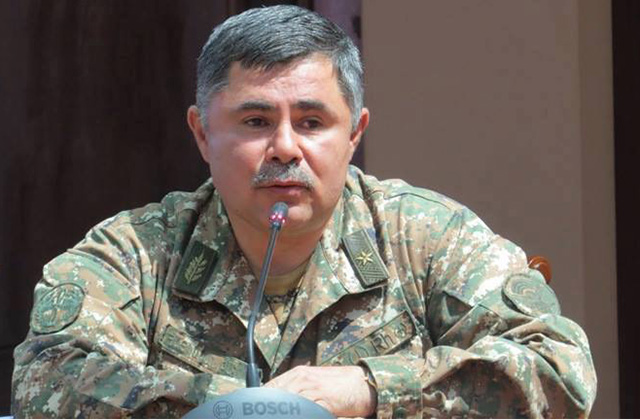
Viktor Kocharyan, Head of the NKR State Commission on Prisoners of War, Hostages and the Missing, rejects the information released by the Azerbaijani media that the Armenian side refuses to hand over the body of the Azerbaijani killed serviceman. In an interview with “Armenpress’ Viktor Kocharyan said that there is no body of the Azerbaijani serviceman in the Armenian side. “There is no such a thing. There are no bodies in the Armenian side,” Kocharyan assured.
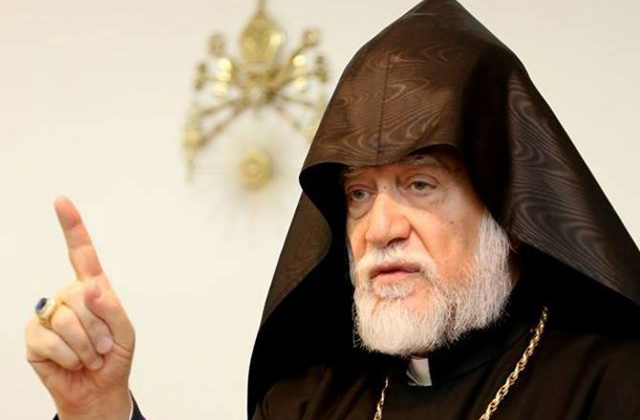
“I saw deep patriotism, I saw endurance and combat readiness among the people, but if our actions don’t speak louder than words, sensitive, patriotic outbursts will turn into a bubble and vanish. The enemy is always awake, we should realize whether we’re sleepless too. The Azerbaijani is the same Turk, able to barbaric, genocide-like actions—to behead and cut the ear. This isn’t linked to war, this is barbarism, new expression of Turk’s genocide spirit. After all this we should seriously ponder: why? How did it happen? And what we should do in future? Every person has lots of words to say, nice ones, however, it should be put aside and we should think of our follow-ups,” Aram A, His Holiness Catholicos of the Great House of Cilicia, told “Armenpress” today. Below is introduced an excerpt from the interview.
“And it refers bodies of our killed soldiers, who were in the defensive positions, plus lots of evidence as well. Documents are available from the downed helicopter crew, which prove that they pursued big purpose, they intended to penetrate into the defense army, and proof for it is available. All this will be submitted to the international community. Of course, from legal and humanitarian standpoint as well, together will all mutilations of the bodies of killed soldiers, implemented by the Azerbaijani armed forces or maybe by mercenaries.”
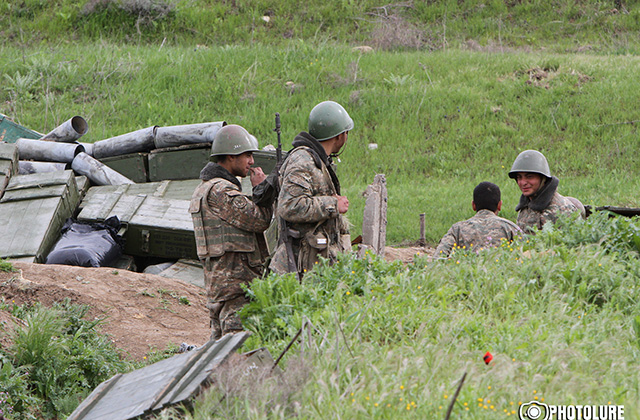
“The adversary performed attacking operations in that direction, by subversive groups, which have been blockaded until the dawn. Type of the helicopter was MI-8, which, probably, was to implement either evacuation of the personnel in blockade or to provide possible support, i.e. descending certain forces there. The helicopter has been destroyed in the territory of Nagorno-Karabakh, passing the positions by about 500 meters. After the downing, the helicopter performed a possible flight, for about 5 km and performed emergency landing in their territory.”
But they didn’t run. Just the contrary. Armenian millionaire takes his son from the comfortable Oxford and sends him to war, but not to some special military unit, but to the frontline, under Russian “solntsepyok.” As it’s crucial for him to have a brave son, than an advanced economist.
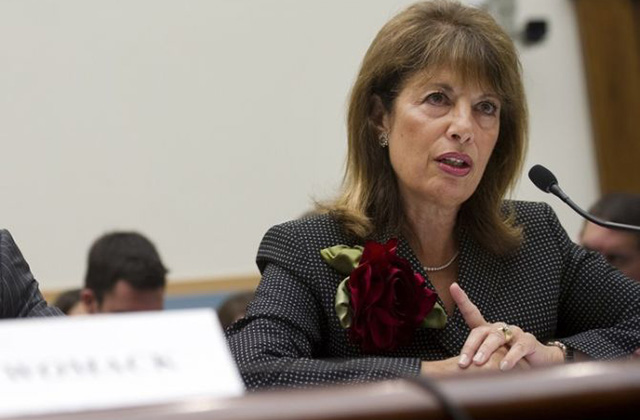
Congresswoman Speier stressed, that otherwise Azerbaijan will continue its policy of violence increase against Armenians. “I strictly condemn violence against the people, who simply want to live the life created as a result of self-determination,” Jackie Speier said.