Bishop Hovakim Manukyan of the Diocese of The Armenian Church of the United Kingdom & Ireland, together with a group of Christian leaders, has sent a letter to the UK Prime Minister Keir Starmer, expressing deep concern over the unlawful detention of 23 Armenians by Azerbaijan. Following the forced displacement of 120,000 Armenians from Artsakh in 2023, these individuals—including former government officials, prisoners of war, and civilians—are facing fabricated charges, unfair trials, and inhumane treatment in Baku.
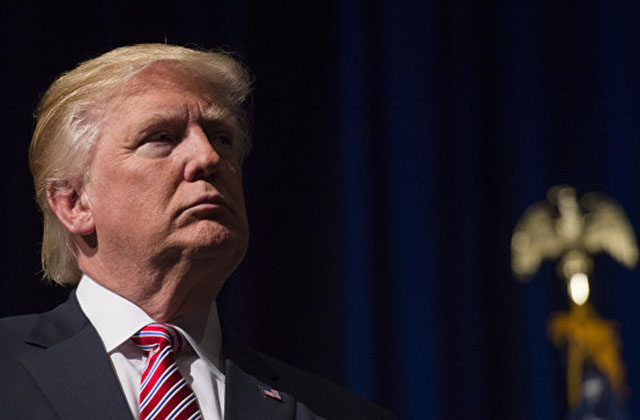
A coalition of American Christian leaders has sent a letter to President Donald Trump urging decisive action to free 24 Christian hostages—23 Armenian Christians and one Azerbaijani Christian convert—held by Azerbaijani authorities. Among them is Ruben Vardanyan, who remains in extremely critical condition as his hunger strike extends into its 21st day, leaving his health rapidly deteriorating in Azerbaijani detention. In their appeal, the signatories cite credible reports of torture and ongoing abuse, emphasizing their belief that President Trump’s leadership is uniquely positioned to resolve this crisis, and that swift action is needed to save Christian lives.
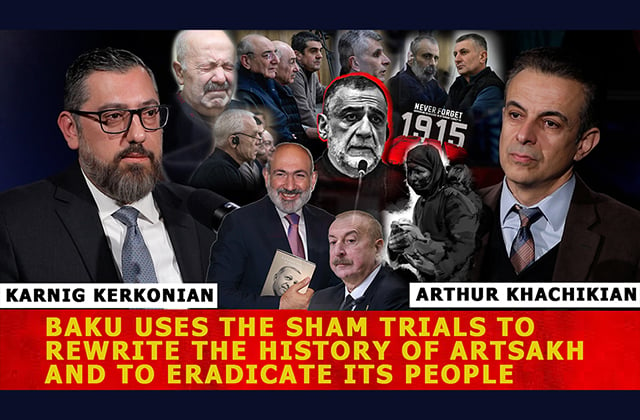
Dr. Arthur Khachikian, Stanford Doctor in Political Science talked with Karnig Kerkonian, an international lawyer and lead counsel in several precedent-setting Armenian rights matters in U.S. and international courts, a Partner of Kerkonian Dajani LLP. He educated at Harvard, Cambridge, and the University of Chicago.
The united representatives of all Armenian churches worldwide have issued an urgent appeal to Christians around the world, calling for the immediate and unconditional release of the Armenian prisoners of war and civilians held in Azerbaijan.
Syeda Ghulam Fatima, 2016 Aurora Prize Finalist and Pakistani human rights activist, intends to travel to Baku in order to attend Ruben Vardanyan’s hearings. Free Armenian Prisoners reports on X.
Today is March 5th. I want to say a few words to you as Ruben Vardanyan, just as I am: as an Armenian, who speaks and thinks in Russian. As a man of the world, who is happily married, loves everyone, who has dedicated himself to self-education, and who lives with faith in God.
Many people have asked how Armenia can help secure the release of these Armenian Christians detained in Azerbaijan given there are no diplomatic relations between Armenia and Azerbaijan. In fact, there is much more that can be done by Prime Minister Nikol Pashinyan and Foreign Minister Ararat Mirzoyan:
These days mark the 37th anniversary of the mass massacres of Armenians in the Azerbaijani city of Sumgait on February 27–29, 1988.
A crime that has a precise legal classification in full accordance with the criteria of the UN Convention on the Prevention and Punishment of the Crime of Genocide. It was indeed genocide, committed over three days without hindrance and with impunity in a city located just 25 kilometers from the capital of Azerbaijan, Baku.
We are writing to you with deep concern regarding the health condition of Ruben Vardanyan, who has been on a hunger strike for over a week while being held in a Baku prison, as well as the situation of other Armenian political prisoners who are being illegally prosecuted in Azerbaijan.