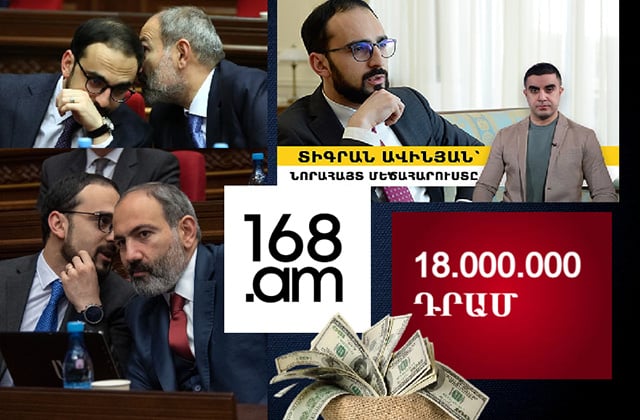
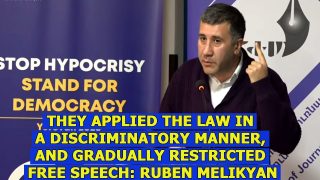
Stockholm, May 23, 2023— A court in the Armenian capital of Yerevan should unfreeze the assets of journalist Davit Sargsyan and the independent news outlet 168 Hours, and the country’s authorities should ensure that members of the press do not face legal retaliation for their work, the Committee to Protect Journalists said Tuesday. On May […]
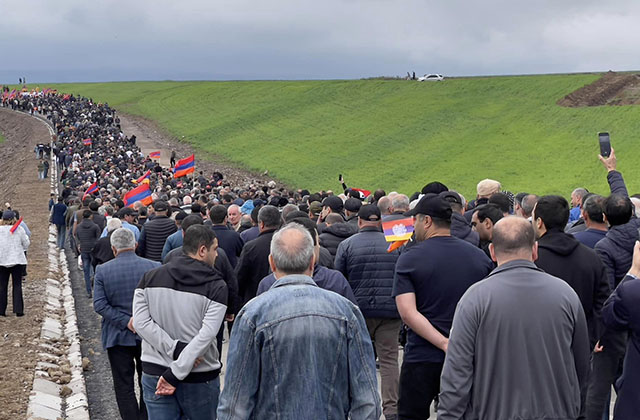
As dignified and patriotic Armenians, we are determined and Artsakh is ours. We are all from Artsakh and have the will to liberate Artsakh from the blockade and restore its territorial integrity.
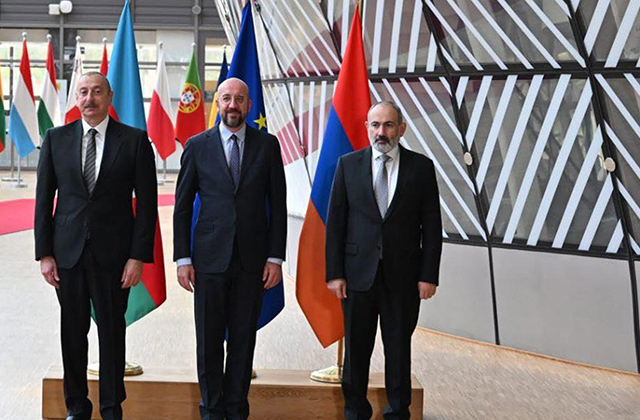
It was a pleasure to host President Aliyev and Prime Minister Pashinyan today for a fifth meeting in Brussels. Our exchanges were frank, open and result-oriented. They focused on progress on the path towards Armenia-Azerbaijan normalization. The leaders shared a common willingness for a South Caucasus at peace. I commend their respective efforts. Together, we reviewed all issues on our agenda.
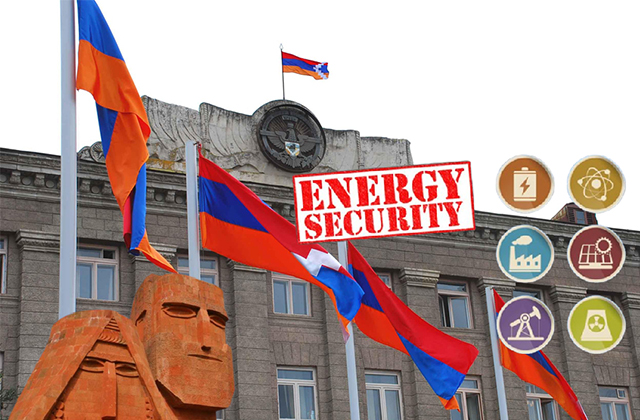
The article considers the main risks and challenges to the energy security of the Republic of Artsakh in the period after the 44-day war in 2020. An analysis of the development of the energy system of Artsakh is carried out to determine its strengths and future potential. The state program for the development of water resources with a focus on the development of hydropower is analyzed.
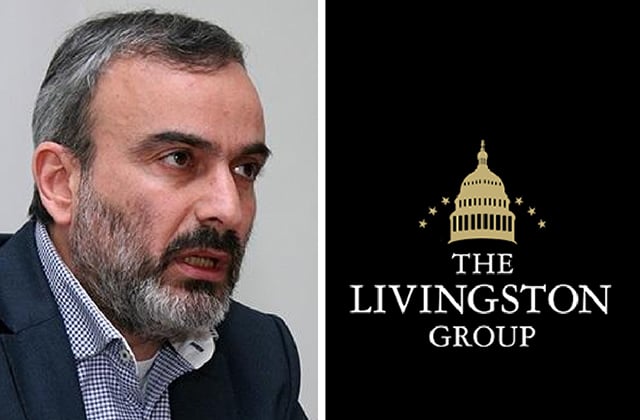
The famous American lobbying company, i.e., the Livingston Group, which is known for its strong anti-Armenian activities in the United States, providing services to the Turkish-Azerbaijani lobby in Washington, provides services to the National Democratic Pole Party. In particular, we found out that this most successful lobbying organization in the USA, which has worked for a long time against the process of international recognition of the Armenian Genocide, as well as the pro-Armenian resolution 907, is trying to organize meetings in the US institutions for Jirair Sefilian, who is going to leave for the USA in the near future.
The only consolation for Armenia is that its two hostile neighbors, Azerbaijan and Turkey, have much lower scores. Both Azerbaijan and Turkey are ranked by Freedom House on its Freedom Score as “Not Free.” In terms of democratic rule, Azerbaijan is classified as a “Consolidated Authoritarian Regime,” while the report on Turkey is still pending.
Several newspapers announced earlier this month that a major complaint has been submitted to the International Criminal Court (ICC) against Turkey. A group of European legal experts compiled a massive file which included “witness testimonies giving details of torture, state sponsored kidnapping, and wrongful imprisonment” by the Turkish government of its 200,000 opponents.
The Lachin Corridor has been blocked by Azerbaijani fake “environmentalists”, the Russian peacekeepers are unable or unwilling to ensure the operation of the road, the Armenian authorities are not doing anything to open it, and they are just trying to “draw the attention of the international community”.
Today is day 72 of the total blockade of Artsakh. For 72 days, the 120K citizens of Artsakh have not had the ability to enter or exit their country. They are deprived of the ability to visit Armenia or to receive guests from Armenia. With very limited supplies, they are forced to ration food with the help of food stamps in order to survive. Children are deprived of the right of education, since the schools can’t be properly heated due to Azerbaijan also disrupting gas supplies from Armenia.
Arthur Khachikian holds a Ph.D. in International Relations from Stanford University. His dissertation and research focused on great power politics and intervention in the international system as well as international history.