“It was important that ministers of foreign affairs—Kerry, Lavrov and Desir, were present at the meeting, which showed that the governments highlight this issue, it was a pressure towards both Azerbaijan and Armenia, in particular, towards Baku.”
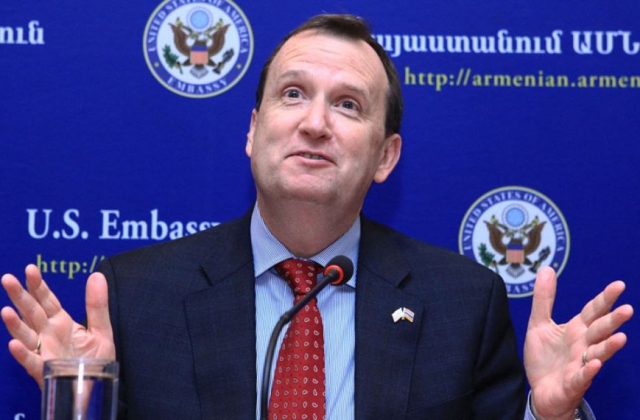
Ambassador says the fact that the sides are ready to work towards the installation of the investigative mechanisms in the Karabakh-Azerbaijani line of contact, shows their goodwill and readiness to that issue.
In recent days, scathing speeches by Armenian and Kurdish deputies in the Turkish Parliament have been circulating on the internet. Last week, I presented the bold speech by Armenian MP Garo Paylan, delivered in April on the Armenian Genocide.
“Strategically or militarily those territories have no importance. From the psychological viewpoint, Azerbaijanis can convince their people that they have achieved something, but at least one soldier was killed and two more wounded for gaining control over just one hectare of land.”
“We shouldn’t pay much attention to the achievement of these agreements on account of our past experience, as I mentioned, we have had 20 meetings, agreed on many things during these meetings, but returning to Baku, the president of Azerbaijan has made completely different statements.”
“As we know, it’s enshrined in Armenia’s security concept that relations with Georgia are strategic, meanwhile it isn’t observed in practice, it’s not observed that Georgia and Armenia pursue other interests than transit maintenance. “
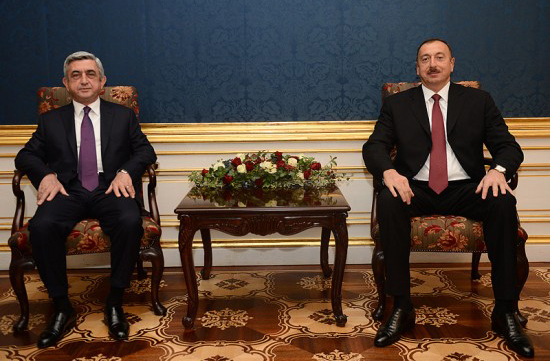
The Presidents reiterated their commitment to the ceasefire and the peaceful settlement of the conflict. To reduce the risk of further violence, they agreed to finalize in the shortest possible time an OSCE investigative mechanism.
Then what does the silence of the system mean? That we have a president, government, army, scientist of a ‘mity’ state? And those scientists are able to develop unmanned aerial vehicles (UAV), and that army— to provide country’s security, and that government— to build future for the country?
Meeting of the presidents of Armenia and Azerbaijan.
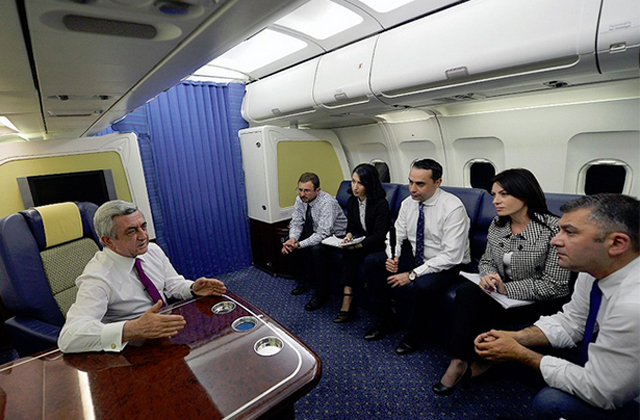
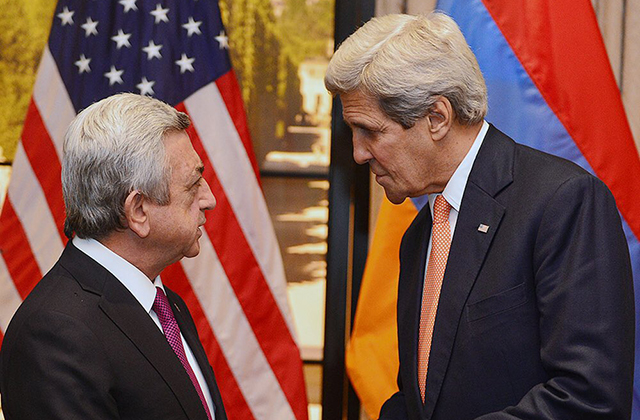
Meeting of the President of Armenia Serzh Sargsyan and US Secretary of State John Kerry has kicked off in Vienna. Reports President’s spokesperson Vladimir Hakobyan made a note about this on his Twitter page.